Bibi Nani and the Bolan: A Complete Guide
Bibi Nani is an ancient shrine at the foot of the Bolan Pass. A simple grave rests beneath a bridge over the river. Muslims and Hindus alike revere this venerated old lady. Deep roots tie her to an ancient goddess of old. A famous mountain pass carries her name through history. This guide covers Bibi Nani and the Bolan for the curious traveller. It explains the shrine the faiths the goddess the legend the pass and the river.
This guide offers a general overview. Details and figures vary between sources.
Quick answer: The Bibi Nani is an ancient shrine located at the bottom of the Bolan Pass on the historical trail linking Quetta and Sibi of the Balochistan province. There is a plain grave, which is covered in green cloths under a bridge across the river of Bolan. The shrine is both a Muslim and a Hindu holy site. It is believed that this deity dates back thousands of years to a goddess of the Indus Valley civilization. This ancient legend makes connections to her brother the saint Pir Ghaib.
A shrine at the foot of the Bolan
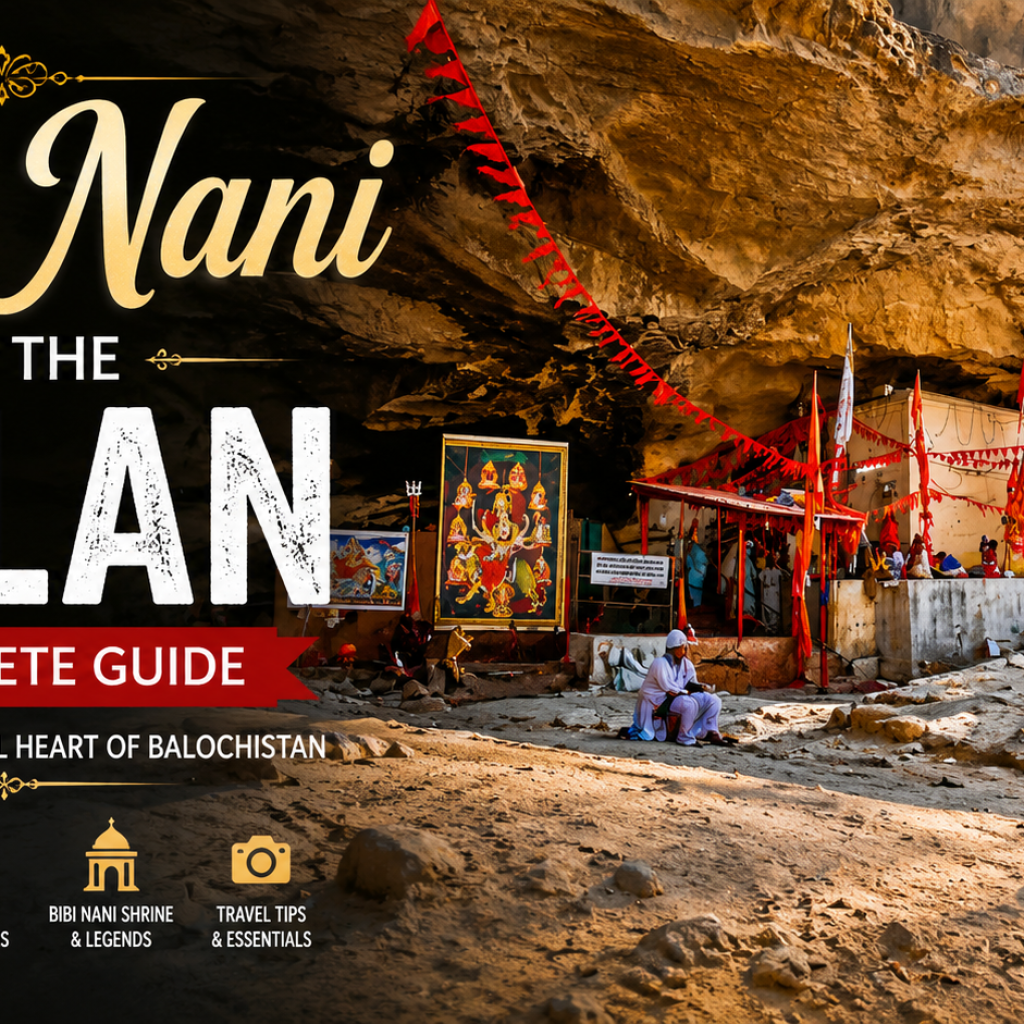
Bibi Nani rests at the foot of the Bolan Pass. A simple grave rests beneath a bridge. Its waters run close beside the tomb. So the shrine marks a storied spot.
A humble grave marks the site. Green cloth drapes the simple tomb. A bridge crosses the river above. So the shrine rests low in a quiet gorge.
A venerated name marks the place. People call her the venerated old lady. Her name means a grandmother of old. So the title carries deep respect.
A storied spot marks the pass. Travellers pass the shrine on the road. Few know its full and ancient tale. So mystery clings to the old grave.
Venerated by many faiths
Bibi Nani draws devotion from many faiths. Muslims and Hindus alike revere her. Both honour the venerated old lady. So the shrine unites different peoples.
A shared reverence marks the shrine. Muslims honour the old saint here. Hindus revere her as a goddess. So the grave draws many hearts.
A common devotion marks the site. Pilgrims of two faiths come to pray. They meet at the humble tomb. So the shrine binds the peoples together.
A gentle unity marks the place. Different faiths share one revered figure. Old respect crosses every line. So Bibi Nani belongs to all.
Echoes of an ancient goddess
Bibi Nani echoes an ancient goddess. Her cult may reach back thousands of years. Old worship on the Indus lives on. So deep antiquity marks the shrine.
An ancient root marks her name. Some trace her cult back many ages. Old Indus worship may lie behind it. So her story reaches deep in time.
A distant goddess marks the tale. An old goddess named Nana was revered. Her worship spread across many lands. So Bibi Nani may carry her memory.
A living memory marks the shrine. Great cities crumbled long ago. Yet her name endured through the ages. So the past survives in the grave.
Bibi Nani and Pir Ghaib
Old legends tie Bibi Nani to a saint. Pir Ghaib is said to be her brother. Their tale unfolds in the Bolan gorge. So folklore colours the ancient shrine.
A famous brother marks the tale. Pir Ghaib is called the invisible saint. He fled through the rocky gorge. So the legend links the two saints.
A parting marks the story. Both siblings split within the gorge. Bibi Nani went down toward the bridge. So her grave rests where she stopped.
A rescued saint marks the legend. A rock is said to have opened for Pir Ghaib. It hid him from those who chased him. So he earned his unseen name.
A gateway through the mountains
A famous route the Bolan carries travellers through the mountains, linking highland and plain. Caravans crossed it for many ages. So the route shaped the whole area.
A famous pass marks the country. Its gorge cuts through the mountains. It joins the uplands to the plains. So the pass opened an ancient road.
An old route marks the gorge. Traders crossed the pass for ages. Goods moved between distant lands. So commerce flowed through the mountains.
A scenic gorge marks the way. Steep hills rise on either side. Its waters wind along the floor. So the pass rewards the traveller.
Where the river vanishes
A Bolan wonder holds the eye. Its river vanishes and returns. Its waters vanish into the pebbles. They flow unseen for many miles. So the river surprises the traveller.
A vanishing river marks the gorge. Water sinks into the stony bed and runs hidden beneath the ground. So the stream seems to disappear.
A hidden course marks the stream. Its waters flow unseen for miles. Pebbles swallow the running water. So the current travels out of sight.
A sudden spring marks the shrine. Water rises again near Bibi Nani then the stream returns to the light. So the stream reappears by the grave.
Frequently asked questions
What is Bibi Nani? Bibi Nani is an ancient shrine at the foot of the Bolan Pass, on the old route between Quetta and Sibi in Balochistan. It centres on a simple grave, draped in green cloth, resting beneath a bridge over the Bolan river, in a rocky gorge. Her name means the venerated old lady an honoured grandmother. Both Muslims and Hindus revere the shrine. Though the figure of Bibi Nani is wrapped in mystery, her shrine is one of the most intriguing and ancient holy places in the area.
Why is Bibi Nani revered by different faiths? Bibi Nani is unusual in that she is honoured by both Muslims and Hindus, who each revere her in their own way at the same humble shrine. Muslims regard her as a saintly old lady, while Hindus connect her with an ancient goddess, so both come to pay their respects. Many scholars believe that her worship reaches back thousands of years, to an old goddess venerated in the days of the Indus Valley and beyond. This shared devotion makes the shrine a rare meeting point of different faiths and traditions.
Who was Pir Ghaib? Pir Ghaib, whose name means the invisible saint, is a figure of local legend said to be the brother of Bibi Nani. According to the old tale the two were travelling through the Bolan gorge when they became separated with Bibi Nani going down toward the place where her grave now rests. Pir Ghaib, pursued and blocked by a rock wall, is said to have prayed to be saved. A rock then opened to hide him, earning him his name as the unseen saint. His story is closely tied to a separate site in the Bolan hills.
Why is the Bolan Pass important? A great gateway the Bolan Pass cuts through the mountains to link the highlands around Quetta with the plains toward Sibi. For thousands of years it served as a route for traders, travellers and caravans moving between distant lands, carrying goods and ideas across the country. A road and a railway now follow the river through the gorge. With its dramatic scenery and deep history the pass has long been one of the most important routes in the area.
What is the wonder of the vanishing river? One of the natural wonders of the Bolan is the way the river seems to vanish and then reappear along its course. At one point the waters of the Bolan sink into the pebbles of the riverbed and flow unseen underground for many miles. Then, near the shrine of Bibi Nani the river rises once more to the surface, returning to the light. This striking feature, where the stream disappears and comes back, has long added to the sense of wonder and mystery surrounding the shrine and its gorge.
Bibi Nani: An ancient wonder of the Bolan
Bibi Nani is an ancient wonder of the Bolan of Balochistan. A simple grave rests beneath a bridge over the river. Muslims and Hindus alike revere this venerated old lady. Deep roots tie her to an ancient goddess of old. A famous mountain pass carries her name through history. Few shrines hold such mystery and age.
You may come to Bibi Nani for the shrine the legend or the pass. This ancient spot rewards the curious mind. You can pause at the humble grave beneath the bridge. You can trace her roots to a goddess of the ancient past. You can follow the old road through the Bolan gorge. Come to Bibi Nani and discover an ancient wonder of the Bolan. This is a meeting of faiths and ages.