Textile Craft Towns of Sindh: A Complete Guide
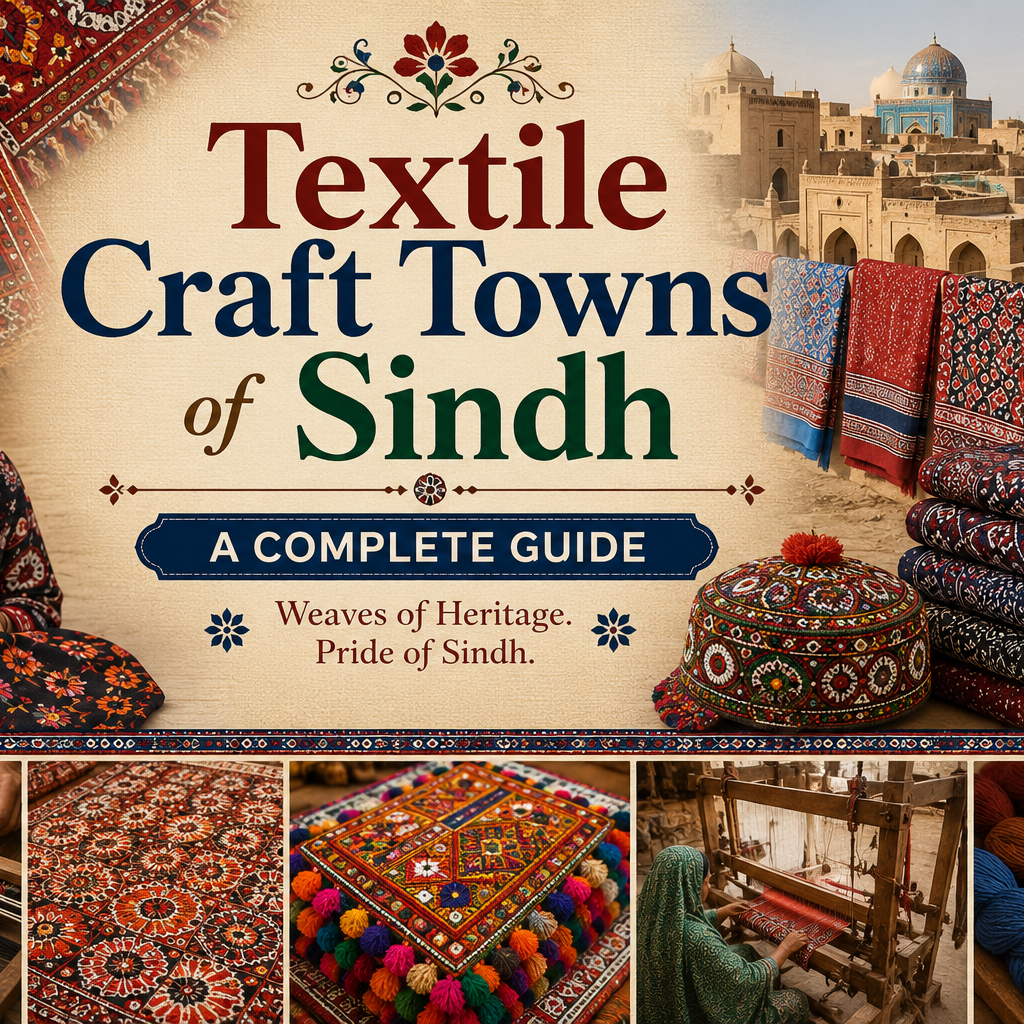
Sindh is one of the great textile lands of South Asia. Its towns weave susi, khes and khadi on ancient looms. Its women embroider dowry cloth with mirrors and thread. Its craft runs from the deserts of Thar to the banks of the Indus. Each town holds its own speciality. This guide surveys the textile craft towns of Sindh. It explains the weaving the embroidery the towns and the future of these crafts.
This guide offers a general overview. Individual crafts have their own dedicated guides.
Quick answer: Sindh weaves and embroiders a rich range of textiles. Susi is a fine striped cloth from Nasarpur, Hala and Tando Muhammad Khan. Khes, khadi and lungi are woven across the province. Sindhi embroidery is famous for its mirror work and bold desert motifs. Thatta, Hala, Nasarpur and Hyderabad are great craft hubs. The Thar desert produces spectacular folk embroidery. Ajrak and Ralli quilts are covered in their own dedicated guides.
Textile heritage of Sindh
Sindh has woven cloth for millennia. Its textile roots reach to the Indus Valley. Bronze needles from Mohenjo daro attest to early embroidery. This heritage is among the oldest in the world.
The province divides into craft regions. The central plains excel at weaving and printing. The northern plains favour gold thread embroidery. The Thar desert produces bold folk work. Each region has its own character.
The crafts reflect the surroundings. Makers draw their motifs from nature. Birds, peacocks and dunes appear in the work. Geometric patterns fill the desert embroidery. The land shapes the design.
The great hubs are well known. Thatta, Hyderabad, Nasarpur and Sukkur lead them. Sehwan and Hala join the list. Each holds a distinct and versatile craft. The dedicated town guides cover several of them.
Susi and the woven cloths
Susi is the legendary cloth of Sindh. It is a finely woven striped fabric. Cotton and silk make it up. The warp threads follow the colours of the stripes. This gives the cloth its distinctive look.
Susi has an ancient pedigree. Records mention it among exports long ago. It was woven in quantity by the 17th century. It was once valued as far away as England.
The craft has declined sharply. A 1907 record counted hundreds of looms. Nasarpur, Hala and Thatta were great centres. Only a handful of master weavers now remain. Power looms have largely replaced the handloom.
Khes is another woven cloth. It serves as a shawl and a rug. Weavers make it on the pit loom. They sew two lengths together by hand. It is a durable traditional textile.
Khadi is the hand spun cloth. It uses natural cotton, silk and wool. Makers spin and weave it by hand. Hala has an ancient khadi tradition. This natural cloth has reached high fashion.
The lungi is a woven wrap. Makers use silk, cotton and wool. They weave broad borders of silver and gold thread. Hyderabad, Nasarpur and Karachi produce it. The bright colours mark it out.
Sindhi embroidery
Sindhi embroidery is famous across the region. It is profuse, colourful and alive. Women work it by hand. It adorns clothing, dowries and homes. This craft is a great pride of the province.
The mirror work is a signature. Craftswomen stitch small mirrors into the cloth. They call these shisha. The mirrors catch the light beautifully.
The gaj is a famous piece. It is a solid embroidery front for a woman's shirt. It covers the area from the neck to the stomach. It combines many stitches and colours.
The desert produces the finest work. Tharparkar and Nagarparkar are famous for embroidery. The pakko and soof styles come from there. The dedicated guide to the Thar covers the region.
The men's items carry it too. Craftswomen once embroidered only women's attire. They now adorn the Sindhi topi as well. The dedicated guide to the topi covers the cap. Mirror work decorates it richly.
Great craft towns of Sindh
Hala is a craft treasury. The town is famous for many crafts. It makes pottery, susi, khadi and Ajrak. The dedicated guide to Hala covers the town. It is one of the richest craft centres.
Nasarpur is an ancient centre. The town has made cloth and tiles for centuries. It is known for khes, embroidery and pottery. It was once a great trade hub. Its crafts have declined but survive.
Thatta is a textile hub. The town holds weaving, printing and embroidery. Its history reaches back to its days as a capital. The dedicated guide to Thatta covers the town.
Bhit Shah makes fine Ajrak. The town around the shrine produces the cloth. The dedicated guide to Bhittai covers the town. Matiari and Tando Muhammad Khan make it too.
Hyderabad is a crafts market. The city gathers the work of the province. It produces lungi and embroidery. The dedicated guide to Hyderabad covers the city. It is a good place to buy.
Other Sindhi textiles
The farasi is a woven rug. Craftswomen work geometric patterns into it. The women of Badin are known for it. These rugs carry desert designs.
The khatho is a woollen shawl. Weavers make it from local wool for winter warmth. It suits the cold desert nights.
Carpets come from the desert. Tharparkar produces kaleen and gilim. These are woven floor coverings. They carry the bold colours of the region.
Mashru is a mixed cloth. It combines a cotton base with a silk warp. Weavers make it in a satin weave. It was once woven specially for women.
Future of the Sindhi crafts
Many crafts face decline. Susi and Kashi work have lost ground. Power looms and factory goods compete. Some traditions survive on a few master craftsmen.
Support is growing. Organisations link makers to markets. They train women in the crafts. The dedicated guide to Ralli quilts covers this work. This helps sustain the traditions.
The crafts still live. Embroidery remains strong across Sindh. Dowry textiles are still made. The desert traditions continue. These living crafts are worth seeking out.
Frequently asked questions
What textiles is Sindh famous for? Sindh is famous for a rich range of textiles. Susi is a fine striped cloth of cotton and silk. Khes, khadi and lungi are woven across the province. Sindhi embroidery is renowned for its mirror work and bold desert motifs. The province also produces the block printed Ajrak and the patchwork Ralli quilt. Both have their own dedicated guides. Farasi rugs and woollen shawls add to the range.
What is susi cloth? Susi is a finely woven striped cloth from Sindh. It is made of cotton and silk, with the warp threads following the colours of the stripes. The cloth has an ancient pedigree and was once valued as far away as England. Women traditionally used it to make their shalwars. Nasarpur, Hala and Thatta were the great centres. The craft has declined sharply. Power looms have largely replaced the handloom.
What is Sindhi mirror embroidery? Sindhi mirror embroidery is a signature craft of the province. Craftswomen stitch small mirrors, called shisha, into the cloth. The mirrors catch the light and give the work its sparkle. The embroidery adorns clothing, dowry textiles and the Sindhi topi. The deserts of Tharparkar and Nagarparkar produce especially fine work. Umerkot, Hyderabad and Sanghar are also important centres of the craft.
Which towns in Sindh are famous for crafts? Several towns are great craft centres. Hala is famous for pottery, susi, khadi and Ajrak. Nasarpur is known for khes, embroidery and pottery. Thatta holds weaving, printing and embroidery. Bhit Shah, Matiari and Tando Muhammad Khan make fine Ajrak. Hyderabad is a great market that gathers the work of the province. The desert district of Tharparkar produces spectacular folk embroidery and quilts.
Are the traditional textile crafts of Sindh dying out? Some crafts face real decline. Susi weaving and Kashi tile work have lost ground to power looms and factory goods. A few traditions survive on only a handful of master craftsmen. Other crafts remain strong, especially embroidery and dowry textiles. Organisations now link rural makers to markets and train women in the crafts. This work helps sustain the living traditions of the province.
Woven heart of Sindh
Sindh is a province woven through with craft. Its looms have made susi and khadi since ancient times. Its women stitch mirrors and thread into cloth of great beauty. Its deserts produce embroidery found nowhere else. Its towns each guard their own speciality. Few places hold such a wealth of textile tradition.
You may come to the craft towns for the weaving the embroidery or the sheer colour. The province rewards the journey either way. You can seek out the last susi weavers of Hala. You can watch the mirror work take shape in a desert village. You can buy the crafts of the province in the markets of Hyderabad. The dedicated guides cover Ajrak, Ralli and the pottery of Hala. Sindh is the woven heart of the region.