Sukkur Barrage and Lansdowne Bridge: A Complete Guide
Sukkur holds two of the greatest engineering works in the country. The Sukkur Barrage spans the Indus with sixty-six gates. It waters millions of acres through seven great canals. The Lansdowne Bridge crosses the river on a bold cantilever frame. It was the largest bridge of its kind in the world when it opened. This guide covers both landmarks for the curious traveller. It explains their history, their engineering and how to see them.
This guide offers a general overview to help you plan a visit.
Quick answer: The Sukkur Barrage crosses the Indus at Sukkur in Sindh. Engineers built it between 1923 and 1932. It was first called the Lloyd Barrage. It runs about 1,500 metres with sixty-six gates. Seven main canals carry its water across the province. The Lansdowne Bridge opened in 1889. It links Sukkur with Rohri. It was then the largest cantilever bridge in the world. The Ayub Bridge now runs alongside it.
Sukkur Barrage
The barrage is a monumental irrigation work. It spans the Indus near the city of Sukkur. It ranks among the largest single irrigation networks of its kind in the world. This scale is what makes it remarkable. It remains the backbone of farming in the province.
The idea came long before the building. An engineer proposed a barrage at Sukkur as early as 1868. The project waited many decades for approval. Officials finally sanctioned it in 1923. This long delay reflects the scale of the undertaking.
Construction ran through the 1920s. Work began in 1923 and continued for nine years. The barrage became operational in January 1932. Sir Charlton Harrison served as chief engineer. Sir Arnold Musto worked as architect and engineer of the scheme.
The barrage carried the name of a governor. Officials first called it the Lloyd Barrage. The name honoured Sir George Lloyd, then Governor of Bombay. He had launched the scheme. The Viceroy opened the completed works. The barrage took its present name after independence.
Engineering of the barrage
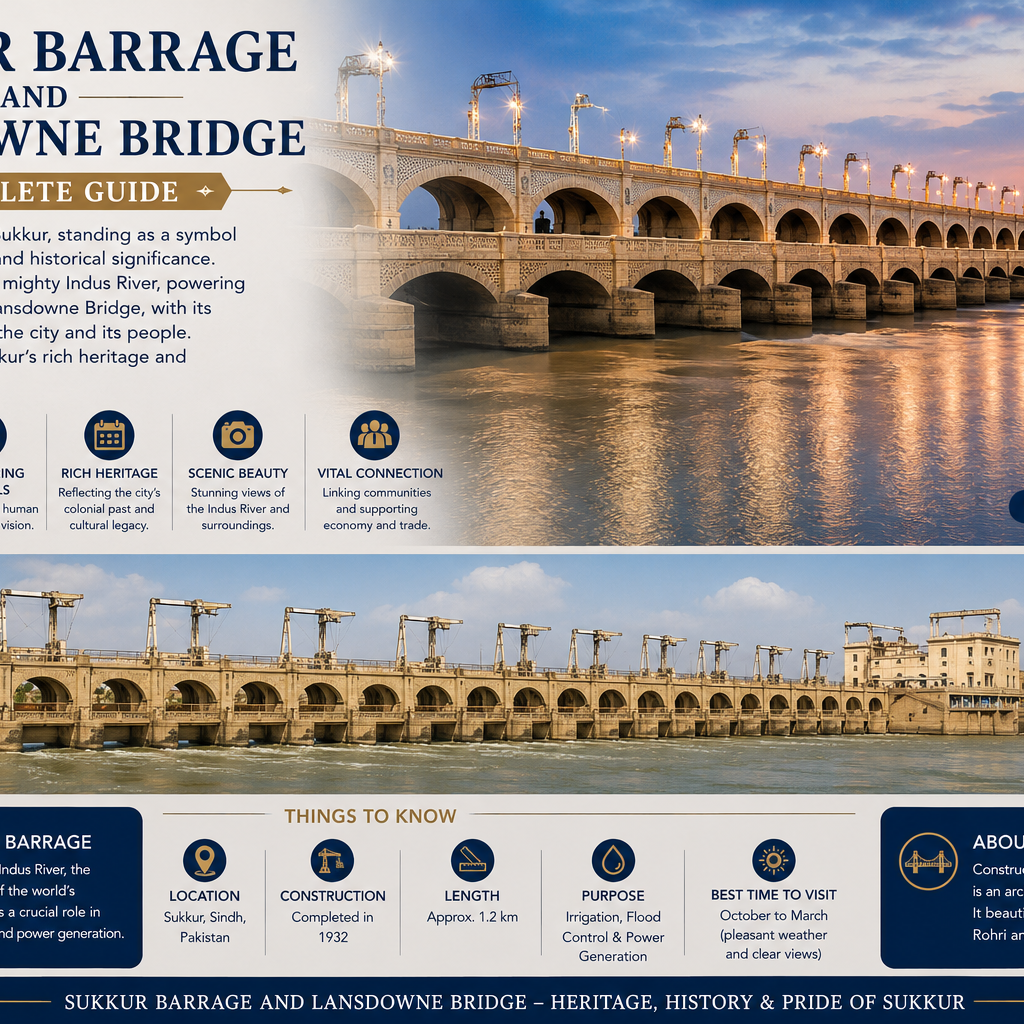
The structure is vast. The barrage runs about 1,500 metres across the river. Sixty-six spans of around eighteen metres each make up its length. Each span carries a gate. This great row of gates is the defining sight of the barrage.
Engineers used the science of their day. They designed the barrage on a theory of seepage under masonry works. Stone masonry, mass concrete and steel formed the structure. This careful design has proved remarkably durable.
The barrage has outlived its design life. Engineers guaranteed it for around fifty years. It has now worked for more than ninety. Rehabilitation work aims to extend its service beyond a century. This longevity is a tribute to its builders.
Seven canals of Sukkur Barrage
Seven main canals leave the barrage. Four take off from the left bank. They are the Rohri, Khairpur East, Khairpur West and Nara canals. Three take off from the right bank. They are the North West, Rice and Dadu canals.
The canals water a vast area. Together they irrigate several million acres of farmland. That figure covers roughly a quarter of the canal-irrigated land in the country. This makes the barrage central to national food supply.
The Nara canal is the longest. It is the greatest of the seven. It carries a very large flow. Its bed is exceptionally wide. This canal alone waters a huge stretch of eastern Sindh.
The system transformed the province. Dry land became fertile fields after 1932. Sindh grew into a great farming region. This transformation is the true legacy of the barrage.
Lansdowne Bridge
The bridge is a Victorian masterpiece. It crosses the Indus between Sukkur and Rohri. Engineers built it between 1885 and 1889. It opened in March 1889. This bold structure changed transport in the region.
The design was daring for its age. Sir Alexander Meadows Rendel designed the bridge. He chose a cantilever form. The completed span was then the largest cantilever bridge in the world. This achievement drew attention across the engineering world.
The ironwork came from London. A London firm manufactured the girder work. It weighed around 3,300 tons. Engineers shipped it out and erected it on site. Six workers died during the construction.
The name honoured a Viceroy. Officials named the bridge after Lord Lansdowne. The Governor of Bombay opened it on his behalf. This naming followed the custom of the era.
Bridge of Sukkur in service
Testing came before the opening. Engineers ran coupled locomotives across the bridge in March 1889. The test load reached several hundred tons. The structure held. The bridge opened days later.
The bridge needed strengthening over time. Locomotives grew heavier through the decades. Engineers lightened the structure in 1910 and again in 1939. They removed dead weight to allow heavier trains. This work kept the bridge in service.
A famous song is linked to the bridge. Local tradition ties the folk song Ho Jamalo to a man who crossed it. Sindh has embraced the song as an anthem of joy and resistance.
The Ayub Bridge took over the trains. Engineers built a steel arch bridge alongside in the early 1960s. It opened in May 1962. Rail traffic moved across to it. The two bridges lie so close that they look like one structure from a distance.
Seeing them today
Both landmarks lie in Sukkur. The barrage and the bridges cross the Indus within a few kilometres of each other. The dedicated guide to Sukkur covers the wider city. You can see both in a single morning.
The views reward an evening visit. The bridges look their finest at sunset. The river carries the light beautifully. Many visitors walk the riverbank for the view.
A museum explains the barrage. A small museum near the works covers the irrigation system. It shows how the canals distribute the water. It is worth a short visit before you walk the barrage.
Frequently asked questions
When was the Sukkur Barrage built? Engineers built the Sukkur Barrage between 1923 and 1932. It became operational in January 1932. An engineer had proposed a barrage at Sukkur as early as 1868. The project waited decades for approval. Officials sanctioned it in 1923. Sir Charlton Harrison served as chief engineer. Sir Arnold Musto worked as architect and engineer of the scheme. The barrage was first called the Lloyd Barrage.
How many canals come from the Sukkur Barrage? Seven main canals take off from the Sukkur Barrage. Four leave from the left bank. They are the Rohri, Khairpur East, Khairpur West and Nara canals. Three leave from the right bank. They are the North West, Rice and Dadu canals. Together they irrigate several million acres. That covers roughly a quarter of the canal-irrigated land in the country. The Nara canal is the longest.
Why is the Sukkur Barrage important? The Sukkur Barrage ranks among the largest single irrigation networks of its kind in the world. Its seven canals water several million acres of farmland. That figure covers roughly a quarter of the canal-irrigated land in the country. The barrage turned dry land into fertile fields after 1932. It transformed Sindh into a great farming region. It remains central to national food supply.
What is special about the Lansdowne Bridge? The Lansdowne Bridge was the largest cantilever bridge in the world when it opened in 1889. Sir Alexander Meadows Rendel designed it. A London firm manufactured its girder work. That ironwork weighed around 3,300 tons. The bridge links Sukkur with Rohri across the Indus. It carried the railway for over seventy years. Engineers strengthened it twice as locomotives grew heavier.
What is the difference between the Lansdowne and Ayub bridges? The Lansdowne Bridge is the older of the two. It opened in 1889 as a cantilever railway bridge. The Ayub Bridge is a steel arch bridge built alongside it in the early 1960s. It opened in May 1962. Rail traffic moved to the newer bridge. The two lie so close together that they appear as one structure from a distance.
Engineering heart of the Indus river
Sukkur holds two works that changed the course of the province. The Sukkur Barrage tamed the Indus with sixty-six gates. Its seven canals turned dry land into farmland across Sindh. The Lansdowne Bridge leapt the river on a cantilever frame. It was the boldest bridge of its kind in the world in 1889. Together they mark Sukkur as the engineering heart of the river.
You may come for the barrage, the bridges or the river itself. Sukkur rewards the visit either way. You can walk the great barrage and watch the gates at work. You can look up at the ironwork of the Lansdowne Bridge. You can see the Ayub arch beside it. Visit at sunset for the finest view. These works have carried the water and the traffic of Sindh for generations.