Sialkot: A Complete Guide
Sialkot is one of the great export cities of the world. It hand stitches most of the footballs used across the globe. It makes surgical instruments that save lives in hospitals worldwide. It is the birthplace of the poet and philosopher Allama Iqbal. Its craftsmen have turned small family workshops into a global success story. This guide covers Sialkot for the curious traveller. It explains the history the industries the sights the culture the property scene and how to visit.
This guide offers a general overview. Figures for exports and output vary between sources.
Quick answer: Sialkot is an industrial city in the north of Punjab, near the border with India. It is the birthplace of Allama Iqbal the spiritual father of the country. It is the world leader in hand stitched footballs and a great centre for surgical instruments and leather goods. It has one of the highest per capita incomes in the province. Its history reaches back to the ancient city of Sagala. It forms part of the industrial Golden Triangle. Autumn and spring are the best times to visit.
About Sialkot
Sialkot is a great industrial city in the north east of Punjab, close to the border with India. It is one of the most prosperous cities in the country.
The city is an export powerhouse. It makes footballs, surgical tools and leather goods for markets across the world.
It has a distinctive economic model. Small family workshops feed the large exports. Hundreds of workshops contribute parts and labour in a cluster system.
It anchors the Golden Triangle. Sialkot, Gujranwala and Gujrat form this export driven engine of northern Punjab.
History of Sialkot
The history reaches deep into antiquity. Sialkot was once Sagala a thriving centre of Buddhist thought whose gardens and fortifications are described in the ancient texts.
It absorbed many cultures. Greek, Persian, Hindu and Islamic traditions all shaped it. The Indo Greek king Menander ruled here. Each left its mark.
The name comes from a fort. Legend ties the city to Raja Sul. Raja Salivahan is said to have rebuilt it and built a fort here. The name Sialkot means the Fort of Sia.
The fort held military value. The Sialkot Fort served many rulers, from the Ghaznavids to the British.
The industries were born under the British. Craftsmen first repaired equipment for the army before moving to their own production, from which the sports and surgical trades grew.
Industries in Sialkot
Sialkot is the world football capital, making most of the hand stitched footballs on earth. Balls made here have featured in the World Cup, with global brands sourcing them from the city.
The sports industry is vast. It makes far more than footballs. Cricket bats, hockey sticks and boxing gloves come from here too. The dedicated guide to the sports industry covers this.
The surgical industry is world leading. Sialkot is the largest centre for surgical instruments, with scissors, forceps and scalpels made here shipping to hospitals worldwide. The trade began around 1900. The dedicated guide to the surgical industry covers this.
The leather industry is renowned, its skilled workers crafting high quality jackets, gloves and accessories that pour from the city for export.
The wealth is remarkable. Sialkot has one of the highest per capita incomes in the whole province, its industries employing hundreds of thousands and shaping the entire district.
Sights in Sialkot
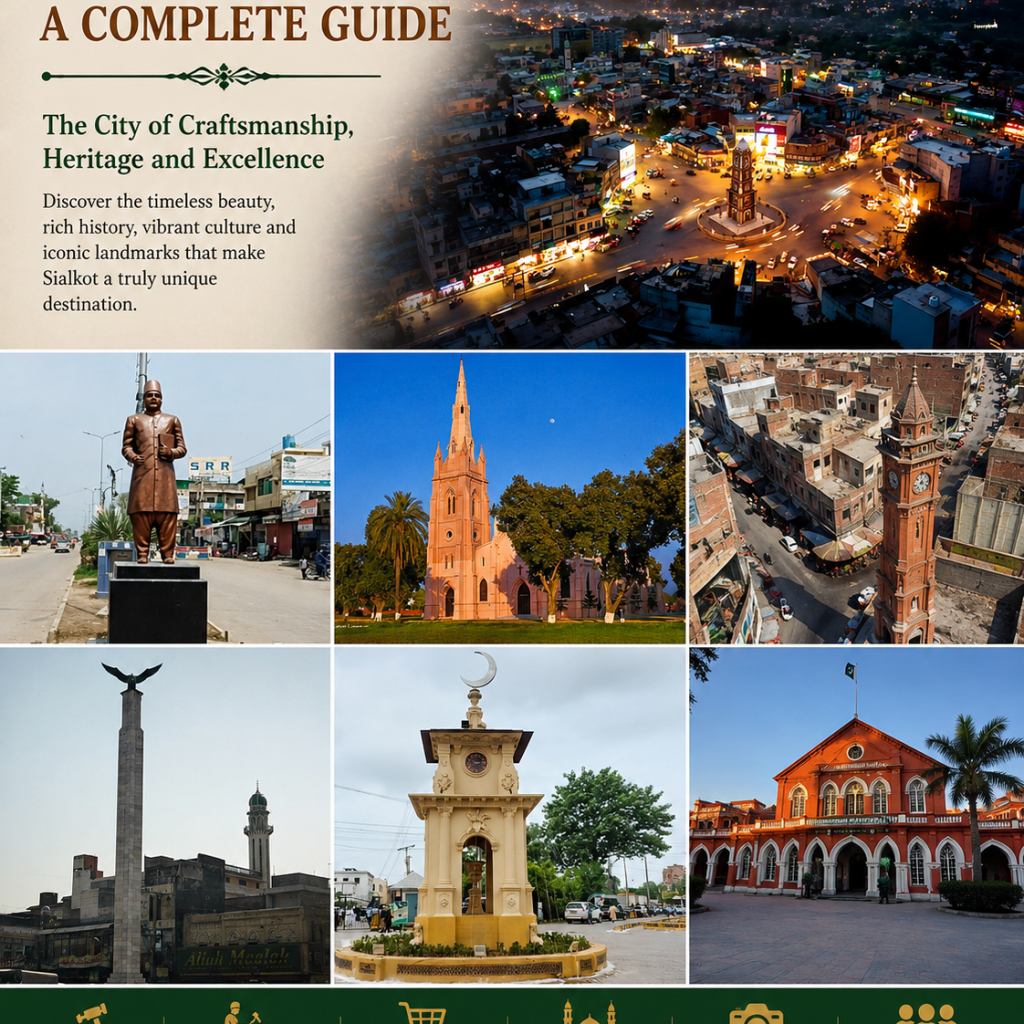
Iqbal Manzil is the great landmark the birthplace of the poet Allama Iqbal, who was born here in 1877. It is now a museum of his life, holding his personal belongings and his library for visitors.
City honours its poet. The city holds the unofficial title City of Iqbal. Schools celebrate his poetry.
Sialkot Fort recalls the past. The old fortification once guarded the city. Little of the original survives. It still marks the long history of the city.
Puran Well ties to folklore. It ties to the tale of Bhagat Puran. The tale is part of Punjabi folklore. The well draws the curious.
Workshops are the real sight. The industrial craft is a wonder to see. Footballs are hand stitched and cricket bats shaped from willow. Watching this craft is memorable.
Culture and the people of Sialkot
People are business minded, known across the country for a strong work ethic. Reliability and deadlines drive an economy whose disciplined, enterprising spirit built the whole export success.
Tradition remains strong. Neighbourhood life stays close knit. Evening tea, shared meals and weddings bind the community. These ties balance the industrial pace.
City values education. Many institutions serve the region. They cover medicine, engineering and law. A separate university serves women.
Sport is a passion. Cricket is the most popular game. Sport runs deep in a city that makes the sports equipment of the world.
Economy and property of Sialkot
Economy is export driven. Industry is the heart of the city. It draws workers from across the region and is a rare success story.
Property market is strong. The wealth of the city supports it. New societies ring the centre. Demand rises with the industry.
Connectivity boosts the market. Motorways link the city to Lahore and beyond. An international airport serves the district. These links lift the market.
The property choice is varied. The old city offers heritage and trade. New societies offer modern living, while the cantonment offers calm.
Visiting Sialkot
Come in autumn or spring. The climate is humid and subtropical. Summer is hot and wet. Winter is mild. Autumn and spring bring the finest weather.
Visit Iqbal Manzil. This is the heart of the heritage. The museum tells the story of the poet and holds his belongings. It is a place of national meaning.
See the craft in action. Some workshops welcome visitors. Watching the football stitching is memorable. The surgical workshops show fine skill.
Explore the wider region. The Golden Triangle cities lie close. Gujranwala and Gujrat both reward a trip. The dedicated guides cover them.
Frequently asked questions
What is Sialkot famous for? Sialkot is famous as one of the great export cities of the world. It is the global leader in hand stitched footballs, making most of those used worldwide, including balls for the World Cup. It is also the largest centre for surgical instruments and a renowned producer of leather goods. It is the birthplace of Allama Iqbal, earning it the title City of Iqbal. Its ancient roots reach back more than two thousand years to the city of Sagala.
Why does Sialkot make so many footballs? Sialkot became the world football capital through a long tradition of skilled craftsmanship. The sports industry was born in the late 19th century. Local craftsmen repaired equipment for the British army and then began their own production. The city developed a cluster model, where hundreds of small family workshops contribute to large exports. This hand stitching skill, passed down the generations, made Sialkot the leading producer of footballs on earth.
Who was born in Sialkot? Allama Muhammad Iqbal was born in Sialkot in 1877. He is the poet and philosopher regarded as the spiritual father of the country. This earned the city the unofficial title City of Iqbal. His birthplace, Iqbal Manzil, is now a museum containing his personal belongings and a library. Sialkot celebrates his poetry through schools and cultural events. Iqbal remains a source of deep pride for Sialkot.
How old is Sialkot? Sialkot is a very ancient city. It traces its origins to Sagala a thriving centre of Buddhist thought and culture described in ancient texts. The Indo Greek king Menander ruled here in the 2nd century BCE. Over the centuries the city absorbed Greek, Persian, Hindu and Islamic traditions. Legend links its founding to Raja Sul and its rebuilding to Raja Salivahan, whose fort gave the city its name.
What is the property market like in Sialkot? The property market in Sialkot is strong, supported by the wealth of its export industries. New housing societies ring the city. Demand rises with the industry. Buyers often include successful business families. Good connectivity, including motorways to Lahore and an international airport, lifts the market further. The old city offers heritage and trade. New societies offer modern living, while the cantonment offers a quieter setting.
Workshop of the world sports
Sialkot is a small city with a global reach. It hand stitches the footballs that fly at the World Cup. It forges the surgical tools that save lives across the world. It gave the nation the poet who dreamed it into being. It built a fortune from small family workshops and skilled hands. Few cities of its size matter so much to the world.
You may come to Sialkot for the industry the poet or the ancient history. The city rewards the visit either way. You can watch a football take shape by hand. You can stand in the house where Iqbal was born. You can trace the roots of the ancient city of Sagala. Come in autumn or spring and see the craft in action. Sialkot is the workshop of the world.