Sheikhupura: A Complete Guide
Sheikhupura is a city born of a Mughal emperor's love of the hunt. It was founded by Jahangir as a royal hunting retreat. It holds the beautiful Hiran Minar a tower raised for a beloved pet deer. It guards a great Mughal fort at its heart. It has grown into a busy industrial city on the Lahore plains. This guide covers Sheikhupura for the curious traveller. It explains the history the Mughal heritage the industry the sights the property scene and how to visit.
This guide offers a general overview. Dates for the monuments vary between sources.
Quick answer: Sheikhupura is a historic city in central Punjab, close to Lahore. It was founded in 1607 by the Mughal Emperor Jahangir as a hunting retreat. It takes its name from his nickname, Sheikhu. It is famous for the Hiran Minar a Mughal tower and pavilion built for his pet antelope. It holds the Sheikhupura Fort in its centre. It is now a major industrial city. Winter is the best time to visit.
About Sheikhupura
Sheikhupura is a historic city in central Punjab, close to Lahore. It blends deep Mughal heritage with a busy modern industry.
It was founded for the hunt. The Mughal Emperor Jahangir, who loved nature and the chase, built the city in 1607 as a royal hunting retreat. That royal past still defines it.
The setting is fertile plain. The city lies in the Bar tract. The Chenab canals water it. The flat, rich soil suits wheat, rice and sugarcane.
It is a busy industrial centre. The streets fill with local life, yet it keeps the spirit of the past.
History of Sheikhupura
Jahangir founded the city in 1607. He named it Jahangirpura at first, before the city took his childhood nickname Sheikhu to become Sheikhupura.
It was a royal hunting ground. The area was reserved for the hunt. Jahangir came here to hunt game. He built the fort and Hiran Minar for his royal visits.
It thrived under the Mughals. The city became a busy trade centre linked to Lahore by road and rail, with commerce flourishing throughout the Mughal empire.
The Sikh age followed. The Bhatti tribe held it after the Mughals. The Sikhs took it under Maharaja Ranjit Singh, whose family used the fort.
The British took over. They seized Punjab in 1849. The city became a district in 1920 and grew into a modern industrial place.
Mughal heritage of Sheikhupura
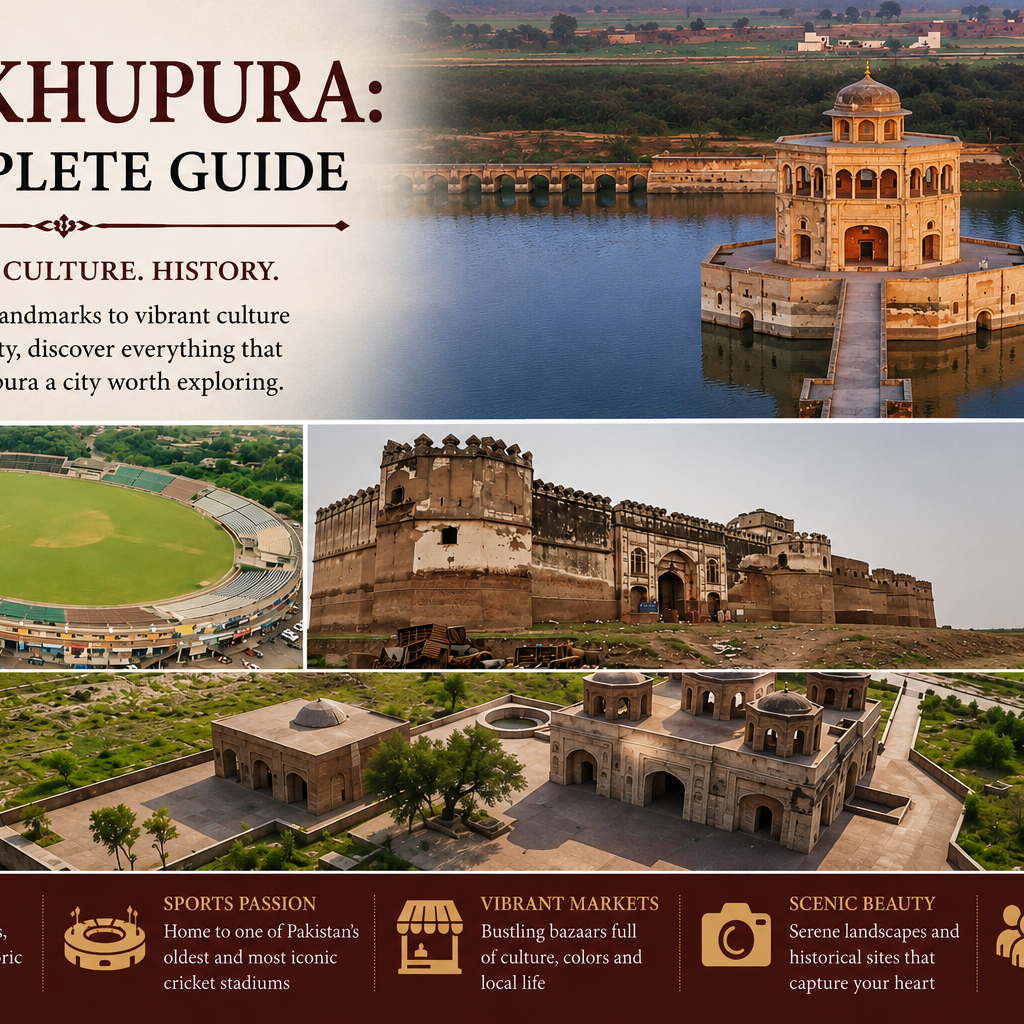
The Hiran Minar is the great treasure. Jahangir built it for his pet antelope Mansraj, its name meaning the Deer Tower in memory of the animal. It is one of the most photogenic sites in the region.
The complex is beautiful. A tall tower rises beside a great water tank. An elegant pavilion rises in the middle of the pool. A causeway links it to the shore. Families come here for picnics.
The tower has a touching story. Jahangir raised it in memory of his beloved deer, with stone carvings of antelope heads said to have once adorned the shaft. It embodies the Mughal bond with nature.
The Sheikhupura Fort is the other jewel. Jahangir built it in 1607 to serve as both a defensive structure and a royal residence for his visits. Its massive walls still impress in the centre of the old city.
The fort has a long story. It sheltered royal movements between Lahore and Delhi. Ranjit Singh later used it. Much of it now needs restoration, yet its scale still conveys Mughal power.
Industry and economy of Sheikhupura
Sheikhupura is an industrial giant. It is a major manufacturing centre. Textiles lead its industry. Many factories fill the district and drive the economy.
Industrial parks anchor the growth. The Rachna Industrial Park serves the city. The Quaid e Azam Business Park is another. These draw new industry to the area.
Agriculture supports the region. The fertile plains grow rich crops. Wheat, rice and sugarcane thrive alongside the industry.
The location is a great asset. The city lies close to Lahore. Roads and rail link the two. This proximity draws workers and trade.
Sights and surroundings of Sheikhupura
Hiran Minar is the must see. The Mughal complex is unforgettable. It is a fine day trip from Lahore and draws crowds on holidays.
The fort rewards a visit. The old Mughal fort lies in the centre. Its walls still stand tall and history fills its courtyards.
The old mosque and gardens charm. The Jah Masjid is the oldest in the region. Company Bagh is a peaceful garden. The Clock Tower marks the centre.
Nankana Sahib lies nearby. This holy Sikh city is close by. It is the birthplace of Guru Nanak and draws Sikh pilgrims from around the world. The dedicated guide to Nankana Sahib covers it.
Property market in Sheikhupura
The property market is growing. The industry and the link to Lahore drive it. New housing societies ring the city. Demand rises with the growth, fuelled by workers and families.
The Lahore link is central. The city lies within reach of the metropolis. It offers value beside the bigger city. Commuters look here for homes.
The option of properties is diverse. The old city provides heritage and business. The new societies provide a modern lifestyle. The outskirts provide space for development. All have their own buyers.
The city keeps growing. Industries attract new settlers. Housing develops outside. The connection to Lahore provides value.
Visiting Sheikhupura
Come in winter. The plains are hot and dry in summer. The winter months from November to February are best. The weather is pleasant then. This is the finest season.
See Hiran Minar first. This is the great highlight. The complex is beautiful in the cool light and suits a family picnic.
Explore the fort. The old Mughal fort lies in the centre. Its walls still tower over the city a window on the imperial past.
Combine it with Nankana Sahib. The holy Sikh city lies close by. It rewards a respectful visit. The dedicated guide covers it.
Frequently asked questions
Who founded Sheikhupura? Sheikhupura was founded in 1607 by the Mughal Emperor Jahangir. He built it as a royal hunting retreat as he loved nature and the hunt. The city was first called Jahangirpura and later took his nickname, Sheikhu, becoming Sheikhupura. He built the Sheikhupura Fort and the Hiran Minar during his reign. The city later passed to the Bhatti tribe then the Sikhs under Ranjit Singh. The British took over last.
What is Hiran Minar? Hiran Minar, meaning the Deer Tower, is an early 17th century Mughal complex in Sheikhupura. Emperor Jahangir built it in memory of his beloved pet antelope, Mansraj. The complex includes a tall tower and a massive water tank. An elegant pavilion rises in the middle of the pool, linked by a causeway. It embodies the Mughal love of nature and the bond between the emperor and his pet. It is one of the most photogenic sites in the region.
What is Sheikhupura famous for? Sheikhupura is famous for its Mughal heritage and its industry. Its greatest treasures are the Hiran Minar and the Sheikhupura Fort, both dating from 1607. The Hiran Minar was built for the pet deer of Jahangir. The city was founded by Jahangir as a hunting retreat. Today it is a major industrial centre, especially for textiles, with two large industrial parks. The holy Sikh city of Nankana Sahib also lies nearby.
Is Sheikhupura close to Lahore? Yes, Sheikhupura is located close to Lahore just forty kilometers. The two are linked by road and rail. This proximity fuels the economy of Sheikhupura. Many people commute between the cities. Sheikhupura offers good value for homes compared with Lahore. The closeness also makes Hiran Minar and the Sheikhupura Fort easy day trips from Lahore. The holy city of Nankana Sahib is also within reach.
When is the best time to visit Sheikhupura? The best time to visit Sheikhupura is winter, from November through to February, when the weather turns cool and pleasant for sightseeing. The plains are hot and dry in summer. Winter is ideal for exploring the Hiran Minar complex and the Sheikhupura Fort in comfortable weather. The Hiran Minar is especially beautiful in the cool light and suits a family picnic. It is an easy day trip from nearby Lahore.
Hunting city of Jahangir
Sheikhupura is a city born of an emperor's love of nature. Jahangir raised it as his retreat among the game and the gardens. He left it the tender monument of Hiran Minar for his deer. He gave it a great fort that still guards its heart. It has grown into a busy industrial city on the Lahore plains.
You may come to Sheikhupura for the Mughal heritage the industry or the nearby shrines. The city rewards the visit either way. You can picnic beside the pool at Hiran Minar. You can walk the walls of the old Mughal fort. You can visit the holy city of Nankana Sahib close by. Come in winter and start with the Deer Tower. Sheikhupura is the hunting city of Jahangir.