Sachal Sarmast and Daraza: A Complete Guide
Sachal Sarmast is one of the boldest voices in Sufi poetry. He wrote in seven languages. He sang of the unity of all existence. He challenged the religious orthodoxy of his age without fear. Devotees call him the poet of seven languages. His shrine at Daraza in Khairpur draws pilgrims and singers. This guide covers the poet and his shrine. It explains his life, his philosophy, his verse and how to visit.
This guide offers a general overview. Sources differ on the year of his death.
Quick answer: Sachal Sarmast was born with name Abdul Wahab Farooqi in 1739. His birthplace was Daraza near Ranipur in the Khairpur district. He wrote poetry in seven languages, most notably Sindhi and Siraiki. His pen name means truthful. Sarmast means ecstatic. He followed the doctrine of the unity of existence. Devotees call him the second Mansur for his bold verse. He died around 1827. His shrine at Daraza carries fine glazed tile work.
Life of Sachal Sarmast
He was born in 1739. His birthplace was the village of Daraza. That village lies near Ranipur in the Khairpur district. His given name was Abdul Wahab. His family bore the Farooqi name.
The family traced a distinguished lineage. They claimed descent from the second caliph of Islam. Daraza was long known for its dervishes. Several members of the family were mystics and poets.
His father died in his childhood. Khwaja Salahuddin Farooqui passed away when the boy was small. His uncle then raised him. That uncle became his spiritual master too.
He married within the family. His wife was the daughter of his uncle. She died only two years later. He never married again. He lived as an ascetic for the rest of his life.
He rarely left his village. Sachal spent almost his whole life at Daraza. He kept a simple diet and simple habits. He avoided the courts and the cities. This retirement shaped his independent voice.
He died around 1827. Sources give the year variously as 1825, 1827 or 1829. He was then in his eighties. His followers buried him at Daraza.
Meeting with Bhittai
Tradition records a famous meeting. Shah Abdul Latif Bhittai visited Daraza. Sachal was then a small child. The older poet is said to have recognised his gift.
The two represent different modes. Bhittai wrote with restraint and folk imagery. Sachal wrote with open ecstasy and challenge. Together they define the two poles of Sindhi Sufi verse.
Name and the titles
His pen name means truthful. The Sindhi word sachu carries that sense. He used Sachal as his signature in verse. Devotees also called him Sachoo.
Sarmast means ecstatic. The word describes a state of spiritual rapture. Together the names mean the truthful mystic. Some render it as the ecstatic saint of truth.
Devotees gave him many titles. They called him Shair e Haft Zaban. That title means the poet of seven languages. They also called him Sartaj us Shuara the crown of poets.
They named him the second Mansur. This compares him to Mansur al Hallaj. That earlier mystic was executed for his bold declarations. The comparison reflects the daring of the verse of Sachal.
Seven languages
He composed in seven tongues. His languages were Sindhi, Siraiki, Persian, Urdu, Balochi, Punjabi and Arabic. Few poets of the region matched this range. This command earned him his famous title.
Sindhi and Siraiki carry his best known work. Singers perform these verses across the province. His Persian poetry runs to several compilations. The Diwan i Ashkar and the Dard Nama are among them.
He wrote a very great deal. Estimates of his output run extremely high. His verse covers divine love, spiritual ecstasy and the search for truth. His range is remarkable in every language.
The philosophy
He followed the unity of existence. Scholars call this doctrine wahdat al wujud. It holds that all being flows from one divine reality. This idea runs through his entire body of work.
He challenged religious orthodoxy. The clergy of his day held great authority. Sachal questioned their rigidity openly. He argued for the inner path over outward form. This boldness defines his reputation.
He preached tolerance and harmony. His verse welcomed people across religious lines. He wrote of love for all humanity. He rejected division by creed or background.
His work drew on many traditions. He read deeply in Persian and Arabic. He absorbed the Sufi masters before him. He then wrote in the plain speech of his own country.
Shrine at Daraza
The shrine lies at Daraza Sharif. The village is around forty kilometres from Khairpur city. Ranipur lies close by. The N 5 highway passes nearby.
A Talpur ruler built the tomb. Mir Rustam Khan Talpur ordered its construction. The Talpur rulers of Khairpur revered the Sufi saints of their state. They raised tombs for many of them. The dedicated guide to Khairpur covers that dynasty.
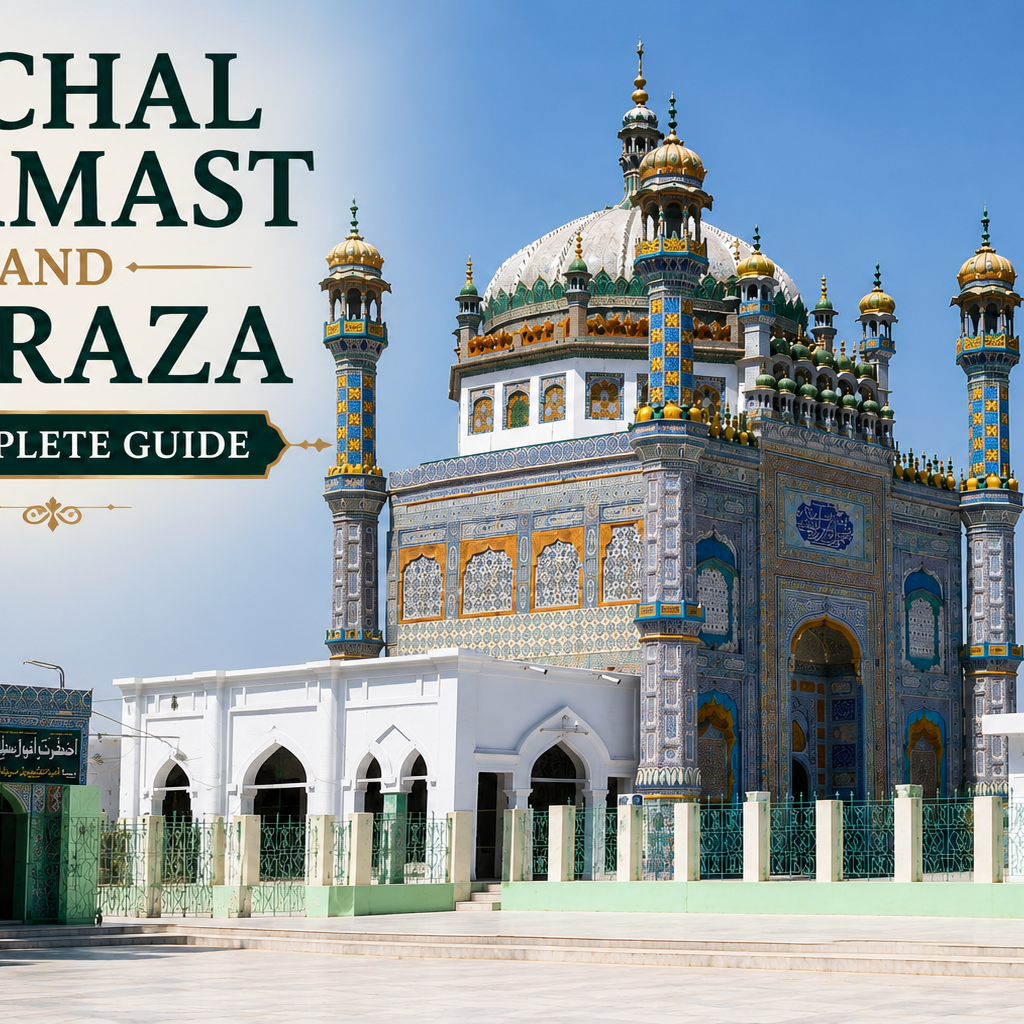
Later patrons decorated it. Sakhi Qabool Muhammad II renovated the shrine. Craftsmen covered it in glazed tiles. The blue and white work is beautiful. Paintings decorate the interior of the tomb.
The Urs draws devotees each year. Pilgrims gather at the shrine for the anniversary. Singers perform his verse through the nights. Faqirs come from across the province. The festival fills the small village with music.
Visiting Daraza
The village lies in the Khairpur district. Daraza is around forty kilometres from Khairpur city. Ranipur is the nearest town. The N 5 highway gives good access. Sukkur lies within easy reach.
Combine it with the Khairpur sites. Faiz Mahal and Kot Diji Fort both lie in the district. Each has its own dedicated guide. The three make a full day of Talpur history.
Visit respectfully. The shrine is an active place of worship. Dress modestly and remove your shoes. The cooler months from November to February are the most comfortable.
Frequently asked questions
Who was Sachal Sarmast? Sachal Sarmast was born Abdul Wahab Farooqi in 1739. His birthplace was Daraza near Ranipur in the Khairpur district of Sindh. He was a Sufi poet, mystic and philosopher. He wrote in seven languages and followed the doctrine of the unity of existence. He challenged religious orthodoxy openly in his verse. He died around 1827, though sources give the year variously.
Why is Sachal Sarmast called the poet of seven languages? Devotees called him Shair e Haft Zaban, meaning the poet of seven languages. He composed verse in Sindhi, Siraiki, Persian, Urdu, Balochi, Punjabi and Arabic. Few poets of the region matched this range. His best known work is in Sindhi and Siraiki. Singers perform those verses across the province. His Persian poetry runs to several compilations.
What does the name Sachal Sarmast mean? The name combines two words. Sachal derives from the Sindhi sachu, meaning truthful. He used it as his pen name in verse. Sarmast means ecstatic and describes a state of spiritual rapture. Together the names mean the truthful mystic. Some render the phrase as the ecstatic saint of truth. Devotees also called him Sachoo.
Where is the shrine of Sachal Sarmast? The shrine lies at Daraza Sharif in the Khairpur district of Sindh. The village is around forty kilometres from Khairpur city. Ranipur is the nearest town. The N 5 highway passes nearby. Mir Rustam Khan Talpur built the tomb. Sakhi Qabool Muhammad II later renovated it and covered it in glazed tiles.
Why is Sachal Sarmast called the second Mansur? Devotees compare him to Mansur al Hallaj. That earlier mystic was executed for declarations the orthodoxy of his time found unacceptable. Sachal wrote with similar daring about the unity of existence. He questioned the rigidity of the clergy openly. The comparison honours the boldness of his verse rather than his fate.
Truthful mystic of Sindh
Sachal Sarmast wrote with a freedom few poets have matched. He sang the unity of all existence in seven languages. He argued for the inner path against outward form. He questioned the authority of his age without flinching. He lived simply in one small village all his life. His verse still travels far beyond it.
You may come to Daraza for the poetry the philosophy or the shrine. This quiet village rewards the visit either way. You can look at the glazed tiles that cover his tomb. You can hear his verse sung by the faqirs. You can pair the trip with Faiz Mahal and Kot Diji nearby. Come in the cooler months and dress respectfully. Sindh has few voices as fearless as this one.