Rawalpindi: A Complete Guide
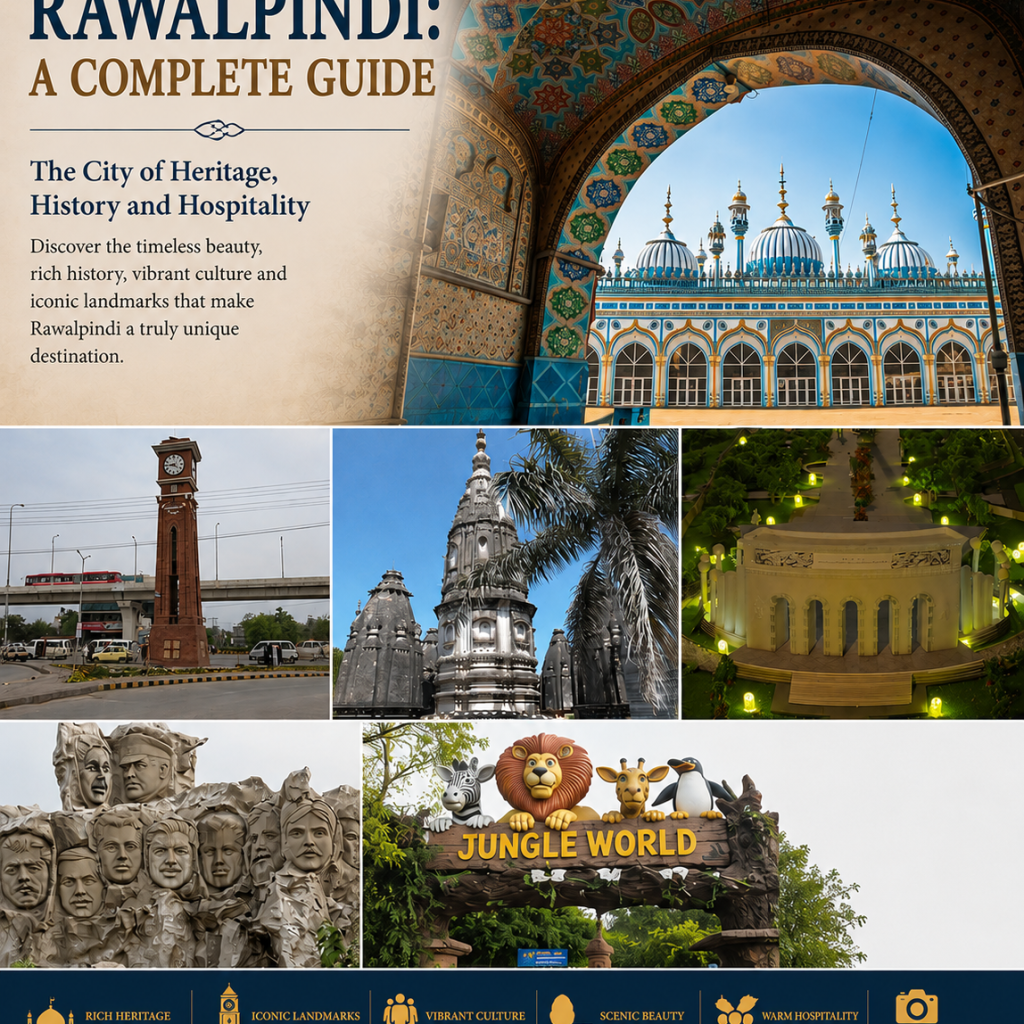
Rawalpindi is the bold and bustling twin of Islamabad. It grew organically over centuries into a great commercial city. Its bazaars teem with life from morning until late night. It is the headquarters of the army and the gateway to the north. It makes a vivid contrast to the calm, planned capital beside it. This guide covers Rawalpindi for the curious traveller. It explains the history the twin city bond the bazaars the sights the property scene and how to visit.
This guide offers a general overview. Figures for the population vary between sources.
Quick answer: Rawalpindi is a historic city in the north of Punjab. It is the twin city of Islamabad the capital. The two lie right beside each other. It grew as a garrison town and a trade hub linking Punjab to Kashmir. It is the headquarters of the army. Raja Bazaar and Saddar are its great commercial districts. It is the gateway to Murree, Kashmir and the north. Autumn and spring are the best times to visit.
About Rawalpindi
Rawalpindi is a great commercial city in the north of Punjab, dense, historic and full of life.
It is the twin of Islamabad. The capital lies right beside it. Many visitors stay in one and explore both.
Two cities make a study in vivid contrast. Islamabad is calm, green and carefully planned, while Rawalpindi is bold, dense and organic in the way it has grown. The capital handles government while Rawalpindi handles commerce.
The city is a great crossroads. It links Punjab to Kashmir and the north. Its location as the gateway to Murree has always given it value.
History of Rawalpindi
Roots reach deep. The wider region holds ancient history. It shares this ancient heritage with Islamabad.
It was a great trade hub. Rawalpindi linked Punjab to Kashmir and beyond, with goods flowing through it for centuries to build the wealth of the city.
British made it a garrison. They developed it into a major military town and laid out the Saddar cantonment, with its ordered colonial streets and bungalows.
Old city grew alongside. Raja Bazaar and its markets expanded. The two halves developed together and still shape the city.
The capital changed everything. Islamabad rose beside it in the 1960s while Rawalpindi hosted the national government throughout its construction, forging the enduring twin city bond.
The twin city and the garrison
Twin city bond is central. Rawalpindi and Islamabad share a metropolitan area. The Metrobus links the two. They function as a single hub.
Garrison role is defining. Rawalpindi is the headquarters of the army, where the General Headquarters lies and military institutions shape parts of the city.
City serves the north. It is the gateway to Murree and the hills. It links to Azad Kashmir and the mountains a vital junction.
The economy is powerful. Rawalpindi built its wealth before Islamabad existed.
Bazaars of Rawalpindi
Raja Bazaar is the great market and the commercial heart of the city, where narrow alleys teem with life from morning until late. Spices, jewellery and household goods fill it.
Moti Bazaar serves the bride. It focuses on women's fashion. Bridal wear and embroidered shawls fill it. Bangles glitter in the stalls. It is a hub for wedding shopping.
Sarafa Bazaar deals in gold. It is famous for beaten gold and silver. Brass and copperware feature too. It is the place for precious metal.
The other bazaars each have a role. Kashmiri Bazaar and Ganj Mandi trade in goods and grain. Urdu Bazaar is a haven for books. Many traders are second or third generation.
Saddar offers modern shopping. This cantonment district is more ordered. Bank Road holds branded outlets and bookshops. The CSD Mega Mall blends tradition with modern retail.
Sights in Rawalpindi
Ayub National Park is a green escape. It spreads over a huge area on the edge of the city. Families gather for outdoor fun. Gardens a lake and rides fill it.
Liaquat Bagh is a historic park. It was once known as Company Bagh. The first Prime Minister was assassinated here in 1951. It lies near Saddar a place of memory.
Army Museum tells the military story. It offers insight into the history of the forces. The Rawalpindi Cricket Stadium is nearby too.
Food streets are legendary. Saddar, Murree Road and Committee Chowk draw the crowds. The food is authentic and satisfying. Street stalls fill the evenings.
Economy and property of Rawalpindi
Economy is strong and connected. Rawalpindi is one of the most connected cities in the country.
Property market is active. The twin city bond drives demand. Bahria Town and DHA lie in the area, each with its own dedicated guide. Buyers value the link to the capital.
Location shapes the market. Saddar suits those who want the centre. Murree Road is the main artery. The cantonment offers a quieter, ordered setting. Each area suits a different buyer.
The wider district is growing. New societies spread across the area. The link to Islamabad lifts values.
Visiting Rawalpindi
Come in autumn or spring. Summer is hot and can exceed forty degrees. Winter can approach freezing. Autumn and spring bring the finest weather. These seasons suit exploring the city.
Explore both twin cities. Stay in Saddar for the central location. See Islamabad by day and eat in the old bazaars by night. The Metrobus links the two.
Dive into Raja Bazaar. This is the soul of the city. Wander the narrow lanes and bargain in the old shops. It is daily life, not curated tourism.
Use it as a gateway. Rawalpindi is the base for the north. Murree the hills and Azad Kashmir all lie close.
Frequently asked questions
What is the difference between Rawalpindi and Islamabad? Rawalpindi and Islamabad are twin cities that share a region and a metropolitan area. Islamabad is the modern capital, built in the 1960s as a calm, green and carefully planned administrative city. Rawalpindi is much older and grew organically over centuries as a garrison and commercial city. It is bold, dense and full of life, with chaotic bazaars and a powerful economy. The Metrobus links the two. Many people live in one and work in the other.
What is Rawalpindi famous for? Rawalpindi is famous as the twin city of Islamabad and the headquarters of the army, home to the General Headquarters. It is known for its lively bazaars, especially the historic Raja Bazaar. It is a great trade hub and the gateway to Murree the northern hills and Azad Kashmir. Its food streets in Saddar and along Murree Road are legendary. It grew as a garrison town under the British and built its wealth long before Islamabad ever existed beside it.
What are the best bazaars in Rawalpindi? Raja Bazaar is the most famous a sprawling network of alleys selling spices, jewellery and household goods. Moti Bazaar is dedicated to women's fashion, bridal wear and bangles. Sarafa Bazaar is known for beaten gold and silver jewellery. Kashmiri Bazaar, Ganj Mandi and Urdu Bazaar trade in goods, grain and books. For modern shopping the Saddar cantonment area offers branded outlets on Bank Road and the CSD Mega Mall.
Is Rawalpindi a good place to visit as a tourist? Rawalpindi is definitely a worth visiting place along with Islamabad, and one should not miss the experience. The bazaars provide real glimpses of day-to-day activities and transactions. There is an Ayub National Park for a green retreat in Rawalpindi. In addition, there is Liaquat Bagh and the Army Museum that adds historical flavor to Rawalpindi. It has some of the best food streets in Pakistan.
What is the property market like in Rawalpindi? The property market in Rawalpindi is active, driven by the twin city bond with Islamabad. Large housing societies such as Bahria Town and DHA lie in the area and have their own dedicated guides. Buyers value the link to the capital. Proximity to Islamabad lifts values across the district. Saddar suits those who want a central location, while the cantonment offers a quieter, more ordered setting. New societies continue to spread across the area.
Bold twin of the capital
Rawalpindi is the bold and beating heart beside the calm capital. It grew over centuries into a great city of trade and movement. Its bazaars teem with life from dawn until late night. It commands the army and guards the gateway to the north. It gives the twin cities their energy and their soul. Few cities carry such history and such life.
You may come to Rawalpindi for the bazaars the food or the road to the hills. The city rewards the visit either way. You can lose yourself in the alleys of Raja Bazaar. You can eat your way along the food streets of Saddar. You can use it as your base for Murree and the north. Come in autumn or spring and explore both twin cities. Rawalpindi is the foundation on which the capital rests.