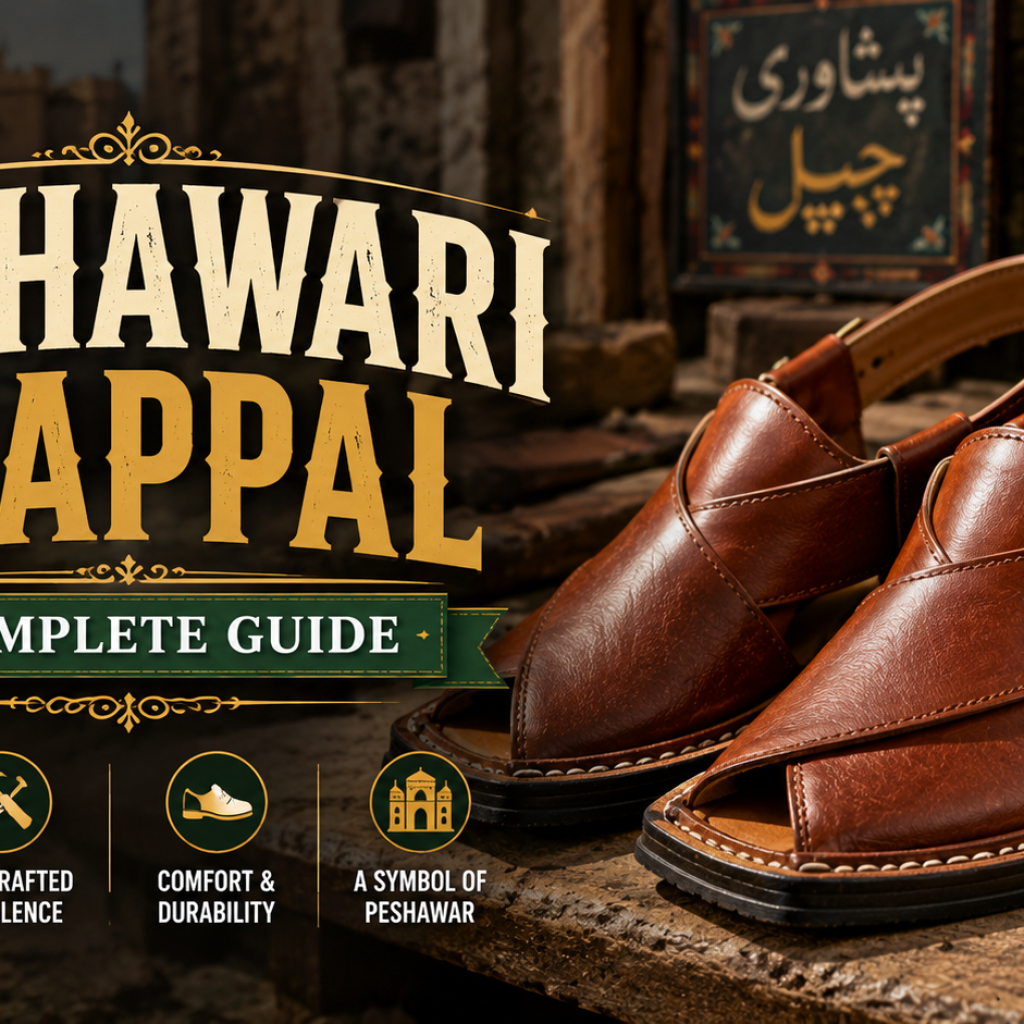
Peshawari Chappal: A Complete Guide
Peshawari chappal is the proud footwear of the frontier. Skilled hands stitch each sandal from tough leather. Two broad straps cross the foot above a thick sole. Many regard it as the national footwear of Pakistan. Men wear it with the shalwar kameez across the land. This guide covers the Peshawari chappal for the curious traveller. It explains the sandal, its origins the making the styles, its meaning and how to choose a pair.
This guide offers a general overview. Details and figures vary between sources.
Quick answer: The Peshawari chappal is a traditional leather sandal from Peshawar in Khyber Pakhtunkhwa, often called the national footwear of Pakistan. A semi closed shoe, it has two wide straps crossing the foot and a buckled heel strap, set on a thick, sturdy sole. Craftsmen hand stitch it from genuine leather with the sole often cut from a truck tyre for durability. Men wear it with the shalwar kameez, casually or at weddings and festivals. Charsadda is famed as the heartland of the craft.
Footwear of the frontier
Peshawari chappal is the classic footwear of the north. Men wear it with the shalwar kameez daily. Its sturdy leather suits the rugged country. So the sandal marks the dress of the frontier.
A semi closed shape defines the sandal. Two wide straps cross over the foot. A heel strap with a buckle holds it firm. So the wearer adjusts it for comfort.
A sturdy build marks the footwear. Thick leather forms the straps and sole. A tough base withstands hard ground. So the sandal lasts for many years.
A national symbol crowns the chappal. Many call it the footwear of Pakistan. Men wear it from Peshawar to Karachi. So the sandal crosses the whole country.
Born in Charsadda and Peshawar
Peshawari chappal was born in the frontier towns. Charsadda and Peshawar shaped the craft. Skilled hands have made it for generations. So the sandal springs from a long tradition.
An old craft marks the towns and artisans first made the sandal long ago. They sought a tough shoe for the terrain. So the chappal met the need for durable footwear.
A famous heartland shapes the craft. Charsadda rests north of Peshawar city. Its artisans make the finest chappals. So the town ranks as the home of the craft.
A wide spread carried the sandal. Travellers took it across the subcontinent. Punjab and Sindh took up the style. So the chappal spread far from its home.
Leather and the tyre sole
Peshawari chappal is made from tough leather by hand. Craftsmen cut and stitch each pair. A thick sole gives it long life. Simple tools shape the lasting sandal.
Genuine leather forms the sandal. Buffalo hide often makes the sole. Cowhide shapes the crossing straps. So fine leather gives the chappal its strength.
A tyre sole lends great durability. Craftsmen cut the base from a truck tyre. Its tough rubber grips the ground. So the sole lasts for years of wear.
Skilled hands stitch each pair. Craftsmen work the leather by hand. Old methods pass down the generations. So each sandal bears the mark of its maker.
Styles of the chappal
Peshawari chappal comes in several styles. A Charsadda style suits everyday wear. Modern forms add a sleek new look. Each style bears its own character.
A Charsadda style marks daily wear. Its single sole bends soft and light. Matte leather shapes the simple straps. So the style suits easy, everyday use.
A modern style gained wide fame. Its rounded toe and cushioned sole please. City folk pair it with jeans or kameez. So the sleek form won a new following.
Other styles fill the market. A pointed Norozi lasts through hard wear. A Kohati style shows a broad front strap. So the many forms suit every taste.
Symbol of Pashtun dress
Peshawari chappal is a symbol of Pashtun dress. Men wear it at weddings and festivals, where the sandal marks respect for old custom. So the footwear carries a deeper meaning.
A festive role marks the sandal. Weddings and Eid call for the chappal. Fine pairs complete the traditional dress. So the sandal graces special days.
A shared footwear crosses all ranks. Farmers and businessmen both wear it. Students and elders favour the sandal. So the chappal unites every walk of life.
A proud heritage clings to the craft. A fine sandal reflects Pashtun values and skill. Generations have kept the tradition alive. So the chappal honours a living culture.
Choosing a pair ofPeshawari chappal
Peshawari chappal rewards a careful choice. Genuine leather marks the finest pairs. A firm sole promises long wear. Simple checks reveal an authentic sandal.
Real leather marks a fine pair. Natural marks show on its surface. A soft, earthy feel confirms the hide. So the material reveals a true chappal.
A sturdy sole promises long life. Thick leather or tyre bases wear best. A firm stitch holds the straps tight. So a solid build rewards the buyer.
A famous source ensures quality. Charsadda pairs enjoy the best name. Local markets offer many styles. So a trusted maker guides the choice.
Frequently asked questions
What is a Peshawari chappal? A Peshawari chappal is a traditional leather sandal from the city of Peshawar in Khyber Pakhtunkhwa, often regarded as the national footwear of Pakistan. It is a semi closed shoe with two wide straps crossing over the foot and a heel strap fastened with a buckle, set on a thick, sturdy sole. Hand stitched from genuine leather with the sole often cut from a truck tyre for durability, it is worn mainly by men with the shalwar kameez. Comfortable and long lasting, it is worn both casually and on special occasions across the country.
Where does the Peshawari chappal come from? A frontier craft the Peshawari chappal comes from the towns of Peshawar and Charsadda in Khyber Pakhtunkhwa, where artisans have made it for generations. Its beginnings trace back to around the late nineteenth century, when it was crafted as a tough, comfortable alternative to wooden sandals, suited to the rugged country. Charsadda a town north of Peshawar, is widely regarded as the heartland of the craft, its hand made chappals considered the finest. Over time the sandal spread across the subcontinent, becoming a symbol of Pashtun identity and a favourite far beyond its home.
What is the Peshawari chappal made of? A Peshawari chappal is made mainly from genuine leather, worked and stitched entirely by hand. A sole is traditionally cut from tough buffalo hide or from a truck tyre, giving it great durability, while the crossing straps are often made from softer cowhide. Craftsmen, known locally as mochi, shape and stitch each pair using methods passed down through the generations. So the result is a hard wearing sandal that can last for years. An authentic pair is prized for its genuine leather and careful, handmade construction.
What are the different styles of Peshawari chappal? A rich craft the Peshawari chappal comes in several styles, each with its own character. A Charsadda style is light and simple with a single flexible sole and soft matte leather, favoured for everyday wear. A modern, sleeker version with a rounded toe and cushioned sole has gained wide popularity in recent years, often worn with jeans as well as traditional dress. Other styles include the pointed, hard wearing Norozi and the Kohati, known for its broad front strap. Each shares the same basic design while offering a distinct look and feel.
How can you tell a genuine Peshawari chappal? A genuine Peshawari chappal can be told above all by its leather and its craftsmanship. Real leather shows natural marks and slight imperfections on its surface, has a soft, flexible feel and a distinct earthy smell, unlike the stiff, chemical feel of synthetic materials. A well made pair has a thick, firm sole, whether of layered leather or tyre rubber with neat, strong stitching holding the straps. Chappals from Charsadda are widely regarded as the gold standard, so buying from a trusted maker or market is the surest way to find an authentic pair.
Timeless sandal of Peshawar
Peshawari chappal is the timeless sandal of Peshawar. Skilled hands stitch each pair from tough leather. Two broad straps cross the foot above a thick sole. Many regard it as the national footwear of Pakistan. Men wear it with the shalwar kameez across the land. Few sandals carry such heritage and pride.
You may come to Peshawar or Charsadda for a fine pair. This sandal rewards the visitor either way. You can watch the craftsmen stitch the leather by hand. You can try on the many styles in the bazaar. You can wear a pair with your shalwar kameez. Come to the frontier and discover the timeless sandal of Peshawar. This is the proud Peshawari chappal.


