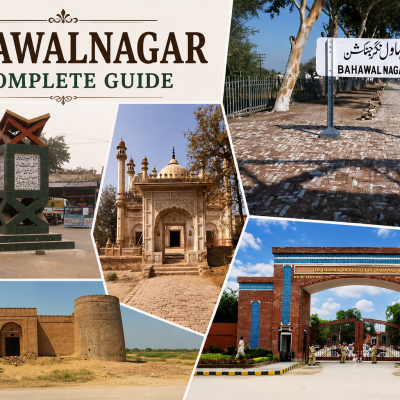
Pakpattan: A Complete Guide
Pakpattan is one of the holiest cities in the country. It cradles the shrine of Baba Farid a beloved Sufi saint and poet. Its name means the Holy Ferry a crossing on the Sutlej River. It draws up to two million pilgrims each year for the great Urs festival. This guide covers Pakpattan for the curious traveller. It explains the history the shrine the pilgrimage the sights the property scene and how to visit.
This guide offers a general overview. Figures for the population and the pilgrimage vary between sources.
Quick answer: Pakpattan is a historic city in eastern Punjab, near the right bank of the Sutlej River around 184 kilometres south west of Lahore. It was known in ancient times as Ajodhan a crossing on the Sutlej. It took the name Pakpattan, meaning Holy Ferry, from the great Sufi saint Baba Farid. His shrine is one of the most revered in the country and draws up to two million pilgrims to its annual Urs. Winter is the best time to visit.
About Pakpattan
Pakpattan is a historic and holy city in eastern Punjab. It is located near the right bank of the Sutlej River. It is one of the great centres of Sufism in the country. It is famous above all for the shrine of Baba Farid.
A river plain forms the setting. This city rests on a raised mound near the Sutlej. This mound is the site of the ancient town. Fertile farmland surrounds it on every side.
Its name reflects its sanctity. Pakpattan means the Holy Ferry or Pure Crossing. It combines two words: pak, meaning pure, with pattan, meaning landing. This name honours the spiritual influence of Baba Farid.
An older name was Ajodhan, used for centuries for this crossing on the Sutlej. Both names ajodhan and Pakpattan, were long used together.
History of Pakpattan
Its roots run deep into antiquity. Ajodhan existed long before the modern borders. It was a fortified point on the Sutlej crossing. Its origins reach back to the pre Islamic period.
Baba Farid transformed the city. This great Sufi saint settled here in the 13th century. His spiritual influence gave the city its holy name. He died here in 1265 and was buried in the town.
Great travellers wrote of the city. Ibn Battuta visited in 1334 and recorded its prosperity. Tamerlane spared the city out of respect for the saint. This reverence protected it during a violent age.
Pakpattan changed hands often. It was destroyed and rebuilt many times over the centuries. Sikhs took it in the early 19th century then the British annexed it with Punjab in 1849.
This shrine grew in power. Its keepers once held an autonomous state, defended by loyal clansmen. This gave the shrine great political weight.
Shrine of Baba Farid
Baba Farid was a great saint and poet. He was a 13th century mystic of the Chishti order. He was also a celebrated poet of the Punjabi language. He is one of the most beloved figures in the area.
This shrine is deeply revered. It holds the tomb of Baba Farid in white marble. An old mosque rises beside it. Its own dedicated guide covers the shrine in detail.
This shrine bridges two faiths. Poetry by Baba Farid was included in the Sikh holy book. Guru Nanak came here to collect his verses. Sikhs and Muslims alike revere the saint.
Its tomb has two great gates. Nuri Darwaza is the Gate of Light. Bahishti Darwaza is the Gate of Paradise. These gates are central to the pilgrimage.
Great Urs and pilgrimage of Pakpattan
This Urs is a vast festival. It marks the death anniversary of Baba Farid. It is held in the Islamic month of Muharram. It draws up to two million pilgrims to the city.
Bahishti Darwaza is the centre of the rite. Pilgrims pass through the Gate of Paradise during the Urs. Many believe the passage cleanses them of sin. This ritual is the great event of the festival.
Pilgrims come from across the country and beyond, for the sanctity of the shrine is known as far as Central Asia.
This city fills with devotion. Music, prayer and charity mark the days of the Urs. Its whole population turns to the festival. It is a powerful expression of Sufi devotion.
Sights and the food of Pakpattan
This shrine is the great draw. A tomb and mosque of Baba Farid rise at the heart of the city. Pilgrims fill the courtyards throughout the year.
Chan Pir Darbar is located nearby. This shrine holds a spring festival in March. It honours another Sufi saint of the area. It is a centre of local devotion.
Tosha sweet is a speciality. Pakpattan is famous for this unique sweet. It was first made here in the city. Pilgrims carry it home as a blessing.
Rivers and canals add interest. Sutlej waters flow near the city, with the Pakpattan canal watering the district.
Economy and property in Pakpattan
Farming anchors the economy. Fertile plains grow cotton, wheat and sugarcane. Canal irrigation waters the fields. Farming supports much of the district.
Pilgrimage drives trade. This shrine draws visitors throughout the year. Their custom supports shops, lodgings and food stalls. This spiritual tourism is a great economic force.
Property here is steady. Farming wealth and the pilgrim trade support the market. New housing schemes ring the city. Demand rises with the growth of the district.
Location aids the market. Pakpattan is located within reach of Sahiwal and Lahore. Road links serve the district. This connectivity lifts the property market.
Visiting Pakpattan
Come in winter. These plains are very hot in summer. Winter months from November to February are the finest season. Weather is cool and pleasant then.
Visit the shrine of Baba Farid. This is the great spiritual highlight. Its evening devotions are especially moving. A dedicated guide covers the shrine.
Time it with the Urs. This great festival fills the city with pilgrims. Passing through the Bahishti Darwaza is a powerful experience. Expect vast crowds during the Urs.
Taste the Tosha. This local sweet is a great speciality. Seek it out in the old bazaars. Pilgrims carry it home as a blessing.
Frequently asked questions
Why is Pakpattan famous? Pakpattan is famous as the resting place of Baba Farid a beloved 13th century Sufi saint and Punjabi poet of the Chishti order. His shrine is considered the most significant in Punjab and draws up to two million pilgrims to its annual Urs festival. This city, once known as Ajodhan, took the name Pakpattan, meaning Holy Ferry, from the spiritual influence of the saint. During the Urs, pilgrims pass through the Bahishti Darwaza the Gate of Paradise, in a famous ritual.
Who was Baba Farid? Baba Farid also known as Fariduddin Ganjshakar, was a 12th and 13th century Punjabi Muslim mystic and poet of the Chishti order of Sufism. He settled in Pakpattan then known as Ajodhan. His spiritual influence transformed the city and gave it its holy name. He is one of the most beloved figures in the area, revered by Muslims and Sikhs alike. His Punjabi poetry was later included in the Sikh holy book the Guru Granth Sahib.
What is the Bahishti Darwaza? Bahishti Darwaza the Gate of Paradise, is one of the two great gates of the shrine of Baba Farid. Its counterpart is the Nuri Darwaza the Gate of Light. During the annual Urs festival, pilgrims pass through the Bahishti Darwaza in a famous ritual. Many believe the passage cleanses them of their sins. This crossing is the principal event of the Urs and draws enormous crowds to the shrine in Pakpattan.
What was the old name of Pakpattan? Pakpattan was known in ancient times as Ajodhan a fortified settlement on a raised mound beside the Sutlej River. It served as an important crossing point on the river and dates back to the pre Islamic period. As the shrine of Baba Farid grew in significance the name Pakpattan, meaning Holy Ferry, gradually eclipsed the older name. Both names were long used together in local and administrative records, including in the Ain i Akbari.
When is the best time to visit Pakpattan? Winter, from November to February, is the best time to visit Pakpattan, when the weather is cool and pleasant. These plains are very hot in summer. Winter suits a visit to the great shrine of Baba Farid and the old bazaars where the famous Tosha sweet can be found. Timing a trip with the annual Urs festival offers a powerful experience of Sufi devotion. It fills with vast crowds of pilgrims then.
Holy city of Baba Farid
Pakpattan is the holy city of the great saint Baba Farid. It rose from the ancient crossing of Ajodhan on the Sutlej. It took its name and its fame from the beloved Sufi poet. It draws millions to its gates in the days of the great Urs. It offers the sweet Tosha as a blessing to its pilgrims. Few cities hold such devotion in their heart.
You may come to Pakpattan for the shrine the pilgrimage or the poetry. This city rewards the visit either way. You can bow at the marble tomb of the great Sufi saint. You can pass through the Gate of Paradise in the days of the Urs. You can taste the sweet Tosha in the old bazaars. Come in winter and feel the devotion of the place. Pakpattan is the holy city of Baba Farid.