Pakistani Truck Art: A Complete Guide
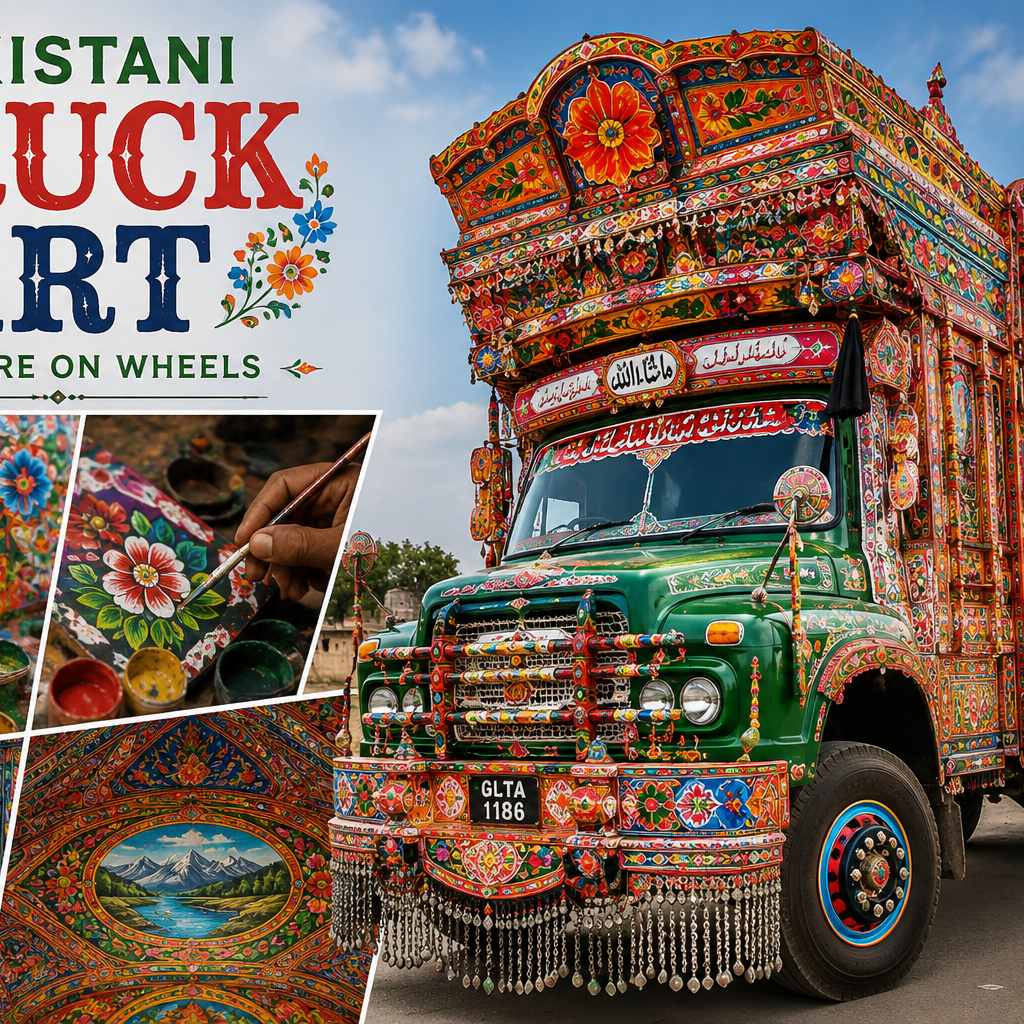
Pakistani truck art is one of the most joyful traditions of the country. It turns ordinary trucks into moving murals of flowers, poetry and painted faces. Every area adds its own signature style. This craft carries the pride and identity of the drivers who own it. This guide covers the truck art of Pakistan. It explains the history the regional styles the techniques the meaning and where to see it.
This guide offers a general overview. Styles and terms vary between areas and workshops.
Quick answer: Pakistani truck art is the tradition of decorating trucks with vivid painting and ornament. It is called phool patti in Urdu and jingle trucks abroad. This craft grew from the arrival of trucks in the early 20th century. Karachi became a great hub after 1947. Craftsmen use hand painting, reflective tape, mirror work, wood and metal. Motifs include flowers, birds, scenery, poetry and portraits. Each area has its own distinct style. This art carries the pride and identity of the owner.
About Pakistani truck art
Truck art turns vehicles into moving murals. Craftsmen cover trucks in bright colour and ornament. They call the result a work of folk art. In Urdu the craft is called phool patti.
This art is exuberant. It fills every surface of the truck with flowers, birds, scenery, poetry and portraits.
It adorns more than trucks. Buses, rickshaws, minivans and tractors carry it too. It has even spread to cars and aircraft.
Drivers cherish their trucks. They call a decorated truck a bride. A truck is a source of great pride.
History of Truck Art
This tradition has ancient roots. Some trace it to the Indus Valley. People there decorated their boats and animals. This habit of adornment runs deep. Skilled painters later made glorious horse drawn carriages in the days of the Raj. This tradition passed on to motor transport.
Trucks arrived in the early 20th century. Bedford trucks came from Britain in the 1920s. General Motors brought trucks to Karachi in the 1930s. Companies embossed logos on them at first.
Truck art grew after 1947. Karachi became a hub for truck painting. Craftsmen flocked there for work. Long haul drivers made their trucks personal canvases. Decoration grew richer over the decades.
Global attention came in the 1970s, when foreign tourists began photographing the bright vehicles. Workshops in Karachi, Rawalpindi and Peshawar grew into a distinct industry by the 1980s.
Regional styles in Truck Art
Styles vary dramatically across the country. Each part of the country reflects its own traditions and materials. A viewer can often name the origin of a truck at a glance.
Karachi is known for dazzle. Its trucks carry mirror work, bright colours and reflective tape that glows at night. Many call these disco trucks.
Rawalpindi favours flamboyance. Pindi style is the most exuberant of all. It uses vivid colours, elaborate stickers and dense layering. Moulded plastic decoration is a Pindi mark.
Peshawar loves woodwork. Its craftsmen carve intricate wooden panels. Metallic engravings and geometric patterns feature too. This style is rich and ornate.
Balochistan uses camel bone. Its artisans set carved bone into the bodywork. Wooden trimming adds to the effect. Quetta workshops are known for this craft.
Sindh favours rich pattern. Rural Sindhi work sets camel bone inlay against bold red. Floral motifs cover the panels. This style draws on the Ajrak and pottery heritage.
Punjab and Swat have their own marks. Punjabi trucks carry bold floral and figurative painting. Swati and Hazara styles are prized across the north. Each carries a distinct local character.
Techniques of Truck Art
Hand painting is the traditional method. Craftsmen call it naqqashi. They paint designs directly onto the truck. They use brushes, layered pigments and stencils. This is the highly skilled core of the craft.
Reflective tape is the newer method. Craftsmen call it chamak patti. Chamak means shiny and patti means strip. They cut reflective foil into flowers, patterns and calligraphy. This work glows brilliantly at night.
Tape has changed the craft. It is quicker than painting and earns more for less labour. Many artists have taken it up. Some trucks now get a second makeover in tape alone.
Other materials add richness. Mirror work catches the light, while wood carving, metal ornament, plastic and beads decorate the body. Bells and chains hang beneath and make the truck jingle as it moves.
This work takes weeks. A full decoration is a long task. Painters, welders, electricians and metalworkers all collaborate to turn a truck into a gallery.
Motifs and their meaning
Truck art is a visual language that carries the identity of the owner. It tells stories and holds symbols, so every truck says something.
Religious themes seek blessing. Craftsmen paint sacred calligraphy, prayers for a safe journey and portraits of Sufi saints. These invite protection on the road.
Poetry adorns the trucks. Craftsmen paint verse across the panels, some philosophical and some humorous. Slogans of love and longing are common.
Nature fills the designs. Flowers and vines cover the borders, while peacocks, pigeons, tigers and horses appear often. These stand for beauty, strength and freedom.
Portraits and scenery feature too. Craftsmen paint national heroes, famous landmarks and idealised mountain scenes. These reflect the dreams of the driver and make each truck personal.
Truck art today
This craft is now global. Pakistani truck art has gained world recognition. Exhibitions have shown it in the United States, Britain and Australia.
Master artists have led the way. Karachi painter Haider Ali is among the best known, having painted a truck for the Smithsonian Folklife Festival in 2002. His work now features in museums around the world.
It has spread to new fields. A phool patti movement has taken it beyond the road, into fashion, design, interiors and sports branding. Global fashion houses have drawn on its style.
It supports many livelihoods. This thriving industry employs painters, metalworkers and craftsmen, providing work for many families.
Where to see truck art
Karachi is the great centre. Most new trucks arrive at the port city first. Truck stops at Hawke's Bay and Mauripur Road display the work. It is the natural place to see the craft.
Rawalpindi is a second hub. Pir Wadhai holds busy decoration yards. Craftsmen redecorate trucks in the flamboyant Pindi style. Visitors can watch the taping and painting.
Other cities have their yards. Badami Bagh in Lahore is a great centre. Sariab Road in Quetta is known for woodwork. Peshawar workshops carve their ornate panels.
Souvenirs carry it home. Small painted items are widely sold and make colourful mementoes. Many visitors take a piece home.
Frequently asked questions
What is Pakistani truck art? Pakistani truck art is a folk tradition of decorating trucks with vivid colour and ornament. It is called phool patti in Urdu and jingle trucks in the West. Craftsmen cover the vehicles in flowers, birds, scenery, poetry and portraits, using hand painting, reflective tape, mirror work, wood and metal. This art turns ordinary trucks into moving murals. It carries the pride, identity and beliefs of the owner and reflects the area where it was made.
How did truck art begin in Pakistan? Decorating transport is an ancient habit, traced by some to the Indus Valley, while colonial craftsmen once decorated horse drawn carriages for the gentry. Trucks themselves arrived in the early 20th century, with Bedford trucks from Britain in the 1920s and General Motors trucks reaching Karachi in the 1930s. After 1947, Karachi became a great hub for truck painting, drawing craftsmen from across the country. Long haul drivers turned their trucks into personal canvases. Decoration grew richer over the decades.
What are the regional styles of Pakistani truck art? Truck art styles vary widely across Pakistan each reflecting local traditions and materials. Karachi is known for its glittering disco trucks with mirrors and chamak patti tape, while Rawalpindi produces the flamboyant Pindi style with dense stickers and plastic work. Peshawar and Balochistan favour wooden carving, with camel bone inlay a mark of Balochi and rural Sindhi trucks. Punjab, Swat and Hazara each carry their own distinct painting styles, so a viewer can often name where a truck was decorated.
What is the difference between naqqashi and chamak patti? Naqqashi is the traditional hand painting method, in which craftsmen paint designs directly onto the truck with brushes, layered pigments and stencils. Chamak patti is the newer method, using reflective and coloured foil cut into shapes that glow brilliantly at night. This tape is quicker than painting and earns more for less labour, so many artists have taken it up. Both methods produce intricate and colourful designs. Some trucks combine the two.
Where can I see truck art in Pakistan? Karachi is the great centre of the craft, with busy workshops at Hawke's Bay and Mauripur Road where most new trucks are first decorated. Rawalpindi is a second hub, with decoration yards at Pir Wadhai working in the flamboyant Pindi style. Badami Bagh in Lahore and Sariab Road in Quetta are other well known centres, while Peshawar is famed for its woodwork. Decorated trucks also travel the highways, so any truck stop offers a display. Small painted souvenirs make colourful mementoes.
The moving galleries of the road
Pakistani truck art is the joy of the road made visible. It turns working trucks into moving galleries of flowers, poetry and the faces of saints. It grew from an ancient love of adornment into a modern craft. Every area adds its own signature to the tradition. Few folk arts are so alive and so mobile.
You may come to truck art for the colour the poetry or the sheer exuberance. This craft rewards the interest either way. You can watch the painters at work in a Karachi yard. You can read the verse that crosses a truck panel. You can see the reflective tape glow along a night highway. Come and take home a painted souvenir of the road. Pakistani truck art is a whole country celebrating itself on wheels.