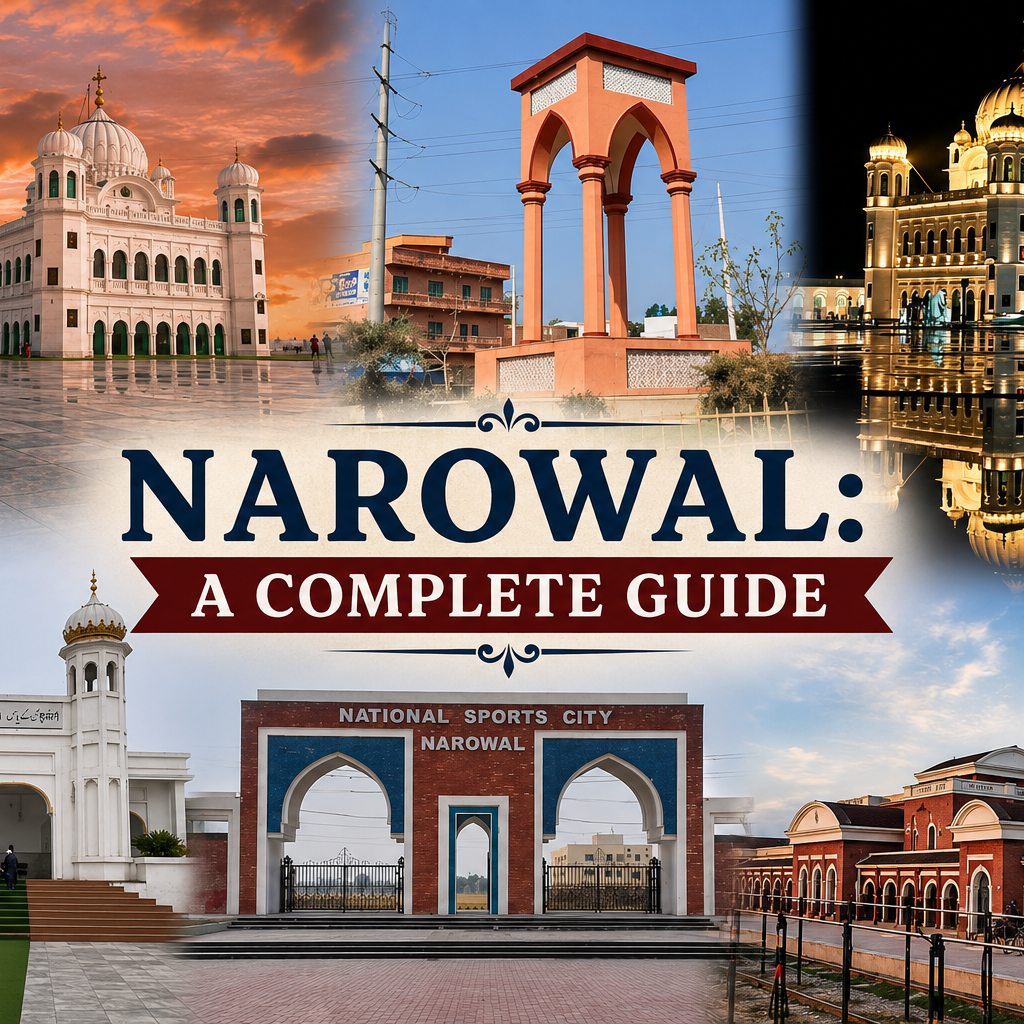
Narowal: A Complete Guide
Narowal is a serene agricultural city in the north east of Punjab. It rests on the western bank of the Ravi River, near the border with India. It is home to one of the holiest sites in the Sikh world the Gurdwara Darbar Sahib at Kartarpur. It gave its name to the famous visa free Kartarpur Corridor. It anchors a green district rich in wheat, rice and sugarcane. This guide covers Narowal for the curious traveller. It explains the history the Kartarpur shrine the corridor the sights the property scene and how to visit.
This guide offers a general overview. Figures for the population vary between sources.
Quick answer: Narowal is a city in the north east of Punjab, on the western bank of the Ravi River, near the border with India. It is the capital of Narowal District, formed in 1991. It is famous for the Gurdwara Darbar Sahib at Kartarpur where Guru Nanak spent the last 18 years of his life. The visa free Kartarpur Corridor, opened in 2019 allows Indian Sikh pilgrims to visit the shrine. It is a great agricultural district. Winter is the best time to visit.
About Narowal
Narowal is a historic city in north east Punjab. It is located on the western bank of the Ravi River. It is the capital of its district near the border with India. It is famous above all for the Kartarpur shrine.
Area is the fertile river plain. The city is located near the Ravi, close to Jammu and Kashmir. The rich soil makes the district a great farming region. Wheat, rice and sugarcane fill the surrounding fields.
Climate is shaped by the hills. The proximity to Jammu keeps the summers milder than the plains. The winters are cool and pleasant. This diverse weather supports a wide range of crops.
Narowal district holds three tehsils. These are Narowal, Shakargarh and Zafarwal. The district was formed in 1991 from two of them. Zafarwal was added as a tehsil in 2009.
History of Narowal
The area has deep roots. It formed part of the historic heart of Punjab. The area lay on old routes to Kashmir and Delhi. Shakargarh was a gateway for travellers and armies.
Guru Nanak settled at Kartarpur. The founder of Sikhism came here after his long travels. He founded the town of Kartarpur by the Ravi in 1515. He spent the last 18 years of his life here.
The Guru built a community here. He ploughed the fields and set up a free kitchen. He assembled an early Sikh commune at Kartarpur. He preached equality, service and devotion until his death in 1539.
The shrine has a moving story. Both Hindus and Muslims claimed the Guru after his death. They built memorials with a shared wall between them. The Ravi later shifted course and washed the old site away.
The district took modern shape. Narowal and Shakargarh tehsils merged in 1991. This formed the new Narowal District. Zafarwal was added as a third tehsil in 2009.
Kartarpur shrine
The Gurdwara Darbar Sahib is the great shrine. It is built where Guru Nanak spent his final years. It rises on the bank of the Ravi at Kartarpur. Its own dedicated guide covers the shrine in detail.
It is among the holiest Sikh sites. It ranks alongside the Golden Temple and Nankana Sahib. It marks the place where Guru Nanak died in 1539. It is the second holiest site in Sikhism.
The shrine rests close to the border. It is located only a few kilometres from the frontier with India. Indian Sikhs long gathered on the far side to view it. This nearness shaped the story of the corridor.
The shrine is a place of devotion. Pilgrims come to pray and to reflect. The langar continues the tradition of the Guru. The atmosphere is calm and deeply spiritual.
Kartarpur Corridor in Narowal
Kartarpur Corridor is a historic crossing. It links the shrine to the border with India. It was opened in 2019, near the 550th birth anniversary of Guru Nanak. It allows visa free access for Indian pilgrims.
Corridor is a rare bridge. It lets Indian Sikhs visit the shrine without a full visa. Thousands may cross each day under the arrangement. Pilgrims return the same day after their visit.
Crossing has deep meaning. It reunited pilgrims with a site long viewed from afar. It has been seen as a gesture of interfaith harmony. It made Narowal a point of global interest.
Corridor boosts the district. The pilgrimage brings visitors and attention. It supports local trade and services. It has lifted the profile of the whole region.
Economy and property in Narowal
Economy rests on agriculture. The fertile plains grow wheat, rice and sugarcane. Canal and river irrigation water the fields. Farming supports most of the district.
Education is a growing strength. The University of Narowal serves the district. Baba Guru Nanak University has been established here. These institutions draw students to the city.
Property market is steady. The farming wealth and the pilgrim trade support it. New housing societies ring the city. Demand rises with the growth of the district.
Location aids the market. Narowal is connected by road and rail to Lahore. The Kartarpur crossing draws attention to the district. This connectivity lifts the property market.
Visiting Narowal
Come in winter. The plains are warm in summer. The winter months from November to February are the finest season. The weather is cool and pleasant then.
Visit the Kartarpur shrine. This is the great spiritual highlight. It marks the final home of Guru Nanak. The dedicated guide covers the shrine.
Learn about the corridor. The visa free crossing is a modern wonder. It reunites pilgrims with a sacred site. It is a symbol of interfaith goodwill.
Explore the district. Shakargarh holds old heritage sites. The Ravi and the green fields are scenic. The countryside rewards the curious traveller.
Frequently asked questions
Why is Narowal famous? Narowal is famous above all for the Gurdwara Darbar Sahib at Kartarpur, one of the holiest sites in Sikhism. There Guru Nanak spent the last 18 years of his life, dying in 1539. It ranks alongside the Golden Temple in Amritsar and Nankana Sahib among the great Sikh shrines. The city gave its name to the visa free Kartarpur Corridor, opened in 2019 to allow Indian Sikh pilgrims to visit the shrine. Narowal is also a rich agricultural district near the border with India.
What is the Kartarpur Corridor? The Kartarpur Corridor is a visa free border crossing that links the Gurdwara Darbar Sahib at Kartarpur to the frontier with India. It was opened in 2019, close to the 550th birth anniversary of Guru Nanak. It allows Indian Sikh pilgrims to visit the shrine without a standard visa. Several thousand pilgrims may cross each day, returning the same day after their visit. The corridor reunited Sikhs with a site long viewed only from across the border. It has been widely seen as a gesture of interfaith harmony.
Why did Guru Nanak settle at Kartarpur? Guru Nanak founded the town of Kartarpur by the Ravi River in 1515 after his long missionary travels. He settled there to build an early Sikh community, ploughing the fields and setting up a free community kitchen the langar. He spent the last 18 years of his life at Kartarpur, preaching a message of equality, selfless service and devotion, until his death in 1539. The Gurdwara Darbar Sahib was later built on the site where he is said to have died.
What crops are grown in Narowal? Narowal is an agriculture based district where thousands of acres of rich land are used for agriculture. Wheat, rice and sugarcane are the main crops grown on this rich alluvial soil in the Ravi plain with a milder climate due to proximity of the hills of Jammu. Agriculture plays a vital role in the local economy despite problems of small farms and floods. There is an emerging education system in the district that includes the University of Narowal.
When is the best time to visit Narowal? The best time to visit Narowal is winter, from November to February, when the weather is cool and pleasant. The proximity to Jammu keeps the summers milder than much of the plains. The cooler months are still the most comfortable. Winter suits a visit to the Kartarpur shrine and the heritage sites of Shakargarh as well as walks along the green banks of the Ravi. The birth anniversary of Guru Nanak in November is a particularly significant time at Kartarpur.
City of the final home of the Guru
Narowal is the green city where Guru Nanak made his final home. It rests on the Ravi at the edge of the province. It cradles the shrine where the founder of Sikhism spent his last years. It opened a rare corridor to reunite pilgrims with a sacred site. It fills the country with wheat, rice and sugarcane from its fields. Few cities hold such devotion by such a quiet river.
You may come to Narowal for the shrine the corridor or the countryside. The city rewards the visit either way. You can pray at the great Gurdwara Darbar Sahib at Kartarpur. You can learn the story of the famous visa free corridor. You can wander the green fields along the Ravi. Come in winter and feel the peace of the place. Narowal is the final home of Guru Nanak.