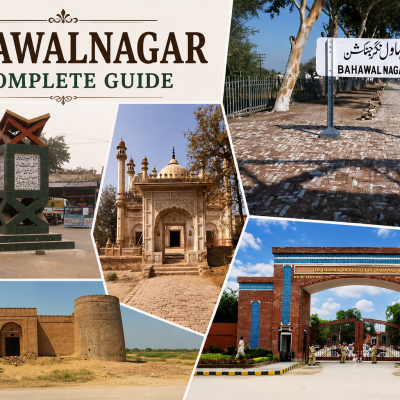
Mohenjo-daro: A Complete Guide
Mohenjo daro is one of the greatest archaeological wonders in the world. It holds the remains of a city built around four and a half thousand years ago. The city rose on the banks of the Indus. It ranked among the largest and most advanced cities on earth. It reveals grid streets, covered drains, private bathrooms and the famous Great Bath. Builders raised them all long before the classical world. This guide covers Mohenjo daro for the curious traveller. It explains the history, the structures, the museum, the mysteries and how to visit.
This guide offers a general overview to help you plan a visit.
Quick answer: Mohenjo daro is an ancient city in the Larkana district of Sindh. Builders raised it around 2600 BCE on the banks of the Indus. The city was abandoned around 1900 BCE. It was one of the two great centres of the Indus Valley Civilisation. It held a population of perhaps thirty five to fifty thousand people. It is famous for its grid streets, its covered drainage, the Great Bath and the granary. Archaeologists rediscovered it in 1911 and excavated it from the 1920s. Winter is the best time to visit.
About Mohenjo daro
Mohenjo daro is one of the earliest cities in the world. Builders raised it around 2600 BCE. The city rose on what was then the west bank of the Indus. It ranked among the earliest and most advanced cities anywhere on earth. This great antiquity is its claim to fame.
The name means the mound of the dead. The name Mohenjo daro carries this meaning in Sindhi. People gave it long after the ancient city was abandoned and buried. This evocative name reflects how the site was found. It lay hidden beneath the earth for thousands of years.
The city was a great centre of the Indus Valley Civilisation. Mohenjo daro was one of the two main centres alongside Harappa. It may have been the capital of a wide state. This central role makes it one of the most significant archaeological sites in South Asia.
History and rediscovery of Mohenjo daro
The city flourished for centuries. Mohenjo daro thrived for around seven centuries. It held a population of perhaps thirty five to fifty thousand people at its height. This was a huge city for the Bronze Age. This scale made it one of the largest settlements of the ancient world.
The city was abandoned in mystery. Mohenjo daro was abandoned around 1900 BCE. The reason has never been established with certainty. Scholars have suggested changes in the river, climate and trade among the possible causes.
The site was rediscovered in the 20th century. Archaeologists rediscovered the buried city in 1911. Excavations began in 1922. Major work followed in the 1930s. This rediscovery transformed our understanding of ancient South Asia.
Great structures of Mohenjo daro
The Great Bath is the most famous structure. It is a large and watertight brick tank on the raised citadel. Scholars think it was used for ritual bathing. It is the best known structure at the site. This remarkable tank is the symbol of Mohenjo daro.
The granary is a massive brick building. A huge brick structure occupies the citadel. It has long been known as the granary in Mohenjo daro. Its true purpose is still debated among scholars. This great hall is impressive for its scale. Its uncertainty reminds us how much remains unknown.
A Buddhist stupa crowns the site. The most prominent structure on the skyline is a Buddhist stupa. Builders raised it on the highest mound many centuries after the ancient city was abandoned. This later monument shows how the mound drew people long after the city had gone.
Urban planning and drainage in Mohenjo daro
The streets were laid out on a grid. The city followed a careful grid of straight streets and narrow lanes. It divided into neat blocks of courtyard houses. This orderly planning reveals a society with real skill in engineering and administration.
The drainage system was centuries ahead of its time. Mohenjo daro had covered drains along its streets. Soak pits and bathrooms served private houses. It is one of the earliest sanitation systems known. This public health engineering is the great marvel of the site. It went unmatched for many centuries.
The houses reveal daily life. The remains of individual houses show courtyards, private wells and internal bathrooms. They offer a glimpse of everyday life. These homes are among the most moving parts of a visit.
Museum and the mysteries of Mohenjo daro
The museum holds the treasures of the site. The site museum displays pottery, ornaments, tools and the famous carved seals. Excavators recovered them all from the site. This collection brings the ancient city to life.
The seals are a great treasure. Mohenjo daro yielded a large share of all known Indus seals. Craftsmen carved them from soapstone. Animals and script often mark them. These small seals point to organised trade and craft production.
The script remains undeciphered. Nobody has deciphered the writing of the Indus Valley Civilisation. The people of Mohenjo daro cannot yet speak to us in their own words. This unsolved script keeps much of the ancient city beyond our reach.
Visiting Mohenjo daro
The site is reached through Larkana. Mohenjo daro lies in the Larkana district. Most visitors travel through the city of Larkana. Its own dedicated guide covers that city in more detail. Larkana itself is reached by road, rail and air.
Winter is the best time to visit. The region has a hot desert climate. The cooler months from November to February are by far the finest time to explore. The summer heat can be fierce and draining.
A guide brings the ruins to life. A local guide can explain the layout and the discoveries. They turn a field of brick walls into a living ancient city. Carry water a hat and sun protection for the open site.
Frequently asked questions
Where is Mohenjo daro located? Mohenjo daro is located in the Larkana district of Sindh. It lies on the right bank of the Indus in the north of the province. Most visitors reach the site through the nearby city of Larkana. Road, rail and air connections serve that city well. The site lies in open country. You can best reach it by road from Larkana with a local guide.
How old is Mohenjo daro? Builders raised Mohenjo daro around 2600 BCE. That makes it roughly four and a half thousand years old. The city was abandoned around 1900 BCE. It flourished for around seven centuries. It was one of the two great centres of the Indus Valley Civilisation alongside Harappa. It was contemporary with ancient Egypt and Mesopotamia. It ranks among the earliest and most advanced cities anywhere in the world.
What is the Great Bath at Mohenjo daro? The Great Bath is a large and watertight brick tank. It occupies the raised citadel of Mohenjo daro. It is the most famous structure at the site. Scholars generally think it was used for ritual bathing. This reveals the importance of water in the life of the ancient city. Its careful brickwork shows remarkable engineering skill for a city so old.
Why is Mohenjo daro famous? Mohenjo daro is one of the earliest and most advanced cities in the world. It reveals sophisticated urban planning long before the classical era. Its streets followed a grid. Its houses had private wells and bathrooms. Covered drains carried away waste through one of the earliest sanitation systems known. The Great Bath, the granary and its carved seals add to its importance. Together they make the site enormously important to world history.
When is the best time to visit Mohenjo daro? The best time falls in the cooler months from November to February. The weather is pleasant then for exploring the open site. The region has a hot desert climate. Summer temperatures can be fierce. Midday exploration becomes uncomfortable and even dangerous then. Spring and autumn are also reasonable. Winter is by far the most comfortable season for a visit.
Oldest city of the Indus civilization
Mohenjo daro is one of the great wonders of the ancient world. Builders raised this city four and a half thousand years ago on the banks of the Indus. Archaeologists rediscovered it only a century ago. The site offers the Great Bath and the granary on the citadel. Its grid streets, covered drains and private bathrooms complete the picture. It reveals a civilisation of remarkable skill and organisation. Its undeciphered script and its unexplained abandonment keep it among the greatest mysteries in archaeology.
You may come to Mohenjo daro for its ancient engineering, its Great Bath or its carved seals. This World Heritage site in the heart of Sindh is unforgettable either way. You can walk the ancient streets. You can look into the drains and wells that served a city older than the pyramids. You can see the treasures gathered in its museum too. You can reach the site through Larkana. Visit in winter and step directly into the dawn of urban life.