Mirpur Khas: The City of Mangoes
Mirpur Khas is one of the most fertile and historic cities in Sindh. It is famous across the country as the City of Mangoes. The city lies on the fertile plains of the south east of the province. This old Talpur capital is renowned for its hundreds of varieties of mango. Its great annual mango festival adds to its fame. Its ancient Buddhist and Talpur heritage completes the picture. This guide covers Mirpur Khas for the curious traveller. It explains the history the landmarks the famous mangoes the culture and how to get there.
This guide offers a general overview to help you get to know the city and plan a visit.
Quick answer: Mirpur Khas is a city in the south east of Sindh. The Talpur rulers founded it in 1806. It is famous as the City of Mangoes. The city grows hundreds of varieties of mango above all the celebrated Sindhri. It has hosted an annual mango festival since 1955. The city holds ancient heritage in the Kahu Jo Daro Buddhist stupa. The Talpur tombs of the Chitorri graveyard add to its appeal. The city lies on fertile and well irrigated plains. You can reach it by road and rail.
About Mirpur Khas
Mirpur Khas is a fertile city of the south east of Sindh. It is a major city in the south east of the province. The city lies on fertile plains fed by irrigation canals from the Indus. This fertile setting defines the city. It has made Mirpur Khas one of the great farming hubs of the province.
The name reflects its royal past. The name Mirpur Khas means the town of the most high Mirs. It recalls the founding of the city as the seat of a branch of the Talpur rulers. This royal heritage is part of its character. It gives the city a proud history.
The city is a hub of farming and trade. Mirpur Khas is a vital commercial centre for the surrounding farming districts. It trades in mangoes, bananas, sugarcane and cotton. This agriculture is the lifeblood of the city. It draws people from across the region.
History of Mirpur Khas
The area has ancient roots. A flourishing Buddhist settlement known as Kahu Jo Daro once occupied the area. Ancient Hindu temples stood nearby too. This ancient past reveals the long history of the region. It reaches back many centuries.
The Talpur rulers founded the modern city. Mir Ali Murad Talpur founded modern Mirpur Khas in 1806. He made it the capital of a branch of the Talpur dynasty. A fort was built at the same time. This founding gave the city its status. It became an important political centre.
Irrigation transformed the city. Canals such as the Jamrao brought water to the fertile land. This work continued under British rule and after. It turned the region into a great farming hub. This irrigation was the making of the modern city. It drives its prosperity to this day.
Mangoes and the festival in Mirpur Khas
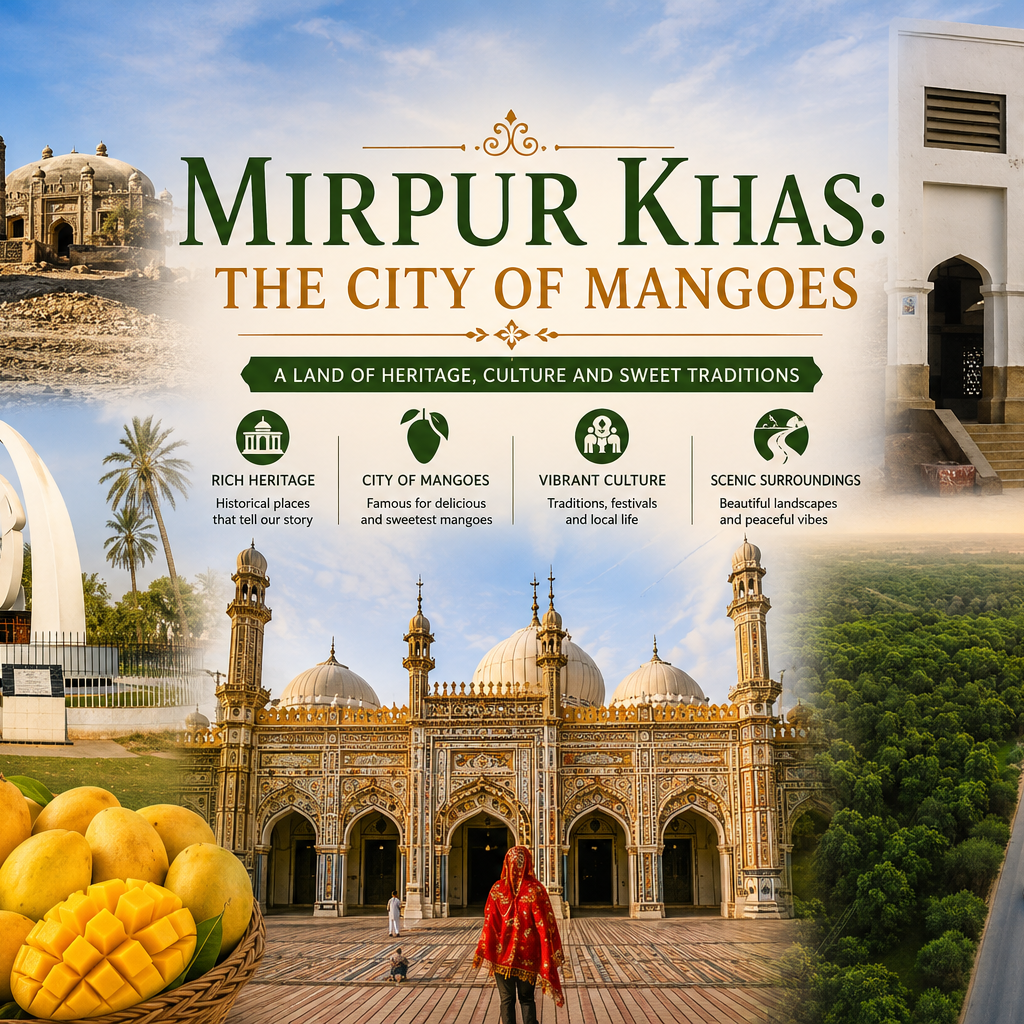
Mirpur Khas is the City of Mangoes. The city is celebrated across the country under this name. It grows hundreds of varieties of the fruit each year on its fertile plains. This mango heritage is the great fame of the city. It is a source of enormous local pride.
The Sindhri is the most famous variety. The name means the mango of Sindh. It is the most celebrated of the many varieties grown here. Growers prize it for its sweetness and flavour. This famous mango is known across the country. It is one of the great fruits of the region.
The mango festival is one of the largest in Asia. Mirpur Khas has hosted an annual mango festival since 1955. Many call it one of the largest in Asia. It draws hundreds of growers and thousands of visitors. This great festival celebrates the fruit with displays and contests. It is the high point of the mango season from summer into autumn.
Landmarks of Mirpur Khas
The Kahu Jo Daro stupa recalls an ancient past. The ruins are those of an ancient Buddhist stupa. They date back around fifteen centuries. They reveal the deep history of the region. This ancient site is a treasure of heritage. It yielded fine terracotta reliefs now held in museums around the world.
The Chitorri graveyard holds the Talpur tombs. The graveyard lies a short distance from the city. It holds the grand sandstone and brick mausoleums of the Talpur rulers. Ornate domes and fine carving decorate them. These beautiful tombs are a highlight of the region. They blend Islamic and local styles.
The bazaars and multi faith sites add to the appeal. The city holds bustling bazaars such as the Shahi Bazaar. They sell textiles ajrak and crafts. Old temples and shrines reflect its multi faith heritage. These sites offer a glimpse of the culture of the city. They reward those who explore its streets.
Culture the food and getting Mirpur Khas
Mirpur Khas is rich in culture and food. The city blends agrarian life, Sufi tradition and a multi faith heritage. Its food scene is rich and seasonal alongside its famous fruit. This culture is felt throughout the city. It is a source of local pride.
Mirpur Khas is well connected. You can reach the city by road on the dual carriageway to Hyderabad. It is a junction on the railway network too. This good connectivity links it to the wider region. It has made the city a busy hub of commerce.
Frequently asked questions
Where is Mirpur Khas located? Mirpur Khas is located in the south east of Sindh. It lies on fertile plains fed by irrigation canals from the Indus. It borders the desert district of Tharparkar. The city is a major farming and commercial hub. You can reach it by road on the dual carriageway to Hyderabad. It is a junction on the railway network too. These links make it an accessible base for exploring the south east.
Why is Mirpur Khas called the City of Mangoes? Mirpur Khas grows hundreds of varieties of mango each year on its fertile and well irrigated plains. The celebrated Sindhri leads them all. The city has hosted an annual mango festival since 1955. Many call it one of the largest in Asia. It draws hundreds of growers and thousands of visitors. Mangoes are at the heart of its economy and its identity.
What is the Mirpur Khas mango festival? The Mirpur Khas mango festival is an annual celebration of the famous fruit. The city has held it since 1955. Many call it one of the largest of its kind in Asia. It brings together hundreds of growers and thousands of visitors. Displays of the many varieties, contests and cultural events fill the programme. It is the high point of the mango season. That season runs from summer into autumn.
What are the best places to visit in Mirpur Khas? The best places include the ancient Kahu Jo Daro Buddhist stupa. It reveals the deep history of the region. The Chitorri graveyard holds grand Talpur tombs. The city itself holds bustling bazaars such as the Shahi Bazaar. Old temples and shrines reflect its multi faith heritage. The orchards and the mango festival are a great draw in the mango season.
What is the history of Mirpur Khas? Mir Ali Murad Talpur founded modern Mirpur Khas in 1806. He made it the capital of a branch of the Talpur dynasty. The area has far older roots. It was home to the ancient Buddhist settlement of Kahu Jo Daro and old Hindu temples. Irrigation canals built under British rule transformed the fertile land into a great farming hub. This drove the growth of the city into the agricultural centre it remains today.
Mango capital of Sindh
Mirpur Khas is a city of fertile plains and rich heritage. It is famous across the country as the City of Mangoes. The city offers hundreds of varieties of mango and a great annual festival. The ancient Kahu Jo Daro stupa and the grand Talpur tombs of Chitorri add to its appeal. It blends agricultural abundance with deep history. Its famous Sindhri mango, its multi faith heritage and its warm culture make it rewarding to explore.
You may come to Mirpur Khas for its mangoes, its ancient heritage or its lively bazaars. This fertile city of south east Sindh has much to offer either way. You can sample the famous Sindhri in the mango season. You can wander the ruins of Kahu Jo Daro and admire the ornate Talpur tombs. You can explore the bustling markets of the city too. You can reach Mirpur Khas easily by road and rail. It is a city where farming and history meet at the agricultural heart of the province.