Makli Necropolis: A Complete Guide
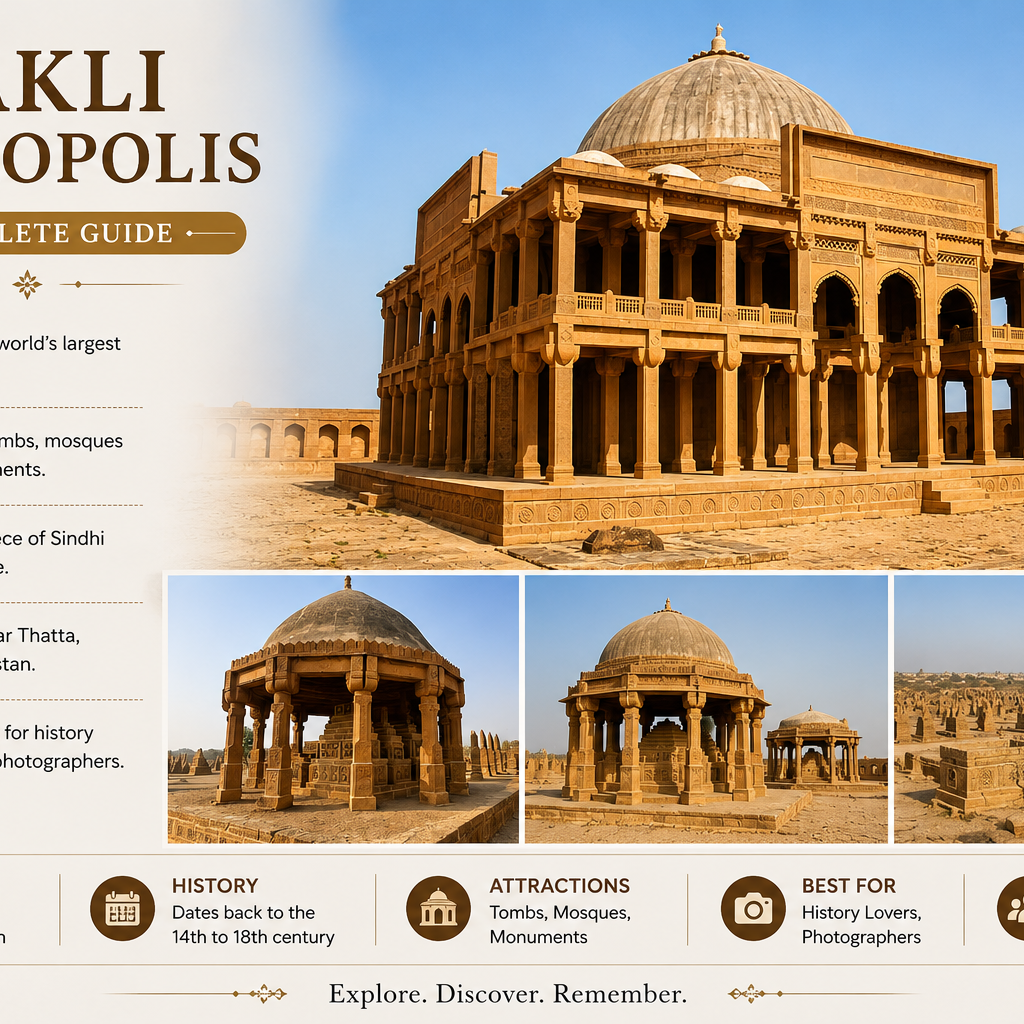
Makli Necropolis is one of the largest funerary sites in the world. It is a silent city of the dead. The necropolis spreads across a great plateau outside Thatta. Half a million graves and hundreds of grand mausoleums cover the site. They hold kings, queens, saints, scholars and ordinary people. They span four centuries of the history of Sindh. This guide covers Makli for the curious traveller. It explains the history, the finest tombs, the stone carving and how to visit.
This guide offers a general overview to help you plan a visit.
Quick answer: Makli Necropolis is a vast cemetery on Makli Hill outside Thatta in Sindh. It covers around ten square kilometres. It holds an estimated half a million to one million graves. The tombs date from the 14th to the 18th century. They span the Samma arghun, Tarkhan and Mughal dynasties. Its finest monuments include the tombs of Jam Nizamuddin II and Isa Khan Tarkhan II. Makli gained World Heritage status in 1981. It lies about a hundred kilometres from Karachi.
About Makli Necropolis
Makli ranks among the largest cemeteries in the world. It covers around ten square kilometres on the long plateau of Makli Hill. It holds an estimated half a million to one million graves. This vast scale is difficult to grasp until you see it.
The necropolis is a silent city. Many call Makli the city of silence. Grand mausoleums, domed tombs and simple graves cover the plateau as far as the eye can see. This description captures its atmosphere perfectly. It is a haunting and beautiful place.
The site is a record of four centuries. The tombs of Makli date from the 14th to the 18th century. They record the political, cultural and spiritual life of Sindh across four hundred years. This long span makes it a living archive. It is far more than a graveyard.
History and the dynasties
Makli grew beside the old capital. The necropolis rose alongside the nearby city of Thatta. That city was once a capital of Sindh. It was a great centre of Islamic culture and learning. The guide to Thatta covers this in more detail. The fortunes of the two places rose and fell together.
Four dynasties are buried here. Makli holds the tombs of the Samma arghun, Tarkhan and Mughal periods. Each left its own architectural mark on the plateau. This layering of dynasties is the great fascination of the site. It allows visitors to trace changing styles across the centuries.
The site declined with Thatta. Makli declined along with Thatta from the 18th century. The river changed course and political power moved elsewhere. This decline left the necropolis quiet. It preserved the site much as the centuries had left it.
Finest tombs in Makli
The tomb of Jam Nizamuddin II is a masterpiece. He was the Samma ruler who reigned in the 15th and early 16th centuries. His tomb is a square sandstone structure. Visitors admire it for its symmetry and its carving. This beautiful tomb ranks among the finest at Makli. Its stonework blends Islamic and local styles.
The tomb of Isa Khan Tarkhan II is the largest structure. It is a two storey stone tomb of Isa Khan Tarkhan the Younger. Builders completed it in the 17th century. Grand cupolas and balconies crown it. This great mausoleum is the most imposing sight at Makli. Its upper floor has at times been closed for safety.
Other tombs reward the explorer. The plateau holds many more fine monuments. They include the tombs of Jan Baba, Sultan Ibrahim and Mirza Jani Beg. The Mughal governor Diwan Shurfa Khan rests here too. These varied tombs show the wealth of styles at Makli.
Architecture and the stone carving in Makli
The carving is known as lacework in stone. The sandstone carving at Makli is remarkably fine and intricate. Observers have long described it as lacework in stone. Floral patterns, geometric designs and calligraphy cover the tombs. This exquisite craft is the glory of the site. It reaches a level rarely matched anywhere.
The tiles bring colour to the tombs. Glazed tiles in deep blue, turquoise and green decorate many tombs. They reflect influences from Central Asia and Persia. These beautiful tiles brighten the sandstone. They are among the most photographed details at Makli.
The styles blend many traditions. The monuments of Makli bring together Islamic, Persian, Mughal, Gujarati and local traditions. Domes arches, canopied pavilions and richly carved pillars fill the plateau. This mingling of styles reflects the cosmopolitan past of Thatta. It makes the site remarkable for students of architecture.
Visiting Makli
Makli lies just outside Thatta. The necropolis lies around six kilometres from the centre of Thatta. Karachi is roughly a hundred kilometres away. The drive follows an easy main road. This proximity makes it a popular day trip.
Combine Makli with the other sights of Thatta. Most visitors pair it with the magnificent Shah Jahan Mosque. The nearby Keenjhar Lake often completes the day. This combination is the classic Thatta itinerary. Each site has its own dedicated guide.
Come prepared for a large open site. The plateau is vast and exposed. Comfortable shoes, water and sun protection are essential. A local guide helps enormously. The cooler months from November to February are the finest time.
Frequently asked questions
Where is Makli Necropolis located? Makli Necropolis is located on Makli Hill just outside the historic town of Thatta. Thatta lies in the south of Sindh. The site is around six kilometres from the centre of the town. Karachi is roughly a hundred kilometres away. The drive takes one and a half to two hours on the main road. This makes it one of the most accessible World Heritage sites in the country.
How many graves are at Makli? Makli Necropolis holds an estimated half a million to one million graves. They spread over around ten square kilometres on the plateau of Makli Hill. They range from simple stone slabs to grand multi domed mausoleums. They hold kings, queens, governors, Sufi saints, scholars, soldiers and ordinary people. This vast number makes Makli one of the largest funerary sites anywhere in the world.
How old is Makli Necropolis? The tombs of Makli date from the 14th to the 18th century. They span around four hundred years of the history of Sindh. The site grew alongside the nearby city of Thatta. That city was then a capital and a centre of Islamic culture. It holds monuments from the Samma arghun, Tarkhan and Mughal periods. It declined from the 18th century as the river changed course.
What are the most famous tombs at Makli? The most famous tomb belongs to Jam Nizamuddin II, the Samma ruler. Visitors admire it for its carved sandstone and perfect symmetry. The tomb of Isa Khan Tarkhan the Younger is a two storey stone mausoleum. It is the largest structure on the site. Other notable monuments include the tombs of Jan Baba, Sultan Ibrahim and Mirza Jani Beg. The Mughal governor Diwan Shurfa Khan rests here too.
When is the best time to visit Makli? The best time falls in the cooler months from November to February. Daytime temperatures are comfortable then for walking around the vast open site. The plateau offers little shade. Summer visits can be exhausting. Wear comfortable shoes whenever you come. Carry water and sun protection. Consider hiring a local guide, since the finest tombs are spread widely across the site.
Silent city of Sindh
Makli Necropolis is one of the great wonders of Sindh. It is a silent city of half a million graves. It spreads across a plateau outside the old capital of Thatta. The site offers the carved sandstone of the tomb of Jam Nizamuddin II. The grand two storey mausoleum of Isa Khan Tarkhan adds to the appeal. Blue glazed tiles and stone lacework decorate countless lesser tombs. The site records four centuries of history in stone. Kings, queens, saints and ordinary people rest here together beneath the open sky.
You may come to Makli for its architecture, its history or the sheer sight of it. This World Heritage site is unforgettable either way. You can walk among the domed mausoleums. You can look closely at the lacework carved into the sandstone. You can admire the blue tiles that have kept their colour for centuries. You can pair your visit with the Shah Jahan Mosque nearby. You can reach Makli easily from Karachi. Visit in winter and see the golden past of Sindh lying open to the sky.