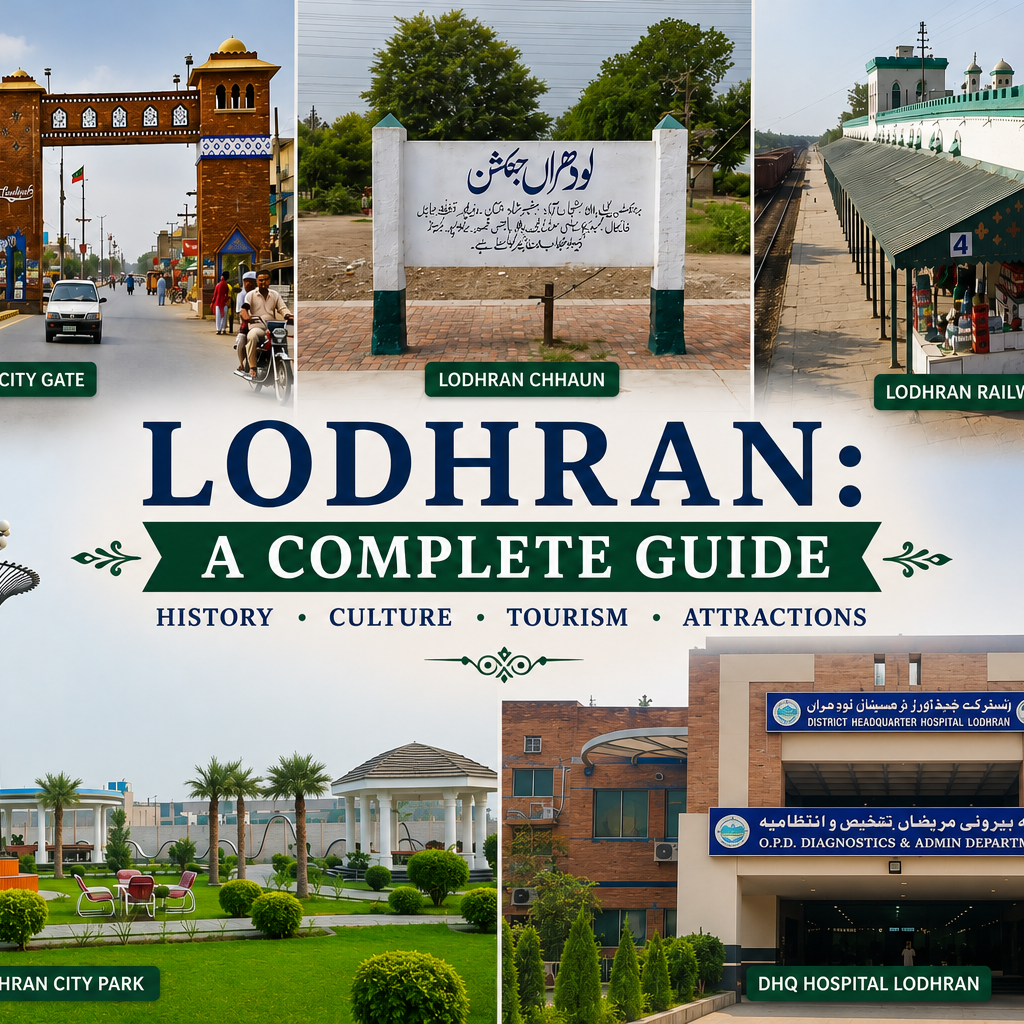
Lodhran: A Complete Guide
Lodhran is a quiet district of cotton fields and mango groves in southern Punjab. It rests on the northern bank of the Sutlej River. It grows some of the finest cotton and mangoes in the country. It guards ancient mounds and weathered forts from ages long past. It serves as a great railway junction on the route between Punjab and Sindh. This guide covers Lodhran for the curious traveller. It explains the history the farming the heritage the sights the property scene and how to visit.
This guide offers a general overview. Figures for the population vary between sources.
Quick answer: Lodhran is a city and district in southern Punjab, on the northern bank of the Sutlej River around 70 kilometres from Multan. It was named after the Lodhra tribe by a local chief in 1873. It became a district in 1991, with three tehsils: Lodhran, Kehror Pacca and Dunyapur. It is a great agricultural area, famous for its cotton and mangoes. It is an important railway junction on the main southern route. Winter is the best time to visit.
About Lodhran
Lodhran is a historic farming city in southern Punjab. It is located on the northern bank of the Sutlej River. It is a district capital in the Multan Division. It blends a farming heritage with an ancient past.
A smooth fertile plain forms the district. Sutlej flows along its southern side. This river is the only one that still runs here. Cotton, wheat and mango fill the surrounding fields.
Its people are diverse. Besides the Lodhra family, many tribes live here. Arain, Baloch, Rajput and Awan families are among them. Farming is the main profession of the area.
This district holds three tehsils. These are Lodhran, Kehror Pacca and Dunyapur. Kehror Pacca is the oldest town of the district. Its undulating land makes it the most picturesque area.
History of Lodhran
Ancient roots reach very deep. Rural outposts of the Indus Valley Civilisation lie in Dunyapur. These date from around 3300 to 1900 BCE. A mound at Mai Manoor Bhit reveals everyday ancient life.
Its name has tribal origins. A local chief renamed the town Lodhran in 1873. He belonged to the Lodhra tribe of the area. This tribe had settled the district in 1740.
British rule developed the city. Foundations were laid in the early 19th century. Lodhran became a tehsil of Multan in 1883. It grew as a railway junction on the southern route.
Its status rose over time. Kehror Pacca and Dunyapur joined the tehsil in 1924. A local movement pressed for district status through the 1980s. Lodhran finally became a district in 1991, with Shoukat Hayat Khan Durrani as its first deputy commissioner.
An old riverbed marks the land. A vanished course of the Beas once flowed through the district. Its dry bed survives as the Bhatari Nullah an intermittent stream. Only the Sutlej still runs along the southern edge.
Farming and economy in Lodhran
Lodhran is famous for cotton. Cotton is the great cash crop of the district. High quality cotton seed is exported abroad. This crop is the backbone of the economy.
Its mangoes are prized. Mango groves fill the fields along the Sutlej. Citrus fruits also grow here. These are traded through the nearby Multan markets, feeding a mango export trade worth tens of millions of dollars.
Farming supports most people. Wheat grows alongside the cotton. Weekly bazaars serve the tehsil towns. Small industry adds to the base.
Its location aids trade. Lodhran is a great railway junction. A stretch of the N 5 highway runs through it. Road and rail link it to Lahore and Karachi.
Heritage and sights in Lodhran
Tibba Talwara is a striking ruin. This 6th century fort rises near Haveli Naseer Khan. Its eroded brick walls date back 1,300 years. It offers sweeping views over the Sutlej.
Kehror Pacca holds old heritage. This is the oldest town of the district. Its shrine of Ali Sarwar honours a Sayyed of Delhi. Old forts and mounds dot the surrounding area.
Ancient mounds reveal the past. Dunyapur holds outposts of the Indus Valley Civilisation. Pottery and wells survive in the soil. These sites recall farmers of 5,000 years ago.
Mari Mandir rises at Dunyapur. This old temple recalls the mixed heritage of the area. Several forts survive across the district. They mark its long and layered history.
Property market in Lodhran
Property here is steady. Cotton and mango wealth support the market. New housing schemes ring the city. Demand rises with the growth of the district.
Location is a great asset. Lodhran is a railway junction on the N 5 highway. It connects Punjab to Sindh. This connectivity lifts the property market.
Buyers find a varied choice. An old city offers heritage and trade. New schemes offer modern living. A rural fringe offers agricultural land. Each suits a different buyer.
This district keeps developing. Farming and the cotton trade underpin the economy. New roads improve access to the area. This supports the property market.
Visiting Lodhran
Come in winter. Summers here are very hot. Winter months from November to February are the finest season. Weather is mild and pleasant then.
See Tibba Talwara. This ancient fort is a great highlight. Its walls offer views over the Sutlej. It is a quiet sentinel of pre Islamic times.
Explore Kehror Pacca. This oldest town holds the shrine of Ali Sarwar. Old forts and mounds surround it. It rewards the curious traveller.
Taste the local produce. Mangoes ripen in the summer months. Cotton fills the fields in season. Local markets sell the fresh harvest.
Frequently asked questions
What is Lodhran famous for? Lodhran is famous as a rich agricultural district in southern Punjab, known above all for its cotton and mangoes. High quality cotton and cotton seed from the district are exported to international markets, while its mangoes and citrus are traded through the nearby Multan markets. Lodhran is also an important railway junction on the main route between Punjab and Sindh. This district holds ancient heritage too, including Indus Valley outposts and old forts such as Tibba Talwara.
How did Lodhran get its name? Lodhran takes its name from the Lodhra tribe, whose family settled in the area in 1740. A local chief of the Lodhra tribe, known as a zaildar, formally renamed the town Lodhran in 1873. At that time, Lodhran and its suburbs formed a tehsil of the Multan district. This city was first developed by British rulers in the 19th century on the northern bank of the Sutlej. It became a separate district in 1991.
What ancient sites are in Lodhran? Lodhran holds several ancient sites. In Dunyapur tehsil archaeologists have uncovered rural outposts of the Indus Valley Civilisation, dating from around 3300 to 1900 BCE. Wells and pottery reveal everyday life of 5,000 years ago. Tibba Talwara a 6th century ruin near Haveli Naseer Khan, rises from the farmland with eroded brick walls and sweeping views of the Sutlej. Old forts and the shrine of Ali Sarwar at Kahror Pacca add further heritage.
What is Kehror Pacca? Kehror Pacca is the oldest town in Lodhran district, located on the old bed of the Beas River, known as the Bhattiari Nullah. It is said to have been founded by a chief of Jaisalmer at the end of the 14th century. It rests on gently undulating land the most picturesque area of an otherwise smooth plained district. Its most remarkable building is the Shrine of Ali Sarwar, honouring a Sayyed of Delhi who came to the town centuries ago.
When is the best time to visit Lodhran? Winter, from November to February, is the best time to visit Lodhran, when the weather is mild and pleasant. Summers here are very hot. Winter suits a visit to the ancient fort of Tibba Talwara or the old town of Kehror Pacca with its shrine of Ali Sarwar. Ancient mounds at Dunyapur also reward a trip. Those who visit in summer can enjoy the famous mango harvest, when the groves along the Sutlej are at their best.
Cotton and mango district on the Sutlej
Lodhran is the quiet district of cotton and mango on the Sutlej. It rose from an ancient land into a modern farming hub. It grows the cotton and fruit that reach markets far away. It guards ancient mounds and forts from ages long past. It links Punjab to Sindh from its great railway junction. Few districts hide such deep history among their fields.
You may come to Lodhran for the cotton the mangoes or the heritage. This city rewards the visit either way. You can climb the ancient walls of Tibba Talwara. You can visit the shrine of Ali Sarwar at Kehror Pacca. You can taste the sweet mangoes in the summer groves. Come in winter and explore the district of cotton and mango. Lodhran is the quiet heart of the south.