Hala Blue Pottery: A Complete Guide
Hala is the home of one of the great crafts of Sindh. Its potters make glazed tiles and pottery in brilliant blue and turquoise. They call this work Kashi Kari an art with roots in Persia and Central Asia. It once covered the mosques and shrines of the province. It now fills homes and markets across the country and beyond. This guide covers Hala blue pottery for the curious traveller. It explains the history the technique the colours the products and where to find it.
This guide offers a general overview. Names and methods vary between workshops and regions.
Quick answer: Hala blue pottery is a traditional glazed ceramic craft of Sindh. Its makers call it Kashi Kari, meaning blue work. The name traces to the Persian city of Kashan. Craftsmen in Hala are called Kashigars. They use cobalt blue, turquoise, mustard, purple, brown and white. They make tiles, pots, vases and plates by hand. The craft once decorated mosques and shrines. Nasarpur and Hala are the great centres in Sindh.
About Hala blue pottery
Hala is a famous craft town. It lies on the left bank of the Indus in Sindh. It is home to potters called Kashigars. The dedicated guide to Hala covers the wider town. It is one of the great craft centres of the province.
The craft is called Kashi Kari. The name means blue work in the local speech. It describes the glazed ceramic art. Makers produce both tiles and pottery. This work is the pride of the town.
The pieces are hand painted. Craftsmen decorate each item by hand. They use signature colours and motifs. The designs draw on Sindhi culture. This handwork is the heart of the craft.
The work is widely exported. Hala tiles and earthenware reach far. The Middle East and Europe both buy them. This trade sustains the craft and carries Sindhi art around the world.
History of Hala Pottery
The craft has Persian roots. It grew from the tradition of Kashi tilework. That tradition began in the Persian city of Kashan. The very name Kashigari comes from Kashan. The craft travelled east over centuries.
Central Asian craftsmen carried it. They brought the technique to South Asia. The Mughal period saw it flourish. Royal patronage spread the ceramic arts. The craft took root across the region.
It spread into Sindh early. The tradition reached Nasarpur, Hala and Sehwan by the medieval period. It formed a regional school of ceramic design. This school had its own distinct character. It shaped the look of Sindhi monuments.
The craft decorated mosques and shrines. Kashi tiles were once essential to sacred buildings. They covered domes, walls and minarets. The tombs of Makli show this work. The dedicated guide to Makli covers that site.
Two great centres
Nasarpur and Hala lead the craft. Both towns lie in the region. Both draw on the fine clay of the river basins. This clay is essential to the work and easily found in both places.
Nasarpur has the longer history. The town was a trade hub for centuries. It held deep expertise in tile making. It was a textile centre too. This made it easy to produce and ship the tiles.
The craft has declined in places. Nasarpur once spread across three square miles. Its textile handicrafts have nearly vanished. Its Kashi work continues but has lost prestige. Modern factory tiles have eclipsed the old craft.
Hala carries the tradition on. The town remains a lively centre of the craft. Its workshops are open yards rather than factories. These are earthy and organic spaces. The work surrounds the visitor.
Technique of Sindhi pottery
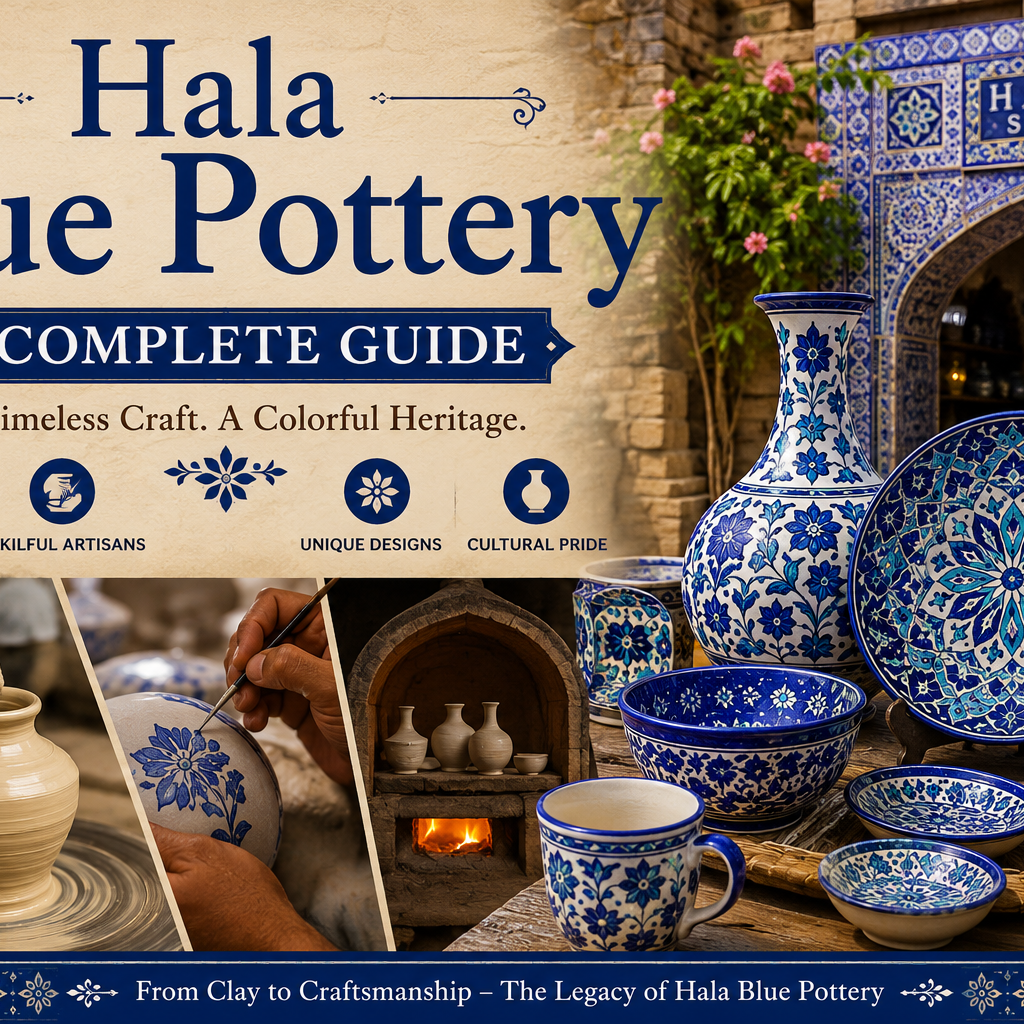
The process begins with clay. Craftsmen use a terracotta base. They call it ajri. They shape the tiles and pots by hand. This becomes the body of each piece.
The pieces are dried and coated. Craftsmen dry the shaped items in the sun. They add a white undercoat next. This white ground carries the design. It makes the colours glow.
The painting comes next. Craftsmen paint the designs by hand. They use different coloured pigments. The cobalt pigment looks grey before firing. It turns brilliant blue in the kiln.
The glaze and the firing finish it. Craftsmen coat the painted piece with glaze. They fire it in a kiln. The heat hardens the piece. It brings out the glossy finish.
Every stage takes skill. Shaping, drying, painting, glazing and firing all demand care. A single piece passes through many hands. This patient work defines the craft.
Colours and the designs of Sindhi pottery
The colours are distinctive. Hala pottery uses a signature palette. Cobalt blue and turquoise lead it. Mustard, purple, brown and white complete it. These colours mark the work at a glance.
The designs draw on Sindhi culture. Craftsmen paint floral and geometric motifs. They add patterns rooted in local art. Some carry Islamic geometry. Each piece tells of its origin.
Two kinds of tile are traditional. One carries several colours together. The other is a clear blue and white glaze. Both adorn the buildings of Sindh.
The motifs echo the region. Flowers, leaves and vines appear often. Geometric borders frame the designs. This visual language is unmistakably Sindhi. It sets the work apart from other schools.
Products and where to find them
The craft makes many things. Craftsmen produce tiles for buildings. They make pots, vases and plates too. Lamps and decorative items complete the range. The variety is wide.
Hala is the place to buy. The town workshops sell direct. Markets across Sindh stock the work. The pieces make fine souvenirs. This is the natural home of the craft.
Look for the genuine article. True Kashi work is hand painted. Its colours are rich and its finish glossy. Factory tiles lack this character. A little care rewards the buyer.
Check the glaze for safety. Some traditional glazes contained lead. Reputable makers now use safer glazes. Verify this for items used near food. This matters for plates and bowls especially.
Frequently asked questions
What is Hala blue pottery? Hala blue pottery is a traditional glazed ceramic craft of Sindh. Its makers call it Kashi Kari, meaning blue work. Craftsmen in Hala are known as Kashigars. They make tiles, pots, vases and plates by hand. They decorate them with cobalt blue, turquoise and other signature colours. The craft once covered the mosques and shrines of the region. Today the pieces are sold across the country and exported abroad.
Why is it called Kashi Kari? The name Kashi Kari means blue work in the local speech. It traces back to the Persian city of Kashan. That city was famous for glazed ceramic tiles. The craft of Kashigari is named after it. Persian and Central Asian craftsmen carried the tradition east. It reached Sindh by the medieval period and took root in towns such as Nasarpur and Hala.
How is Hala pottery made? Hala pottery is made by hand through several stages. Craftsmen shape a terracotta base and sun dry it. They add a white undercoat to carry the design. They then hand paint the motifs with coloured pigments. The cobalt pigment looks grey before firing and turns brilliant blue in the kiln. Finally they glaze the piece and fire it in a kiln. The firing hardens it and gives the glossy finish.
What colours are used in Hala pottery? Hala pottery uses a distinctive palette. Cobalt blue and turquoise lead the range. Mustard, purple, brown and white complete it. These signature colours mark the work at a glance. Craftsmen paint floral and geometric motifs rooted in Sindhi culture. Two traditional kinds of tile exist, one carrying several colours and the other a clear blue and white glaze.
Where can I buy authentic Hala pottery? The town of Hala is the natural place to buy the pottery. Its workshops sell direct from open pottery yards. Markets across Sindh stock the work too. Look for hand painted pieces with rich colours and a glossy finish as factory tiles lack this character. Check that the glaze is lead free for any item used near food, such as plates and bowls.
Blue art of the Indus bank
Hala blue pottery is one of the treasures of Sindh. Its potters have painted in cobalt and turquoise for centuries. Their craft travelled from Persia and took root on the bank of the Indus. It once covered the domes and shrines of the province. It now fills homes and markets across the country. Few crafts carry such colour and history.
You may come to Hala for the tiles the pottery or the workshops themselves. The town rewards the visit either way. You can watch the Kashigars paint in the open pottery yards. You can see the grey cobalt turn to brilliant blue. You can take home a piece glazed in the colours of Sindh. Choose the hand painted work and check the glaze. Hala is the blue art of the Indus bank.