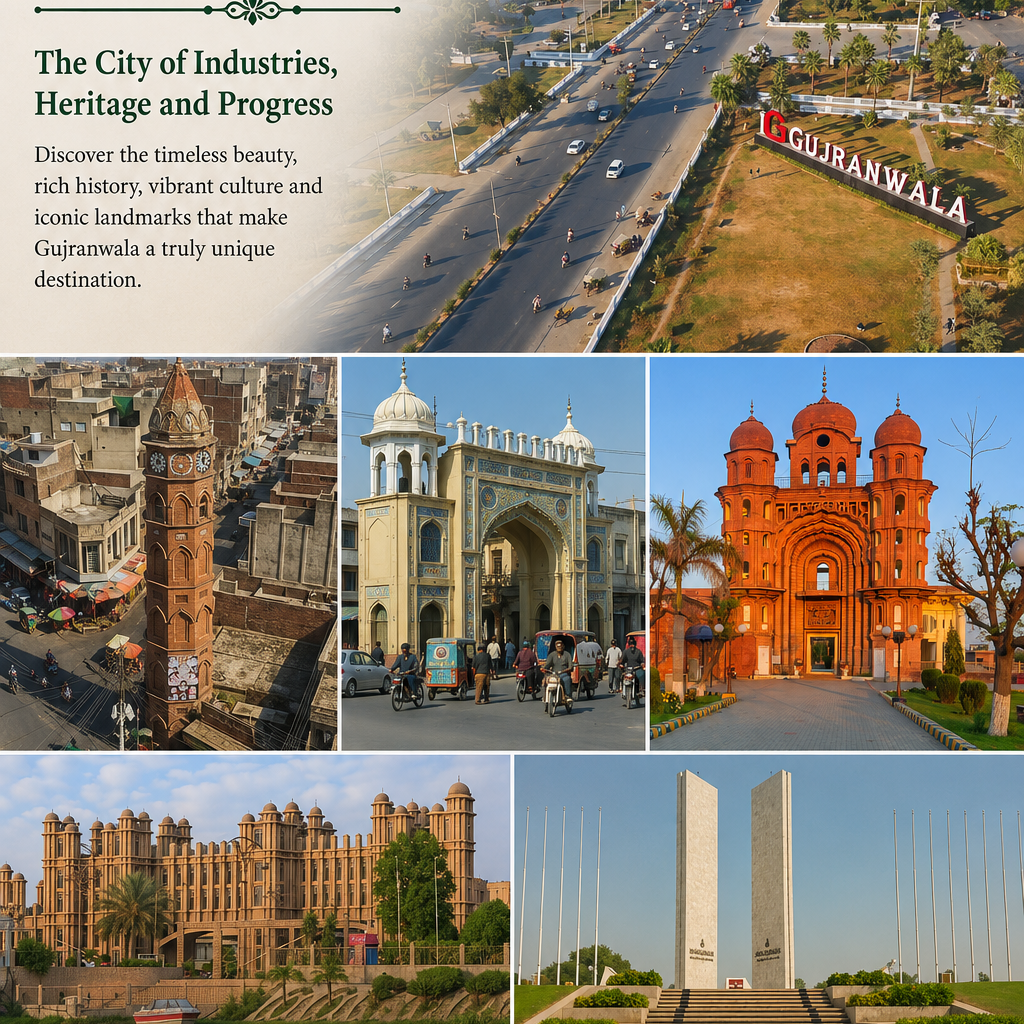
Gujranwala: A Complete Guide
Gujranwala is a city of wrestlers, industry and glorious food. It is famous across the country for its pehalwans and its cuisine. It was the birthplace of Maharaja Ranjit Singh and the first seat of his empire. It ranks among the great industrial cities of the country. Its bazaars, dairy and street food draw food lovers from far and wide. This guide covers Gujranwala for the curious traveller. It explains the history the wrestling and food culture the sights the industry the property scene and how to visit.
This guide offers a general overview. Figures for the population and rankings vary between sources.
Quick answer: Gujranwala is a major industrial city in the north of Punjab Pakistan. It lies on the Grand Trunk Road between Lahore and the northern cities. It was founded in the 18th century and was the birthplace of Maharaja Ranjit Singh. It is known as the City of Wrestlers for its wrestling tradition. It is famous for its food and dairy. It forms part of the industrial Golden Triangle. Autumn and spring are the best times to visit.
About Gujranwala
Gujranwala is a great industrial city in the north of Punjab, on the Grand Trunk Road. It is among the largest cities in the country a hub of both industry and food.
The area is the fertile plain. The city lies in the Rechna Doab the land between the Chenab and the Ravi, with Lahore to the south and Sialkot and Gujrat to the north.
It is a relatively young city. It was founded in the 18th century. Gujjar tribes established it, modern beside its ancient neighbours.
It carries two great nicknames. It is the City of Wrestlers for its kushti tradition. It is part of the Golden Triangle of industry. Food is its third great claim.
History of Gujranwala
Roots lie in the Mughal age. Small settlements grew here in that period. The city was a trade hub under the Mughals, where markets and architecture flourished.
Sikh age was its golden age. Charat Singh built a fortress here around 1750, with his grandson Maharaja Ranjit Singh later making the city the seat of the Sukerchakia Misl.
Ranjit Singh was born here. He united the Sikh principalities to found the Sikh Empire in 1799. He is remembered to this day as the Lion of Punjab.
Capital later moved to Lahore. The city kept its importance as a political and military centre. The Sikh era left forts and havelis. Many still whisper tales of the past.
British brought new change. Gujranwala became an administrative hub. Railways and colleges marked the progress. Partition in 1947 reshaped it. Refugees added new threads.
City of Wrestlers and the food
Wrestling is a deep tradition. Gujranwala is the City of Wrestlers. Locals call it Pehlwanaan da Shaher. The sport of kushti runs in its blood.
City bred great wrestlers. The Great Gama was a legend of the sport among the finest wrestlers ever and still spoken of with awe. Modern wrestlers carry on the tradition.
Food is legendary. Gujranwala is famous across the country for its cuisine, from its renowned barbecue and grilled meats to its famously generous portions.
Dairy is a local speciality. The city is known for its milk and dairy. Rich sweets, lassi and local dishes like chiray add to the fame.
Sights in Gujranwala
Sikh heritage is a highlight. Gujranwala holds a rich Sikh architectural legacy. The birthplace of Ranjit Singh survives. Havelis and samadhis dot the old city and draw the curious.
Old havelis reward a visit. The Haveli of Charat Singh survives in the city. Sheranwala Bagh is a Sikh era garden. Other havelis and gurdwaras survive too, recalling the Sikh golden age.
Old fort ruins remain. Remnants of the Sikh era survive. They mark the military past, though little of the original survives.
Bazaars are full of life. Local markets sell food, cloth and handicrafts. Street food fills the lanes. Modern food streets have sprung up too.
Industry and economy in Gujranwala
Gujranwala is an industrial powerhouse. It is among the largest industrial centres in the country. Skilled labour and raw materials feed a real share of the national output.
The industries are diverse. Electric fans are a famous export. Sanitary fittings, ceramics, textiles, hosiery and steel add to the mix. Thousands of small units drive the economy.
Fan industry is the standout. The city exports quality fans to the Middle East. This trade carries the name of the city abroad.
Golden Triangle is key. Gujranwala, Sialkot and Gujrat form this cluster. Their export industries power the north. The dedicated guides cover the other two.
Property market of Gujranwala
Property market is active. The industrial wealth supports it. New societies ring the city. Business families drive much of the demand.
Location is a great asset. The Grand Trunk Road runs through the city. Rail links reach the whole country. Lahore and Sialkot lie close.
The property choice is varied. Old city of Gujranwala offers heritage and trade. New societies offer modern living, while the outskirts offer room to grow.
The city keeps expanding. New developments spread outward. The link to Lahore and industrial demand underpin the market.
Visiting Gujranwala
Come in autumn or spring. Summer is hot on the plains. Winter is cool and pleasant. Autumn and spring bring the finest weather. These seasons suit exploring the city.
Come hungry above all. The food is the great draw. The barbecue and sweets are famous, so seek out the busy local spots.
Explore the Sikh heritage. The birthplace of Ranjit Singh survives. The old havelis reward a wander. A local guide helps in the lanes. This heritage is little known.
Use it to see the Triangle. Sialkot and Gujrat lie close. The industrial cities reward a trip. The dedicated guides cover them.
Frequently asked questions
Why is Gujranwala called the City of Wrestlers? Gujranwala is called the City of Wrestlers because of its deep tradition of kushti the sport of traditional wrestling. Locals call it Pehlwanaan da Shaher. The sport runs deep in the culture of the city. Gujranwala produced the legendary wrestler known as the Great Gama, regarded as one of the finest wrestlers ever. Modern wrestlers carry on the tradition. The nickname reflects the strength and sporting pride of the city.
Who was born in Gujranwala? Maharaja Ranjit Singh the founder of the Sikh Empire, was born in Gujranwala. His grandfather Charat Singh built a fortress here around 1750. The city became the seat of the Sukerchakia Misl. Ranjit Singh united the Sikh principalities and founded his empire in 1799. He made Gujranwala his first capital before it moved to Lahore. He is remembered as the Lion of Punjab. His birthplace survives in the old city.
What is Gujranwala famous for? Gujranwala is famous for three things above all. It is the City of Wrestlers, with a deep tradition of kushti. It is celebrated across the country for its food, especially its barbecue, sweets and generous portions. It is a major industrial hub, part of the Golden Triangle with Sialkot and Gujrat. It is also known for its dairy production and as the birthplace of Maharaja Ranjit Singh.
What industries are in Gujranwala? Gujranwala is one of the largest industrial centres in the country. It is especially known for its electric fans. It exports these to the Middle East. Other industries include sanitary fittings, ceramics, textiles, hosiery and steel. Thousands of small and medium units drive the economy. Together with Sialkot and Gujrat the city forms the export oriented Golden Triangle of northern Punjab.
When is the best time to visit Gujranwala? The best time to visit Gujranwala is autumn or spring, when the weather is mild and pleasant. The city lies on the plains and is hot in summer, while winter is cool. Whatever the season, come hungry as the food is the great draw. The barbecue, sweets and dairy are famous across the country. The Sikh heritage and the nearby Golden Triangle cities also reward a visit.
City of strength and flavour
Gujranwala is a city of strength, industry and flavour. It bred the wrestlers whose names still echo across the country. It gave the Sikh Empire its founder and its first capital. It powers the north with its fans, ceramics and steel. It feeds the nation with its barbecue, sweets and dairy. Few cities pack such energy into their streets.
You may come to Gujranwala for the food the wrestling or the Sikh heritage. The city rewards the visit either way. You can feast on the finest barbecue in the country. You can trace the birthplace of the Lion of Punjab. You can watch a great industrial city at work. Come in autumn or spring and come hungry. Gujranwala is the muscle and the flavour of the north.


