Dadu and Manchar Lake: A Complete Guide
Dadu is one of the most fascinating districts in Sindh. It is a land of ancient civilisations. The district lies between the Indus River and the Kirthar Mountains. It is above all the home of Manchar Lake. That lake is the largest natural freshwater lake in the country. It is the ancient home of the Mohana boat people. This guide covers Dadu and Manchar Lake for the curious traveller. It explains the lake, its people, the mountains, the mosques and how to get there.
This guide offers a general overview to help you get to know the district and plan a visit.
Quick answer: Dadu is a district in the west of Sindh. It lies between the Indus River and the Kirthar Mountains. It is famous above all for Manchar Lake. That lake is the largest natural freshwater lake in the country. The Mohana boat people live on its waters on wooden houseboats. The district also holds Gorakh Hill, the highest point in the province. The grand Jamia Mosque of Khudabad and ancient rock carvings add to its heritage. Dadu lies west of the Indus near Sehwan. You can reach it by road and rail.
About Dadu
Dadu is a district of many civilisations. It is a historic district in the west of the province. Ancient civilisations flourished here between the Indus and the Kirthar Mountains. This deep history defines the district.
The district is rich in nature and heritage. Dadu holds the great Manchar Lake and the Kirthar Mountains. Ancient rock carvings and grand old mosques add to the choice. This variety is a large part of its appeal.
The economy rests on farming and industry. Dadu is a prominent agricultural district. Fertile lands, industrial estates and a growing role for tourism support it. This economy is the foundation of the district.
Manchar Lake
Manchar is the largest freshwater lake in the country. It ranks among the largest in South Asia too. The lake is a vast sheet of water west of the Indus. This great lake is the jewel of Dadu. It lies about eighteen kilometres from Sehwan Sharif.
The lake changes with the seasons. The surface of Manchar Lake swells and shrinks through the year. It runs from a modest size in the dry months to a vast expanse after the monsoon. This changing size is a wonder of nature. The lake draws its water from the streams of the Kirthar Mountains and empties into the Indus.
The lake is a haven for birds and fish. Manchar Lake has long teemed with fish and migratory birds. Aquatic plants such as the lotus grow here too. They draw birdwatchers and naturalists. This rich wildlife is a treasure of the lake.
Mohana boat people in Manchar Lake
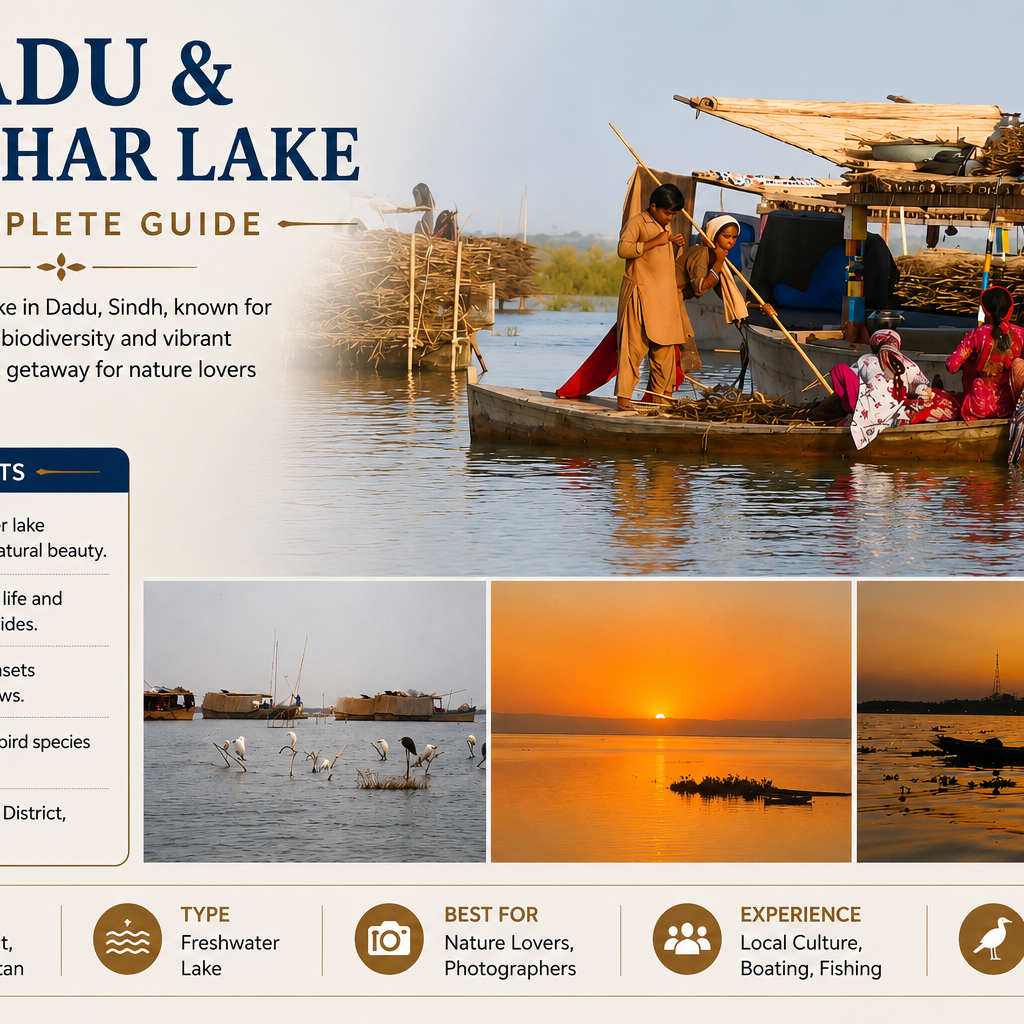
The Mohana are the people of the lake. They are also known as the Mirbahar. They are the traditional fishing people of Manchar Lake. They have lived on its waters for centuries. These boat people are the soul of the lake. Their identity is bound up with its rhythm.
They live on wooden houseboats. The Mohana have traditionally lived their whole lives on these boats. The houseboats serve as both home and workplace. Nets, lines and stoves fill them. This way of life is unique in the country.
A boat tour reveals their world. A motorboat tour offers a glimpse of the life of the Mohana. It covers their houseboats and the careful work of carving their boats. This experience is the highlight of a visit. It is a window into a vanishing way of life.
Mountains, the mosques and the ancient sites
Gorakh Hill is the highest point in the province. It lies in the Kirthar Mountains north west of Dadu. This hill station occupies the highest elevation in the province. Visitors prize it for its cool air and panoramic views. Its own dedicated guide covers it in more detail. It offers a rare escape from the heat of the plains.
The Jamia Mosque of Khudabad is a grand landmark. Builders raised it in the 18th century in the reign of the Kalhora rulers. This magnificent old mosque lies south of Dadu. It was once a centre of learning as well as worship. It is a treasure of the heritage of the district.
The district holds ancient rock carvings. The Kirthar Mountains around Dadu hold them. Images of animals, plants and figures cover the rock. Old inscriptions survive too. These carvings are a window into the prehistoric past. They reveal the deep antiquity of the region.
Challenges and getting Manchar Lake
The lake faces environmental challenges. Pollution and a shortage of fresh water both threaten Manchar Lake. They have harmed its fish and driven away many of the Mohana. These challenges are a great concern. They threaten the future of the lake and its people.
Dadu is reached by road and rail. The district is connected to the cities of the province. It lies west of the Indus. This good connectivity makes it accessible for exploring the lake and the mountains.
A little planning makes for a fine trip. The lake, the mosque and the mountains are best explored with a local guide. A sturdy vehicle helps, especially for Gorakh Hill. The cooler months are the finest time to come.
Frequently asked questions
Where is Manchar Lake located? Manchar Lake is located in the west of Sindh. It spans the Dadu and Jamshoro districts. It lies west of the Indus River and about eighteen kilometres from Sehwan Sharif. It draws its water from numerous small streams in the Kirthar Mountains. It empties into the Indus. It is the largest natural freshwater lake in the country. You can reach it by road from Sehwan and the cities of the province.
Why is Manchar Lake famous? Manchar Lake is the largest natural freshwater lake in the country. It ranks among the largest in South Asia. It is renowned for the Mohana boat people. They have lived on its waters on wooden houseboats for centuries. Its rich birdlife and fish add to its fame. The lake changes size dramatically with the seasons and swells after the monsoon. It has been a cultural and ecological centre of Sindh for generations.
Who are the Mohana of Manchar Lake? The Mohana are the traditional fishing people of Manchar Lake. They are also known as the Mirbahar or Mallah. Many call them the Boat People of Sindh. They have lived on the lake for centuries. They traditionally spent their whole lives on wooden houseboats. Those boats serve as both home and workplace. Their identity is deeply bound up with the rhythm of the lake. Many have left in recent years because of its ecological decline.
What are the best places to visit in Dadu? The best places include the great Manchar Lake with its boat tours. The houseboats of the Mohana are a highlight. Gorakh Hill is the highest point in the province. Visitors prize it for its cool air and views. The district also holds the grand 18th century Jamia Mosque of Khudabad. Ancient rock carvings survive in the Kirthar Mountains. Together they offer a rich blend of nature, history and culture.
Is Manchar Lake worth visiting? Manchar Lake is well worth visiting for its natural beauty and its birdlife. The unique way of life of the Mohana boat people is the greatest draw. A boat tour offers a memorable glimpse of the houseboats and the fishing life. The lake does face environmental challenges. Visit with a local guide who can show you the living heart of the lake. The cooler months are the ideal time.
Great lake of Sindh
Dadu is a district of ancient civilisations and natural wonders. It lies between the Indus River and the Kirthar Mountains. It is above all the home of Manchar Lake. That lake is the largest natural freshwater lake in the country. The Mohana boat people have lived on its waters for centuries. The district offers the houseboats of the lake and the heights of Gorakh Hill. The grand Jamia Mosque of Khudabad and the ancient rock carvings add to the appeal.
You may come to Dadu for Manchar Lake, the Mohana, Gorakh Hill or the ancient sites. This fascinating corner of western Sindh has much to offer either way. You can take a boat across the largest lake in the country. You can meet the boat people who call it home. You can admire the grand old mosque of Khudabad. You can seek out the ancient carvings of the mountains too. You can reach Dadu by road and rail. It is a land of many civilisations where the river, the lake and the mountains meet.