Chotiari Reservoir: A Complete Guide
Chotiari is one of the most biologically diverse places in the country. It lies at the meeting of desert, marsh and forest in the Sanghar district. A great complex of lakes shelters crocodiles, otters and rare birds. Fishing communities live on its shores in thatched huts. The reservoir was built from a natural wetland and remains a subject of debate. This guide covers Chotiari for the curious traveller. It explains the wetland the wildlife the people and how to visit.
This guide offers a general overview. Sources give differing figures for the area of the reservoir.
Quick answer: Chotiari Reservoir lies in the Sanghar district of Sindh. It is around thirty to thirty five kilometres north west of Sanghar city. It lies at the edge of the Thar Desert. It is a complex of interconnected lakes and marshes. The Nara Canal feeds it. Engineers completed the reservoir in the early 2000s. It shelters marsh crocodiles, otters, hog deer and many birds. The wetland is one of the most biodiverse sites in the country.
About Chotiari
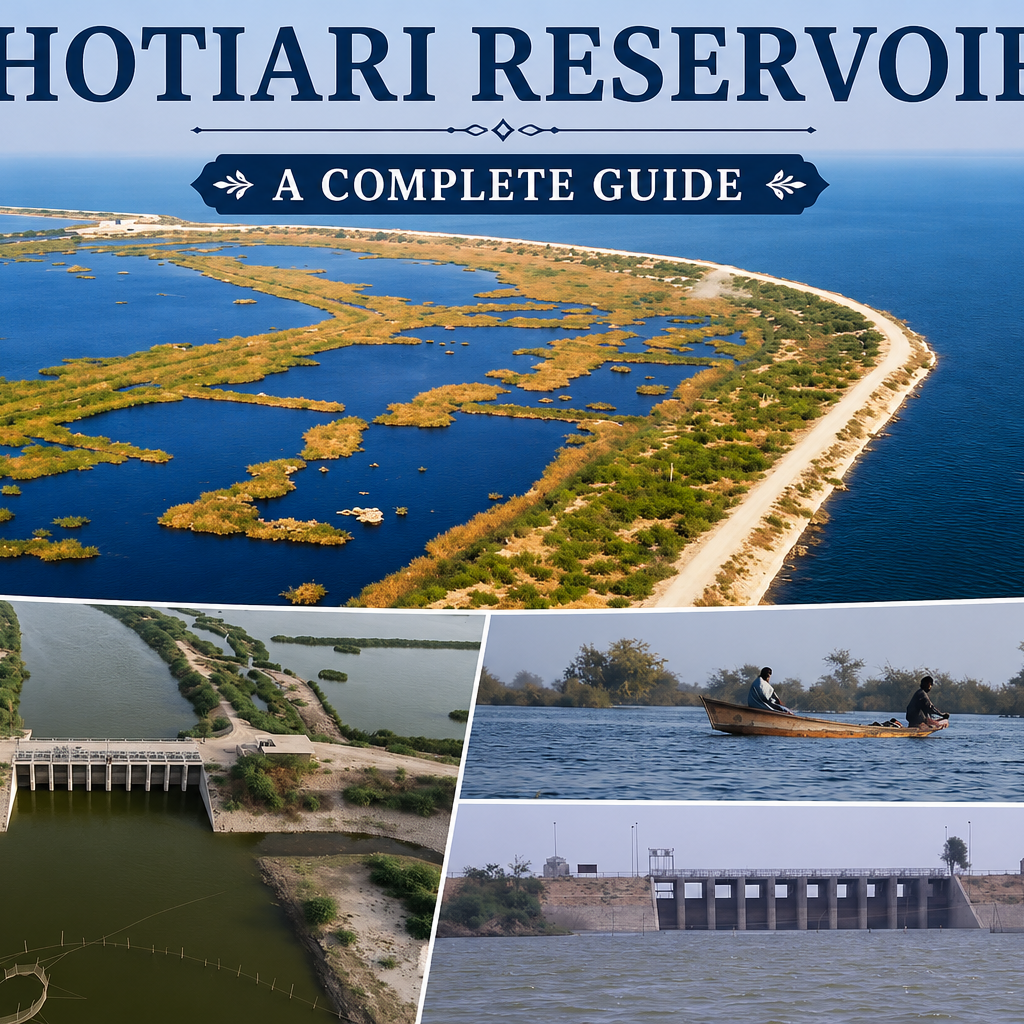
Chotiari is a wetland complex. It is not a single lake but a group of them. Deep lakes and shallow marshes make it up. Named lakes include Bakar akanwari and Sao Naro.
The setting is remarkable. Sand dunes border the water on one side. Riverine forest and farmland lie on another. This meeting of desert and wetland is unusual. It creates a rare mix of habitats.
The Nara Canal feeds the system. The canal surrounds the lakes. It is the main source of their water. It links Chotiari to the wider Indus system.
The complex is highly diverse. It ranks among the most biologically rich places in the country. The mix of habitats supports a great range of species. Few sites hold such variety.
Chotiari reservoir project
Chotiari began as a natural depression. A wetland lay along the left bank of the Nara Canal. It held rain and flood water. This natural basin became the site of the reservoir.
Engineers built the reservoir around it. The project was part of a larger drainage scheme. Crews raised embankments around the natural depression. The reservoir was completed in the early 2000s.
The purpose was water storage. The reservoir holds rain and flood water from the Indus. It stores this for use in times of drought. It supplies farmers across several districts.
The project remains contested. The construction disturbed the natural wetland. It affected the wildlife and the communities. Many have described the environmental cost as heavy.
Wildlife in Chotiari reservoir
The wetland is exceptionally rich. Surveys have recorded around 200 species. These cover mammals, birds, reptiles and amphibians. This diversity is remarkable for a single site.
Marsh crocodiles live in the lakes. They are the most important species here. Surveys have counted dozens of them. The crocodile is globally endangered.
Rare mammals survive here. The smooth coated otter works the water. The fishing cat hunts the margins. The hog deer once lived here too. Foxes the desert cat and the caracal appear in the scrub.
The birdlife is outstanding. Well over a hundred species have been recorded. The marbled teal breeds here. This bird is globally vulnerable. Pallas's fish eagle hunts over the water.
Reptiles fill the wetland. The rock python lives in the reeds. Turtles inhabit the lakes. Many other reptiles share the habitat.
Some species have declined. The Indian wolf and the striped hyena have vanished from the area. Hog deer numbers have fallen sharply. Habitat loss is the main cause.
Threats to Chotiari reservoir
The reservoir itself changed the habitat. The construction disturbed the natural balance. It altered the water and the shoreline. This affected the crocodiles especially.
Deforestation continues. Land is cleared for farming. Firewood is cut for the nearby city. This loss of forest harms the wildlife.
Pollution reaches the water. Pesticides drain from the farmland. They affect the flora and the fauna. The long term impact is a concern.
Illegal trade threatens the crocodiles. Their skins are traded unlawfully. This adds to the pressure on the species. Conservation groups work to stop it.
People of Chotiari
Fishing communities live at Chotiari. Their villages line the shores. Thatched huts house the families. Some are reached only by boat.
They depend on the wetland. Fishing is the main livelihood. Farming and livestock support people of Chotiari too. Their lives are tied to the water.
The reservoir affected them. The construction displaced some communities. It changed their access to the resources. Their concerns are part of the story of Chotiari.
Conservation and visiting Chotiari reservoir
Conservation work continues. A conservation and information centre operates at the wetland. Environmental groups run surveys and programmes. They work with the local communities.
Chotiari reservoir holds ecotourism potential. Tourism bodies see promise here. The wildlife and the setting could draw visitors. Careful development is needed to protect the habitat.
The reservoir lies near Sanghar. It is around thirty to thirty five kilometres from the city. The roads are reasonable. Some villages need a boat trip.
Come in the cooler months. Winter offers the best weather and birds. A local guide helps a great deal. A boat is needed to reach the heart of the wetland.
Visit responsibly. Keep clear of the crocodiles. Respect the fishing communities. Support the conservation groups that protect the site.
Frequently asked questions
Where is Chotiari Reservoir? Chotiari Reservoir lies in the Sanghar district of Sindh. It is around thirty to thirty five kilometres north west of Sanghar city. It lies at the edge of the Thar Desert. The reservoir is a complex of interconnected lakes and marshes rather than a single lake. The Nara Canal feeds it and surrounds it. Some of the villages within the wetland can only be reached by boat.
What wildlife lives at Chotiari? Chotiari is one of the most biodiverse places in the country. Surveys have recorded around 200 species of mammals, birds, reptiles and amphibians. Marsh crocodiles are the most important species. The site also holds smooth coated otters, fishing cats, foxes and the desert cat. Well over a hundred bird species occur, including the globally vulnerable marbled teal and Pallas's fish eagle. Rock pythons and turtles live in the reeds and lakes.
Why was Chotiari Reservoir built? Chotiari was built to store water. It began as a natural wetland along the left bank of the Nara Canal. Engineers raised embankments around the natural depression as part of a larger drainage scheme. The reservoir was completed in the early 2000s. It holds rain and flood water from the Indus for use in times of drought. It supplies farmers across several districts.
Is Chotiari Reservoir an environmental concern? The Chotiari project has been widely debated. The construction disturbed the natural wetland and affected the wildlife and communities. It changed the habitat of the marsh crocodile especially. Deforestation, pesticide pollution and illegal skin trading add to the pressure. Some species, including the Indian wolf the striped hyena and the hog deer, have declined or vanished. Conservation groups now work to protect the remaining wildlife.
Can you visit Chotiari Reservoir? You can visit Chotiari. Tourism bodies see real ecotourism potential in the site. It lies around thirty to thirty five kilometres from Sanghar on reasonable roads. A conservation and information centre operates at the wetland. Winter offers the best weather and birdlife. A local guide helps a great deal. A boat is needed to reach the heart of the complex. Keep clear of the crocodiles and respect the fishing communities.
Wetland at the desert edge
Chotiari is a place of rare contrasts. Desert dunes meet deep lakes and marshes. Crocodiles bask where the sand meets the water. Rare otters and birds share the reeds. Fishing families live in huts along the shores. Few places in the country hold such life in such an unlikely setting.
You may come to Chotiari for the crocodiles the birds or the strange beauty of the place. The wetland rewards the journey either way. You can take a boat across the interconnected lakes. You can look for the marbled teal and the fish eagle. You can meet the communities who live on the water. Come in winter with a local guide. Chotiari is one of the hidden natural treasures of Sindh.