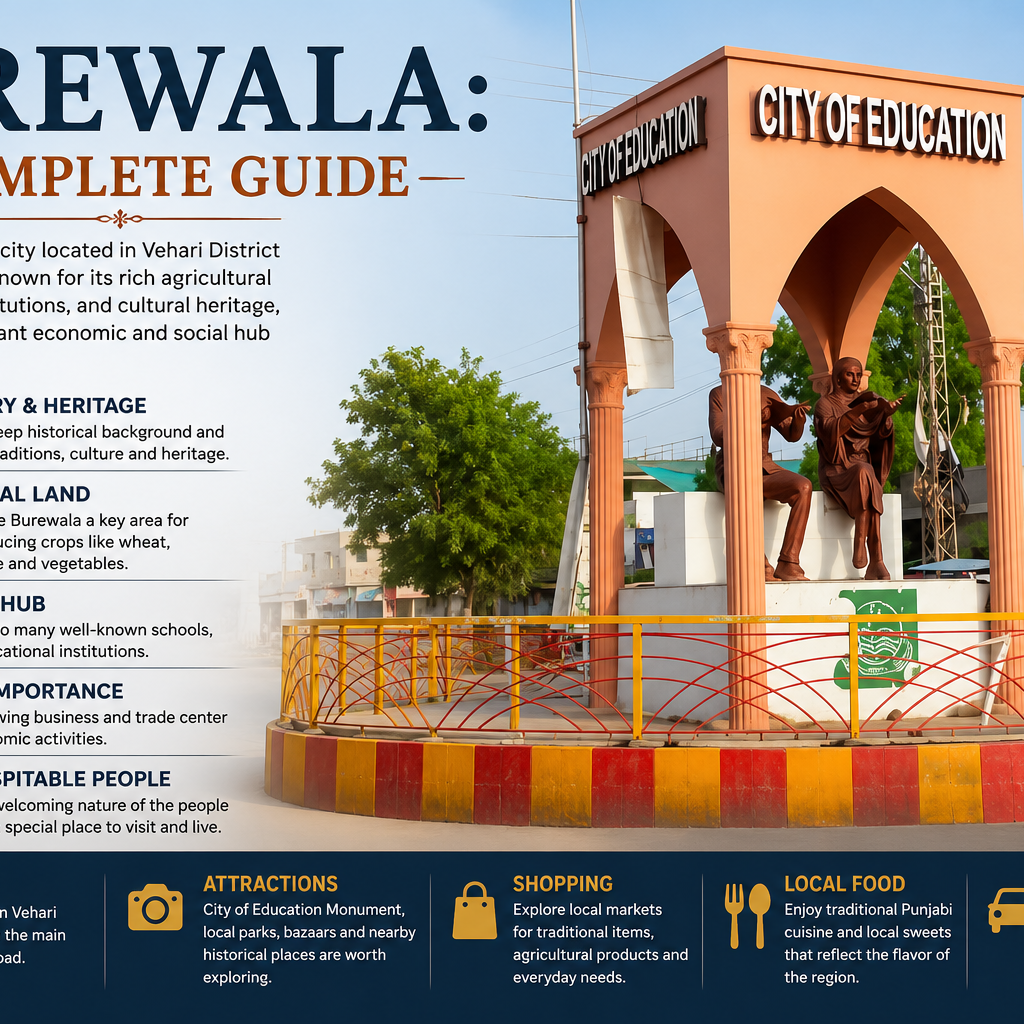
Burewala: A Complete Guide
Burewala is a thriving cotton and textile city in southern Punjab. It rests on the fertile plain of the Vehari district, near the Sutlej River. It rose from a jungle village into a great grain market when the canals and railway arrived. It is one of the leading cotton producing cities in the country. It is also known as a city of education and sport. This guide covers Burewala for the curious traveller. It explains the history the cotton economy the culture the sights the property scene and how to visit.
This guide offers a general overview. Figures for the population vary between sources.
Quick answer: Burewala is a city and tehsil in the Vehari district of southern Punjab around 35 kilometres east of Vehari on the Delhi Multan Road. It takes its name from an old well called Chah Boreywala. It grew as a planned canal colony market town, with its railway station and grain market established in the 1920s. It became a subdivision in 1976. It is a leading cotton and textile centre, known as the City of Education and Sports. Winter is the best time to visit.
About Burewala
Burewala is a historic market city in southern Punjab. It is located in the Vehari district of the Multan Division. It rests around 35 kilometres east of Vehari, on the Delhi Multan Road. It blends a canal colony heritage with a busy commercial life.
A level fertile plain surrounds the city. Pakpattan Canal waters the farmland here. Rich soil makes the area a great cotton zone. Wheat, cotton and sugarcane fill the surrounding fields.
Its name has a local origin. Burewala comes from an old well called Chah Boreywala. Settlers named the well after an ancestor. This gave the growing city its name.
Its layout is orderly. Burewala was built on a planned grid. Streets run perpendicular to each other. This colonial plan still shapes the old core.
History of Burewala
Ancient roots reach deep. Archaeological finds point to Bronze Age settlement. This land once lay under thick forest. Seasonal floods of the Sutlej allowed some early farming.
Canals transformed the jungle. British engineers built the Pakpattan Canal from the Sulemanki Headworks. This turned the arid scrub into fertile farmland. Langrial tribes settled the new colony.
Burewala grew as a mandi town. A railway station opened in 1924. A grain market followed in 1925. This gave rise to the name Mandi Burewala.
Its industry took root early. Burewala Textile Mills opened in 1954. This drew workers and trade to the city. Cotton and textiles became its backbone.
Burewala rose in status. It became a subdivision in 1976. This came with the creation of the Vehari district. It grew into a great cotton centre.
Cotton economy of Burewala
Burewala is a great cotton city. Cotton is the white gold of the area. It is a leading cotton producing city in the country. This crop drives the whole economy.
Its ginning industry is vast. Many cotton ginning factories operate here. Oil and flour mills add to the base. Rice husking mills fill the district too.
Textiles form the basis of the industries here. There is an excellent textile mill that produces yarn in the city. It operates a large number of spindles. The textile mill forms the backbone of the local economy.
The farmers sustain agriculture. Wheat and sugar cane are cultivated along with cotton. Guavas and citrus fruits are grown in orchards.
Culture and sights in Burewala
Burewala is a city of education and sport. Schools and colleges fill the city. It has earned a name for learning. Sport is a proud part of its identity.
The Ghalla Mandi is an amazing market. The grain market is a center for daily activity. Every day, farmers and dealers come here. This market is the lifeblood of the city.
The Baba Haji Sher Dewan Shrine attracts pilgrims. It is dedicated to the first Muslim saint of the subcontinent. It is believed that this shrine was the first shrine in the subcontinent.
Colonial buildings recall the past. A grid of old streets fills the centre. Burnt brick buildings mark the canal colony era. These recall the origins of the city.
Property market in Burewala
Property here is steady. Cotton and textile wealth support the market. New housing schemes ring the city. Demand rises with the growth of the district.
Location shapes the market. Burewala rests on the Delhi Multan Road. Rail and road link it across the country. This connectivity lifts the property market.
Buyers find a varied choice. An old city offers heritage and trade. New schemes offer modern living. A rural fringe offers agricultural land. Each suits a different buyer.
This city keeps developing. Cotton and textile industry underpin the economy. New roads improve access to the area. This supports the property market.
Visiting Burewala
Come in winter. Summers here are extremely hot. Winter months from November to February are the finest season. Weather is mild and pleasant then.
See the Ghalla Mandi. This great grain market is a lively spectacle. It shows the wealth of the area at work. A visit reveals the heart of the local economy.
Visit the Baba Haji Sher Dewan Shrine. This ancient shrine is a place of devotion. It honours an early saint of the subcontinent. It draws pilgrims throughout the year.
Explore the wider district. Vehari and its cotton fields lie to the west. Pakpattan and its shrine lie to the north. Dedicated guides cover these towns.
Frequently asked questions
Why is Burewala famous? Burewala is famous as one of the leading cotton producing cities in the country, with cotton often called the white gold of Punjab. Its economy centres on cotton ginning, oil milling and a major textile industry, making it a vital part of the national textile chain. It is also known as the City of Education and Sports, thanks to its many schools and colleges and its love of sport. It is also home to a busy grain market and the historic shrine of Baba Haji Sher Dewan.
How did Burewala get its name? Burewala takes its name from an old well known as Chah Boreywala, meaning the Well of Bura. According to tradition, early residents of the village dug a well around eight feet in diameter and named it after an ancestor called Bura. That old village was also known as Purana Boora. When the modern city grew up around the canal colony and railway, it took the name Burewala from this well, now part of a link canal.
How did Burewala develop? Burewala developed as part of the British canal colony system in the early 20th century. A new Pakpattan Canal transformed the once arid jungle into fertile farmland attracting the first settlers. A railway station opened in 1924 and a grain market in 1925. This gave rise to the name Mandi Burewala and turned it into a full market town for cotton and grain. Burewala Textile Mills, established in 1954, cemented its role as an industrial centre.
What is the shrine of Baba Haji Sher Dewan? A shrine of Baba Haji Sher Dewan in Burewala honours one of the earliest Muslim saints of the subcontinent. It is said to be the first shrine of this revered saint in the subcontinent. This gives it particular significance for pilgrims. It draws devotees throughout the year and is one of the notable heritage sites of the city. It reflects the deep spiritual traditions of southern Punjab.
When is the best time to visit Burewala? Winter, from November to February, is the best time to visit Burewala, when the weather is mild and pleasant. Summers here are extremely hot. Winter suits a visit to the busy Ghalla Mandi grain market the shrine of Baba Haji Sher Dewan and the old colonial streets of the city centre. Those who visit in the growing season can see the cotton fields in white bloom a common and beautiful sight across the surrounding countryside.
White gold city of the Vehari plains
Burewala is the white gold city of the southern plains. It rose from a jungle village when the great canals arrived. It grows the cotton that clothes the country. It spins the yarn that feeds the textile mills. It has earned a proud name for learning and sport. Few cities grew so fast from field to market to mill.
You may come to Burewala for the cotton the market or the shrine. This city rewards the visit either way. You can watch the grain trade at the busy Ghalla Mandi. You can bow at the ancient shrine of Baba Haji Sher Dewan. You can see the white cotton bloom across the fields. Come in winter and explore the white gold city. Burewala is the cotton heart of the Vehari plains.


