Ajrak: The Block Printed Cloth of Sindh
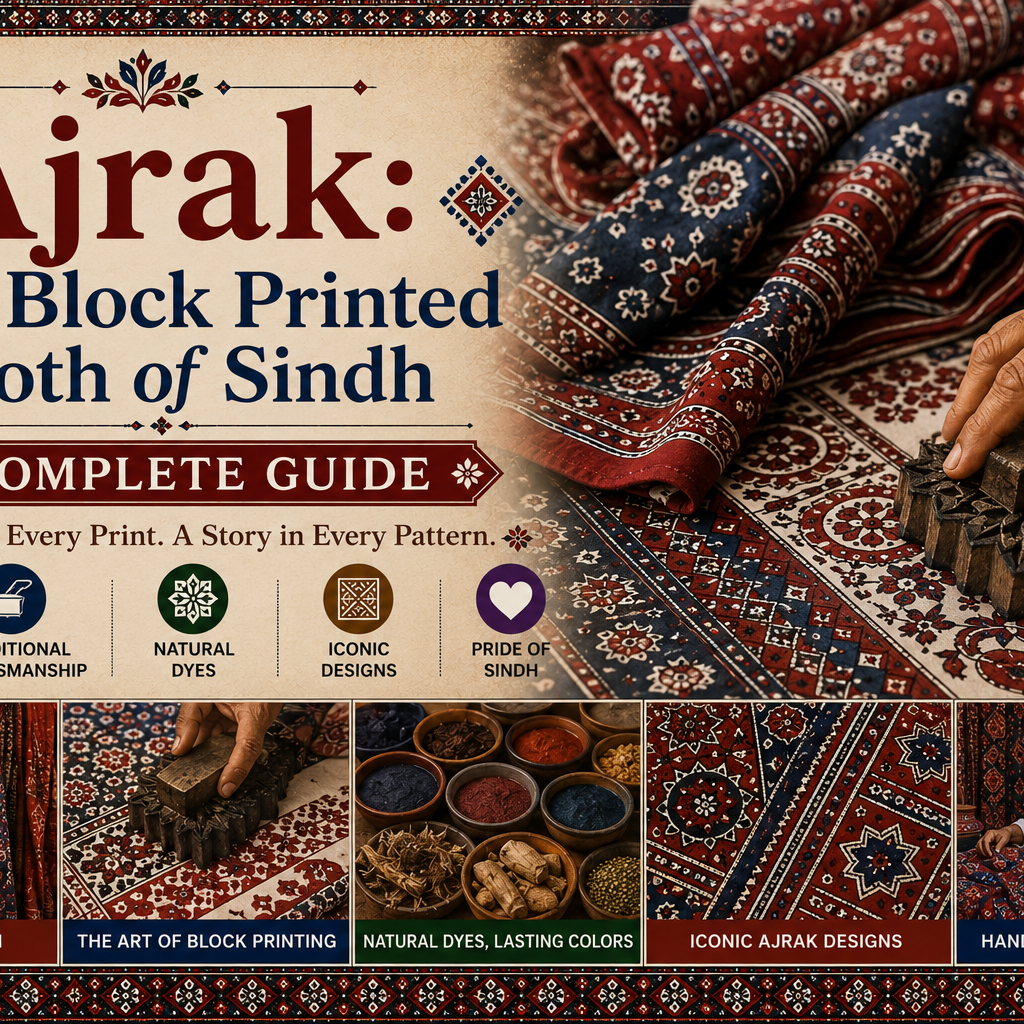
Ajrak is the great textile of Sindh. It carries deep crimson and indigo across geometric patterns of white and black. Its makers craft it by hand through many stages over several weeks. Its roots reach back to the Indus Valley Civilisation. It has become the very symbol of Sindhi identity. This guide covers Ajrak for the curious traveller. It explains the history the meaning the making the patterns and where to find it.
This guide offers a general overview. Accounts of the origin of the name and the craft vary between sources.
Quick answer: Ajrak is a type of block-printed and tie-dyed fabric that originated in Sindh province. The fabric is famous for its deep shades of red and blue colors, which have a white or black design. The word ajrak probably originated from the Arabic word azrak, which means “blue.” Makers craft it by hand through many stages with natural dyes. It is a powerful symbol of Sindhi identity. Men wear it as a turban or shawl and it is given as a gift of honour.
About Ajrak
Ajrak is a block printed cloth. Makers print it with hand carved wooden blocks. They use a resist dye technique. This craft has been passed down through generations. It is the most celebrated textile of the province.
The colours are unmistakable. Deep crimson and indigo dominate the cloth. White and black define the geometric patterns. This colour scheme is the signature of Ajrak. It sets the cloth apart at a glance.
The cloth comes as a long piece. It is usually sold unstitched. People drape it as a shawl a turban or a wrap. The length and size vary with its use.
History of Ajrak
The roots reach into deep antiquity. Ajrak traces back to the Indus Valley Civilisation. That places its origins over four thousand years ago. Few crafts can claim such an ancient descent.
Mohenjo daro holds a famous clue. A statue known as the Priest King was found there. He wears a shawl with a pattern like Ajrak. The dedicated guide to Mohenjo daro covers the site. This link suggests the craft is truly ancient.
The craft evolved over the centuries. Arab, Persian and Mughal tastes all shaped it. The Arab conquest of 711 reinforced the indigo technique. The cloth kept its local Sindhi roots throughout.
The Mughals prized the cloth. Ajrak became popular with kings and nobles. It later spread to all people. This shift made it a symbol for the whole province.
Meaning and the name of Ajrak
The name likely means blue. Most sources trace Ajrak to the Arabic word azrak. That word means blue or indigo. Blue is one of the principal colours of the cloth. Other origins have been suggested too.
Ajrak carries deep meaning. It is far more than a fabric. It represents love, honour and cultural pride. It appears in Sindhi poetry and folk song. The dedicated guide to the poet Bhittai covers that tradition.
The cloth is a symbol of identity. It represents the bond between the people and their land. It expresses the resilience and unity of the community. Few objects carry such weight in a culture.
It is a gift of respect. People present Ajrak to honoured guests. It marks weddings, births and special occasions. High officials offer it as a token of hospitality. This role is central to Sindhi custom.
Making of Ajrak
The process is long and skilled. A single piece passes through many stages. Some accounts count up to sixteen. The work can take several weeks.
The stages build the cloth step by step. Makers wash and prepare the cotton first. They apply resists to protect parts of the design. They print with the carved blocks in turn. They dye the cloth in vats between the printings.
The blocks are hand carved. Craftsmen cut intricate patterns into wooden blocks. They dip these in the dye. They press them onto the cloth by hand. Several blocks layer the colours and shapes.
The dyes come from nature. Indigo gives the deep blue. Madder root gives the red. Pomegranate rind and other plants give the yellows. This use of natural dyes is central to true Ajrak.
The double sided cloth is prized. The finest Ajrak is printed on both sides. The pattern matches exactly through the cloth. This demands great skill. It marks the highest quality.
Patterns of Ajrak
The designs are geometric. Squares, circles and stars fill the cloth. They repeat in symmetrical patterns. This geometry is the heart of the Ajrak style.
The patterns carry meaning that many people believe they represent cosmic harmony in Sindh. Others are said to offer protection. This symbolism runs deep in the tradition.
The motifs have names. Craftsmen know each pattern by a traditional name. These have been handed down for generations. They form a rich visual language.
Where to find Ajrak
The craft is made across Sindh. Many towns produce Ajrak. Matiari, Hala and Bhit Shah are known centres. Sukkur, Hyderabad and the towns of Upper Sindh make it too.
Hala is a famous centre. The town is known for its crafts. The dedicated guide to Hala covers its work. It is a good place to see the craft.
You can buy it across the province. Markets and craft shops sell Ajrak. Look for the hand printed cloth with natural dyes. Beware of machine made imitations with synthetic colours.
Tell the real from the fake. True Ajrak uses soft cotton and natural dyes. Its patterns are detailed and even. Fake pieces are often shiny and uneven. A little care rewards the buyer.
Frequently asked questions
What is Ajrak? Ajrak is the hand-block printed and resist-dyed fabric that is native to Sindh province of Pakistan. It is characterized by its deep red color and deep blue colors with geometric designs in white and black shades. It is made by hand through the use of wooden blocks and natural dyes. The material is made as an un-stitched piece of fabric in the form of a shawl, turban or wrap.
Why is Ajrak important to Sindhi culture? Ajrak is more than just a textile in Sindh. Ajrak is an expression of love and honor for their culture. It is the expression of the connection between the people of Sindh and their land. It is mentioned in Sindhi poems and songs. It is used when they want to offer it to their honored guests. It is also worn during weddings and other festive occasions.
How is Ajrak made? Ajrak is made by hand through many stages, sometimes counted at up to sixteen. Makers wash and prepare the cotton then apply resists to protect parts of the design. They print with hand carved wooden blocks and dye the cloth in vats between printings. The dyes come from nature, with indigo for blue and madder root for red. The whole process can take several weeks for a single piece.
What does the word Ajrak mean? Most sources trace the word Ajrak to the Arabic word azrak, meaning blue or indigo. Blue is one of the principal colours of the cloth. This supports the origin. Some other origins have been suggested too. The craft itself is far older than the Arabic name. Its roots reach back over four thousand years.
Where can I buy authentic Ajrak? Authentic Ajrak is made across Sindh, in towns such as Matiari, Hala, Bhit Shah, Sukkur and Hyderabad. Hala is a well known craft centre and a good place to see the work. Markets and craft shops across the province sell it. Look for soft cotton with natural dyes and detailed, even patterns. Avoid machine made imitations. These have shiny synthetic colours and uneven designs.
Cloth that carries a people
Ajrak is the cloth that carries the soul of Sindh. Its crimson and indigo have coloured the province for thousands of years. Its makers still craft it by hand through weeks of patient work. Its patterns hold the harmony and pride of a whole people. Its roots reach back to the first cities on the Indus. Few textiles anywhere carry such meaning.
You may come to Ajrak as a collector a traveller or a lover of craft. The cloth rewards the interest either way. You can visit the workshops of Hala and Matiari. You can watch the blocks press colour into the cotton. You can take home a piece dyed with indigo and madder. Choose the hand printed cloth with its natural dyes. Ajrak is a thread that ties the present of Sindh to its ancient past.