Sukkur: A Complete City Guide
Sukkur is the third largest city in Sindh. It ranks among the great river cities of the country. The city lies on the banks of the mighty Indus. It is famous for the great Sukkur Barrage and the elegant Lansdowne Bridge. The island temple of Sadh Belo adds to its fame. This historic city of Upper Sindh blends engineering marvels, riverside beauty and a rich heritage. This guide covers Sukkur for the curious traveller. It explains the history the landmarks the culture the food and how to get there.
This guide offers a general overview to help you get to know the city and plan a visit.
Quick answer: Sukkur is the third largest city in Sindh. It located on the Indus in Upper Sindh. The city is famous for the Sukkur Barrage, one of the largest irrigation structures in the world. The 19th century Lansdowne Bridge adds to its fame. The island Hindu temple of Sadh Belo draws many visitors. The Masoom Shah Minaret is another landmark. Sukkur is known for its dates and handicrafts. It is a key commercial hub and the gateway to Mohenjo daro. You can reach it by road, rail and air.
About Sukkur
Sukkur is a great city of the Indus. It is the third largest city in the province. The city lies on the right bank of the Indus in Upper Sindh. It occupies the narrowest point of the lower river. This riverside setting defines the city. It has made Sukkur a centre of trade and irrigation for generations.
The city is a commercial hub of Upper Sindh. Sukkur is an important commercial and industrial centre. It is known for its trade in grain, dates and handicrafts. This trade is the lifeblood of the city. It draws people from across the surrounding districts.
The city has a rich and varied history. Sukkur carries a long history of dynasties, saints and rulers. It holds a plural heritage of many faiths. This deep history is felt in its monuments. It gives the city a special character.
Sukkur Barrage and the bridges
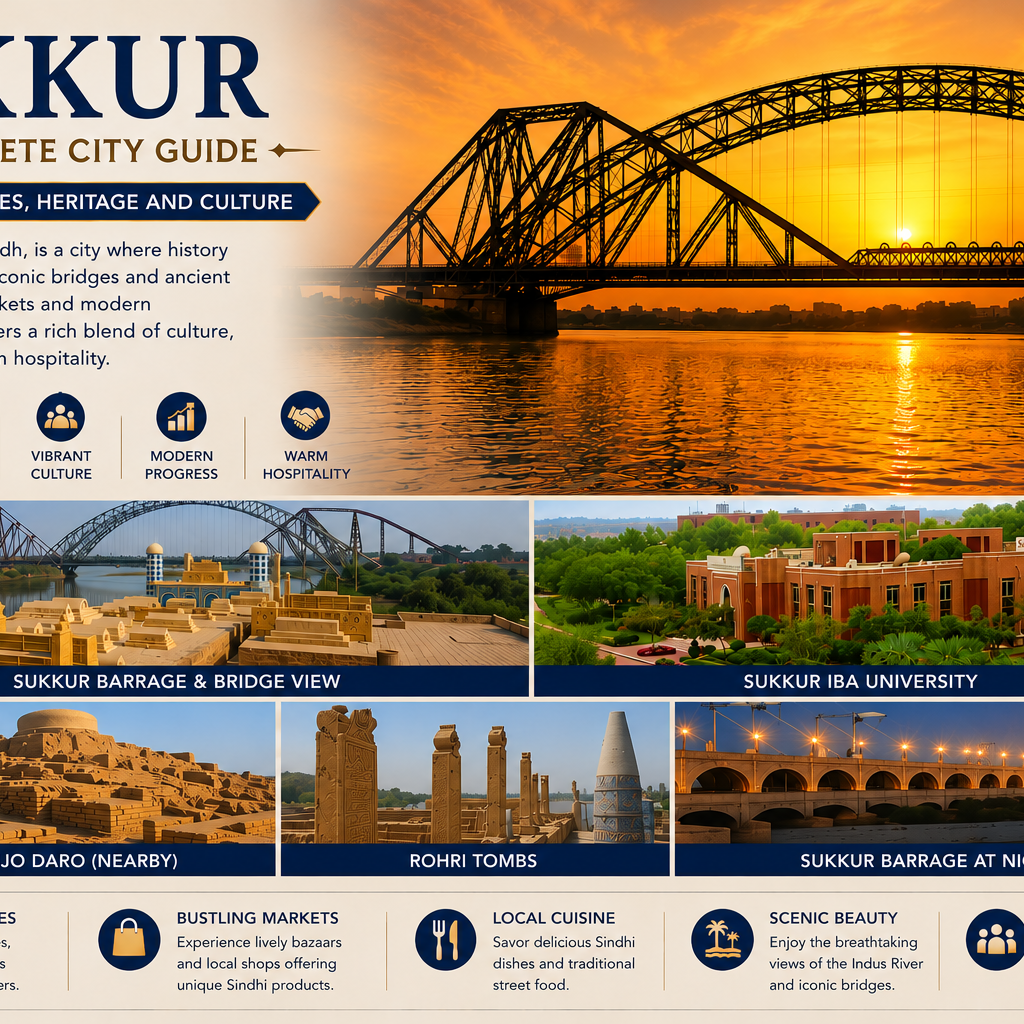
The Sukkur Barrage is a marvel of engineering. Engineers built it during British rule and completed it in 1932. It ranks among the largest irrigation structures in the world. The barrage spans the Indus. This great structure is the defining landmark of the city. It waters vast farmlands through its network of canals.
The barrage transformed the farming of Sindh. It changed the whole farming system of the province. Its canals turned dry land into fertile fields. This role in irrigation is at the heart of the region. A small museum near the barrage explains how it works.
The Lansdowne Bridge is a landmark of colonial engineering. Engineers built it in the 19th century over the Indus. It is a famous feat of engineering and a beautiful sight. The bridge looks especially fine at sunset. The newer Ayub Bridge runs alongside it. These bridges connect Sukkur with Rohri across the river.
Island temple and the monuments
Sadh Belo is a temple on an island in the Indus. This Hindu temple complex is set on a small island. Visitors reach it by boat. It has been a place of pilgrimage for around two centuries. This island temple is one of the most striking sights of the city. It reflects the plural and river based heritage of Sukkur.
The Masoom Shah Minaret is a Mughal landmark. It is a tall brick tower built in the Mughal period. Mir Masoom Shah a soldier and historian of Sindh, raised it. A narrow internal staircase climbs to the top. This lofty minaret offers a spectacular view over the city and the river.
The Sateen Jo Aastan and other sites add to the heritage. The city and the nearby Rohri hold other historic sites. They include the tomb known as the Sateen Jo Aastan. Old mosques and shrines add to the choice. These monuments carry the long story of the region. They reward those who explore beyond the main sights.
Culture and the food of Sukkur
Sukkur is famous for its dates and crafts. The city and the surrounding region are famous for their dates. Colourful handicrafts and Ajrak cloth add to the appeal. These local products make fine gifts. They reflect the craft traditions of Sindh.
The food is a highlight of any visit. Sukkur offers a rich food scene. Fragrant Sindhi biryani and sweets such as Sohan Halwa are popular. This delicious food is a joy for visitors. You can find it easily in the bazaars and eateries of the city.
Bazaars and riverbanks are vibrant places. The central bazaars in the Clock Tower area indicate the commerce of Upper Sindh. People frequent the riverbanks for evening walks. This lively setting is enjoyable to visit. It provides an insight into the life of the city.
Reaching Sukkur and the gateway to Mohenjo daro
Sukkur is well connected across the country. You can reach it by road on the main highways. It is a major junction on the railway network. Its airport handles domestic flights. This strong connectivity links it to the whole country. It ranks among the most accessible cities in Upper Sindh.
Sukkur is the gateway to Mohenjo daro. The city is the nearest gateway to the ancient site. Mohenjo daro is one of the great cities of the Indus Valley Civilisation. Its own dedicated guide covers the site in more detail. Sukkur makes a fine base for exploring the heritage of the region.
Frequently asked questions
Where is Sukkur located? Sukkur is located in Upper Sindh on the right bank of the Indus. It occupies the narrowest point of the lower river. It is the third largest city in the province. You can reach it by road on the main highways. The city is a major junction on the railway network. Its airport handles domestic flights. These links make it one of the most accessible cities in Upper Sindh.
What is Sukkur famous for? Sukkur is famous for the Sukkur Barrage. It ranks among the largest irrigation structures in the world. The 19th century Lansdowne Bridge adds to its fame. The island Hindu temple of Sadh Belo draws many visitors. The city is also known for the Masoom Shah Minaret. Its dates and handicrafts are prized. Sukkur serves as a commercial hub of Upper Sindh and a gateway to Mohenjo daro.
What are the best places to visit in Sukkur? The best places include the great Sukkur Barrage and the beautiful Lansdowne Bridge. The island temple of Sadh Belo is reached by boat. The Masoom Shah Minaret offers a spectacular view over the city and the river. The Sukkur Museum and the Clock Tower bazaars are worth your time. The tomb known as the Sateen Jo Aastan adds to the heritage.
What is the Sukkur Barrage? The Sukkur Barrage is a great irrigation structure spanning the Indus. Engineers built it during British rule and completed it in 1932. It was once known as the Lloyd Barrage. It ranks among the largest irrigation structures in the world. It transformed the farming of the province. Its network of canals waters vast farmlands. A small museum near the barrage explains how the system works.
How do I get to Sukkur? Sukkur is well connected across the country. You can reach it by road on the main highways. It is a major junction on the railway network. Its airport handles domestic flights. These links make it one of the most accessible cities in Upper Sindh. Sukkur is also the nearest gateway to the ancient site of Mohenjo daro.
River city of Upper Sindh
Sukkur is a city of engineering marvels, riverside beauty and rich heritage. It lies on the banks of the mighty Indus in Upper Sindh. The city offers the great Sukkur Barrage and the elegant Lansdowne Bridge. The island temple of Sadh Belo and the lofty Masoom Shah Minaret add to the choice. It blends history, culture and natural beauty. Its dates, its handicrafts and its warm hospitality make it rewarding to explore.
You may come to Sukkur for its engineering wonders, its river views, its monuments or its food. The third city of Sindh has much to offer either way. You can walk along the great barrage and admire the Lansdowne Bridge at sunset. You can take a boat to the island temple of Sadh Belo. You can climb the Masoom Shah Minaret for a spectacular view. Sukkur is the gateway to Mohenjo daro and a great city of the Indus. It rewards anyone exploring the heart of Upper Sindh.